THE ADVENTURE COLLECTIVE® · Independent discovery and booking for outdoor travel

See Egypt’s major archaeological sites in a compact, fast-moving three-day itinerary from Hurghada. Fly to Aswan, visit Abu Simbel, take a first-class train to Luxor and explore the Valley of the Kings and Karnak.
See Egypt’s major archaeological sites in a compact, fast-moving three-day itinerary from Hurghada. Fly to Aswan, visit Abu Simbel, take a first-class train to Luxor and explore the Valley of the Kings and Karnak.
You step out of a Hurghada hotel pre-dawn and the Red Sea’s temperature already nudges the air; by noon the desert light pushes the horizon into a hard line that highlights the geometry of stone. This three-day loop threads coastal bus travel, an internal flight to Aswan, a road transfer to Abu Simbel, and a first-class overnight train to Luxor — a compact corridor through Egypt’s layered past.
Verified experiences and guided adventures in the surrounding area.
Operated by Egypt Travel Line · Hurghada, Red Sea Governorate
You step out of a Hurghada hotel pre-dawn and the Red Sea’s temperature already nudges the air; by noon the desert light pushes the horizon into a hard line that highlights the geometry of stone. This three-day loop threads coastal bus travel, an internal flight to Aswan, a road transfer to Abu Simbel, and a first-class overnight train to Luxor — a compact corridor through Egypt’s layered past.
The route links Giza’s Old Kingdom monuments with New Kingdom grandeur along the Nile. Geologically the floodplain and surrounding deserts shift from wind-polished sandstone to the hard quartzite blocks hauled centuries ago for statues and pylons. Culturally, expect living traditions in market stalls, Nubian crafts around Aswan, and the ever-present cadence of prayer calls in modern towns.
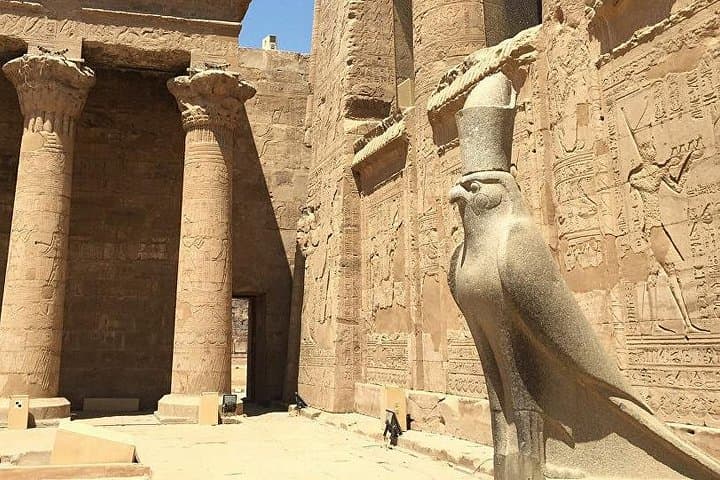
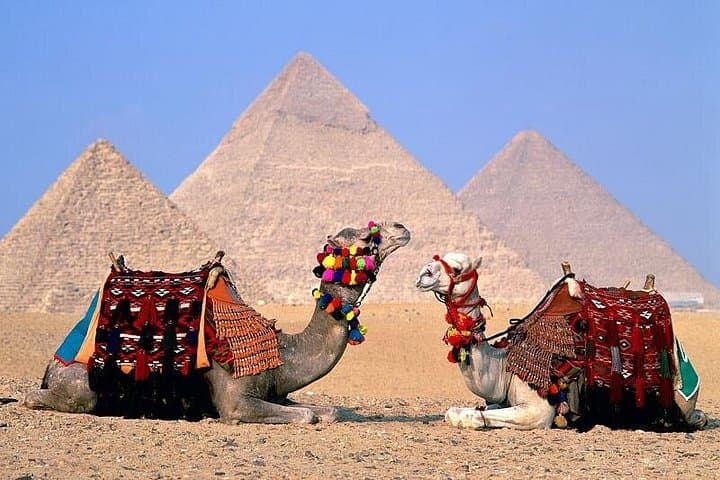
On day one, walking around the Giza plateau introduces monumental scale: Khufu’s pyramid dimensions and the Sphinx’s weathered limestone face. Day two brings the colossal rock-cut temples of Ramesses II at Abu Simbel — relocated in the 1960s to save them from Lake Nasser’s rise — then a rail passage to Luxor. Day three focuses on the West Bank necropolis: tightly painted tomb corridors in the Valley of the Kings and Hatshepsut’s terraced mortuary temple.
Practical edge: expect long travel windows, staircases and uneven temple floors, and intense sun. Carry water, pace visits to avoid midday heat, and keep copies of documents for transfers. Guides manage most logistics; bring comfortable shoes and a light layer for early mornings and air-conditioned vehicles. This itinerary packs major archaeological highlights into three focused days — efficient, busy, and richly architectural.
moderate.
3 days.
Suitable for travelers who can tolerate full days of walking, stairs, and travel between sites; basic mobility required
Most nationalities require an Egyptian entry visa; check your country’s requirements before travel and carry passport copies for transfers.
The itinerary lists included sightseeing and transfers; confirm which specific site entry fees and optional extras (like tombs with additional charges) are covered at booking.
The scheduled first-class train departs mid-afternoon and takes about 3–4 hours to reach Luxor, arriving in the evening.
The operator lists wheelchair-accessible transport, but many archaeological sites have stairs and uneven surfaces; contact the provider to plan accommodations at specific sites.
This route links Pharaoh-era funerary landscapes on Luxor’s west bank with New Kingdom triumphal architecture; Abu Simbel was famously relocated in the 1960s to escape the Nile’s dam-driven rise.
Tourism pressure and water scarcity require respectful site behavior — stick to marked paths, avoid touching reliefs, and support local guides and conservation fees where offered.
Egypt Travel Line operates guided outdoor trips and adventures with an emphasis on safety, stewardship, and memorable experiences.

You step out of a Hurghada hotel pre-dawn and the Red Sea’s temperature already nudges the air; by noon the desert light pushes the horizon into a hard line that highlights the geometry of stone. This three-day loop threads coastal bus travel, an internal flight to Aswan, a road transfer to Abu Simbel, and a first-class overnight train to Luxor — a compact corridor through Egypt’s layered past.
You step out of a Hurghada hotel pre-dawn and the Red Sea’s temperature already nudges the air; by noon the desert light pushes the horizon into a hard line that highlights the geometry of stone. This three-day loop threads coastal bus travel, an internal flight to Aswan, a road transfer to Abu Simbel, and a first-class overnight train to Luxor — a compact corridor through Egypt’s layered past.
The route links Giza’s Old Kingdom monuments with New Kingdom grandeur along the Nile. Geologically the floodplain and surrounding deserts shift from wind-polished sandstone to the hard quartzite blocks hauled centuries ago for statues and pylons. Culturally, expect living traditions in market stalls, Nubian crafts around Aswan, and the ever-present cadence of prayer calls in modern towns.
On day one, walking around the Giza plateau introduces monumental scale: Khufu’s pyramid dimensions and the Sphinx’s weathered limestone face. Day two brings the colossal rock-cut temples of Ramesses II at Abu Simbel — relocated in the 1960s to save them from Lake Nasser’s rise — then a rail passage to Luxor. Day three focuses on the West Bank necropolis: tightly painted tomb corridors in the Valley of the Kings and Hatshepsut’s terraced mortuary temple.
Practical edge: expect long travel windows, staircases and uneven temple floors, and intense sun. Carry water, pace visits to avoid midday heat, and keep copies of documents for transfers. Guides manage most logistics; bring comfortable shoes and a light layer for early mornings and air-conditioned vehicles. This itinerary packs major archaeological highlights into three focused days — efficient, busy, and richly architectural.