THE ADVENTURE COLLECTIVE® · Independent discovery and booking for outdoor travel

Board a morning boat from Hurghada for two guided dives on the Red Sea—expect coral gardens, clear visibility, and a boat lunch between drops. Ideal for certified divers and beginners diving under instructor supervision, this full-day trip blends straightforward logistics with high-reward marine encounters.
Board a morning boat from Hurghada for two guided dives on the Red Sea—expect coral gardens, clear visibility, and a boat lunch between drops. Ideal for certified divers and beginners diving under instructor supervision, this full-day trip blends straightforward logistics with high-reward marine encounters.
The morning light on Hurghada’s marina slices across chrome rails as divers gather at 08:00—boards creak, cylinders click into racks, and the boat eases into the Red Sea. Two open-sea stops mean current, color, and the kind of coral gardens that push you to look twice: plate corals layered like steps, brain corals pocked with life, and shoals of parrotfish cutting through the blue.
Verified experiences and guided adventures in the surrounding area.
Operated by Egyptian Touristic Service-E.T.S · Hurghada, Red Sea Governorate
The morning light on Hurghada’s marina slices across chrome rails as divers gather at 08:00—boards creak, cylinders click into racks, and the boat eases into the Red Sea. Two open-sea stops mean current, color, and the kind of coral gardens that push you to look twice: plate corals layered like steps, brain corals pocked with life, and shoals of parrotfish cutting through the blue.
This coastline sits along an arm of the Red Sea shaped by tectonic rifting; warm saline waters and isolation produced reefs rich in endemics. Hurghada itself grew from a fishing village into a gateway town during the late 20th-century tourism boom, giving access to reefs that once only local fishermen knew. The cultural hum is practical—a mix of Bedouin hospitality, Egyptian coastal commerce, and a dive industry built on safety and conservation.
Expect two guided dives, typically 10–30 m depth with visibility commonly 15–30 m depending on season. Instructors brief on site specifics, marine etiquette, and emergency procedures; an open buffet lunch is served on board between dives. Practical prep matters: hydrate before boarding, carry a logbook and certification card if you have one, and confirm which dive gear is included when you book.
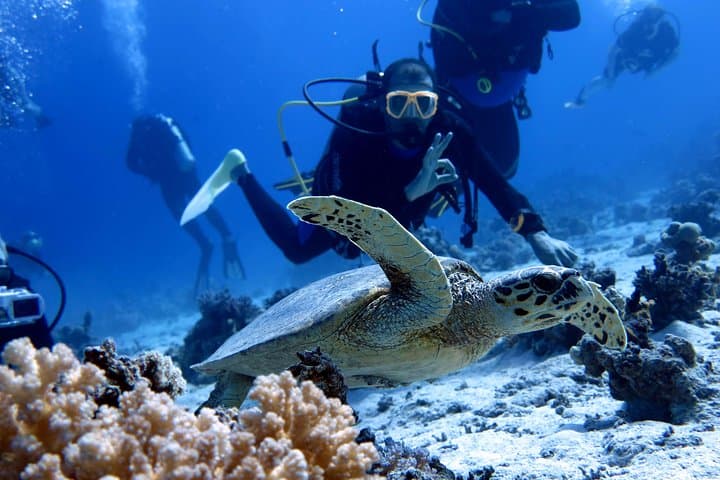
Diving in Hurghada is equal parts technical routine and wild surprise—reefs will test buoyancy and reward patience with turtles, eagle rays, and dense reef fish life. Time your dives for morning calm or late afternoon light, and leave no trace: avoid touching coral, use reef-safe sunscreen, and follow your guide’s route to protect the reefs for the next boat on the horizon.
moderate.
8 hours.
Moderate fitness and basic swimming ability; comfortable with repeated breath-hold and surface swims between boat and entry points.
Certified divers should bring their card; beginners can usually join guided or introductory dives under instructor supervision—confirm the operator’s policies at booking.
Typical recreational depths range 10–30 m with visibility often 15–30 m, though conditions vary with season and weather.
Equipment policies vary by operator—tanks, weights, and basic kit are commonly provided, but confirm whether you must rent items like BCDs or regulators when you book.
The full-day excursion runs about 8 hours (approx. 08:00–16:00), usually including two dives, a buffet lunch on board, bottled water, and instructor guidance.
Hurghada transformed from a small fishing community into a tourism hub in the late 20th century, opening access to nearby Red Sea reefs long used by local fishermen.
The Red Sea’s reefs are sensitive: follow no-touch rules, avoid anchoring on reefs, and use reef-safe products; many operators support local reef cleanup and awareness programs.
Egyptian Touristic Service-E.T.S operates guided outdoor trips and adventures with an emphasis on safety, stewardship, and memorable experiences.



The morning light on Hurghada’s marina slices across chrome rails as divers gather at 08:00—boards creak, cylinders click into racks, and the boat eases into the Red Sea. Two open-sea stops mean current, color, and the kind of coral gardens that push you to look twice: plate corals layered like steps, brain corals pocked with life, and shoals of parrotfish cutting through the blue.
The morning light on Hurghada’s marina slices across chrome rails as divers gather at 08:00—boards creak, cylinders click into racks, and the boat eases into the Red Sea. Two open-sea stops mean current, color, and the kind of coral gardens that push you to look twice: plate corals layered like steps, brain corals pocked with life, and shoals of parrotfish cutting through the blue.
This coastline sits along an arm of the Red Sea shaped by tectonic rifting; warm saline waters and isolation produced reefs rich in endemics. Hurghada itself grew from a fishing village into a gateway town during the late 20th-century tourism boom, giving access to reefs that once only local fishermen knew. The cultural hum is practical—a mix of Bedouin hospitality, Egyptian coastal commerce, and a dive industry built on safety and conservation.
Expect two guided dives, typically 10–30 m depth with visibility commonly 15–30 m depending on season. Instructors brief on site specifics, marine etiquette, and emergency procedures; an open buffet lunch is served on board between dives. Practical prep matters: hydrate before boarding, carry a logbook and certification card if you have one, and confirm which dive gear is included when you book.
Diving in Hurghada is equal parts technical routine and wild surprise—reefs will test buoyancy and reward patience with turtles, eagle rays, and dense reef fish life. Time your dives for morning calm or late afternoon light, and leave no trace: avoid touching coral, use reef-safe sunscreen, and follow your guide’s route to protect the reefs for the next boat on the horizon.