THE ADVENTURE COLLECTIVE® · Independent discovery and booking for outdoor travel

Kick up desert dust on a 25 km quad run to an authentic Bedouin camp near Hurghada, sip cardamom tea, and take a short camel ride before the return. This half‑day mix of adrenaline and culture suits travelers wanting an easy but lively desert experience.
Kick up desert dust on a 25 km quad run to an authentic Bedouin camp near Hurghada, sip cardamom tea, and take a short camel ride before the return. This half‑day mix of adrenaline and culture suits travelers wanting an easy but lively desert experience.
A low sun paints the Eastern Desert gold as riders kick quads into life and head inland from Hurghada. Gravel jumps and rocky shelf roads give way to a flat wash where the air smells faintly of salt and sage; after roughly 25 km the engines quiet and a low cluster of tents appears on the horizon — a working Bedouin camp where steaming tea waits and camels stand patient.
Verified experiences and guided adventures in the surrounding area.
Operated by Amara Travel Egypt · Hurghada, Red Sea Governorate
A low sun paints the Eastern Desert gold as riders kick quads into life and head inland from Hurghada. Gravel jumps and rocky shelf roads give way to a flat wash where the air smells faintly of salt and sage; after roughly 25 km the engines quiet and a low cluster of tents appears on the horizon — a working Bedouin camp where steaming tea waits and camels stand patient.
The route crosses parts of the Arabian‑Nubian Shield, where granite and sandstone outcrops wear wind-carved faces and desert varnish knots the stone. Hurghada itself grew from a small fishing port into a Red Sea tourism hub in the 20th century; deeper inland, Bedouin families still practice hospitality formed around trade routes and pastoral life.
Expect the cultural moment to be direct and simple: a shared cup of cardamom tea, a camel led out for a short ride, and conversation about daily routines rather than performances. Geologically, the landscape is stark and open; ecologically it’s fragile — short vegetation, reptiles, and hardy desert birds adapt here.
Practicalities are straightforward. The half‑day loop is about four hours total (including a roughly 40-minute camp stop) and covers roughly 50 km roundtrip by quad. Morning departures are best for cooler temperatures and better light for photography. Bring a sturdy pair of closed‑toe shoes, sun protection, a full water bottle or hydration pack, and follow your guide’s safety briefing; the experience isn’t technically difficult but requires attention on loose surfaces. Note medical restrictions: not recommended for pregnant travelers or those with spinal or serious heart conditions. Arranged pickup from Hurghada is common — expect an air‑conditioned vehicle to transfer you to the quad start point.
moderate.
4 hours.
Basic fitness and ability to handle an ATV for short distances; not strenuous but requires balance and alertness on rough terrain
The quad portion covers roughly 25 km each way (about a 50 km roundtrip), on mixed gravel and rocky tracks, lasting roughly 1–1.5 hours each way.
No formal experience is required; guides give a safety briefing and practice time—moderate comfort with vehicle handling and balance is recommended.
Yes — the itinerary typically includes a short camel ride at the Bedouin camp, often around 20–40 minutes depending on the operator.
Travelers who are pregnant, have spinal injuries, or serious heart conditions should not participate; check with the operator for full medical advisories.
Bedouin communities in Egypt’s Eastern Desert have long histories tied to nomadic pastoralism and trade routes; modern tourism interfaces with these traditions through guided visits and hospitality rituals.
The desert’s sparse vegetation and fragile soils recover slowly from vehicle disturbance—stick to marked tracks, pack out trash, and minimize fuel spills.
Amara Travel Egypt operates guided outdoor trips and adventures with an emphasis on safety, stewardship, and memorable experiences.
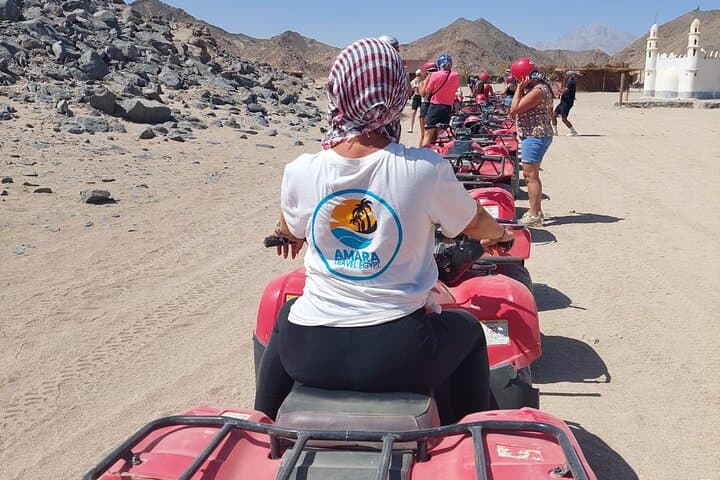
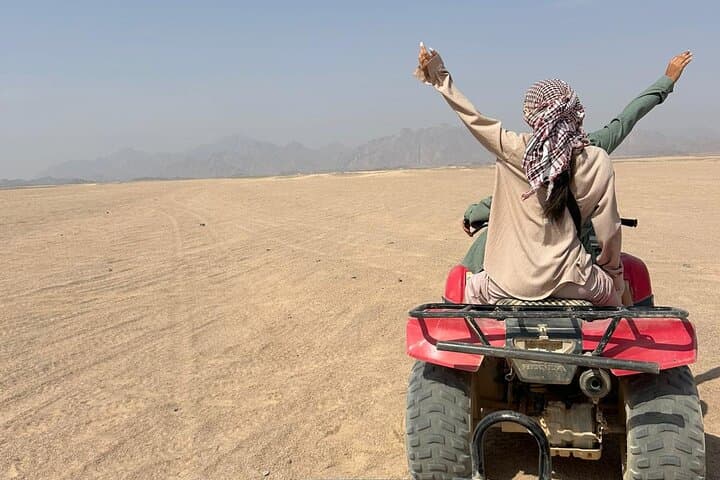
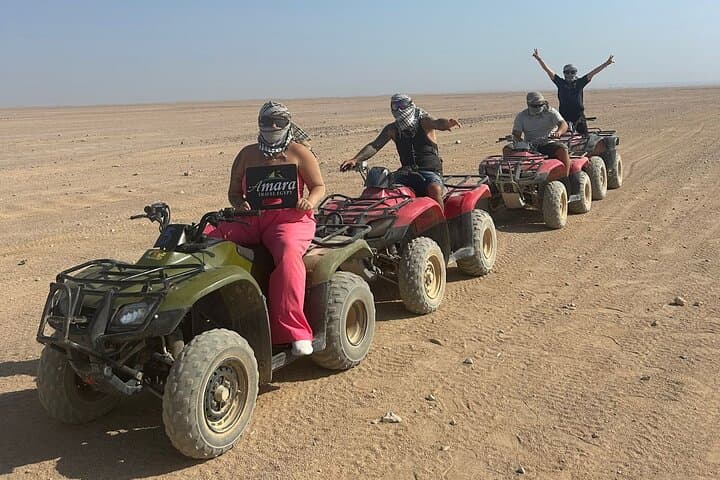
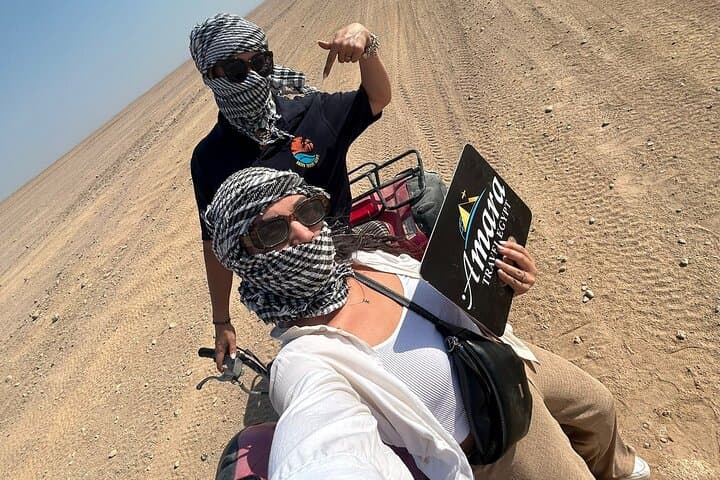
A low sun paints the Eastern Desert gold as riders kick quads into life and head inland from Hurghada. Gravel jumps and rocky shelf roads give way to a flat wash where the air smells faintly of salt and sage; after roughly 25 km the engines quiet and a low cluster of tents appears on the horizon — a working Bedouin camp where steaming tea waits and camels stand patient.
A low sun paints the Eastern Desert gold as riders kick quads into life and head inland from Hurghada. Gravel jumps and rocky shelf roads give way to a flat wash where the air smells faintly of salt and sage; after roughly 25 km the engines quiet and a low cluster of tents appears on the horizon — a working Bedouin camp where steaming tea waits and camels stand patient.
The route crosses parts of the Arabian‑Nubian Shield, where granite and sandstone outcrops wear wind-carved faces and desert varnish knots the stone. Hurghada itself grew from a small fishing port into a Red Sea tourism hub in the 20th century; deeper inland, Bedouin families still practice hospitality formed around trade routes and pastoral life.
Expect the cultural moment to be direct and simple: a shared cup of cardamom tea, a camel led out for a short ride, and conversation about daily routines rather than performances. Geologically, the landscape is stark and open; ecologically it’s fragile — short vegetation, reptiles, and hardy desert birds adapt here.
Practicalities are straightforward. The half‑day loop is about four hours total (including a roughly 40-minute camp stop) and covers roughly 50 km roundtrip by quad. Morning departures are best for cooler temperatures and better light for photography. Bring a sturdy pair of closed‑toe shoes, sun protection, a full water bottle or hydration pack, and follow your guide’s safety briefing; the experience isn’t technically difficult but requires attention on loose surfaces. Note medical restrictions: not recommended for pregnant travelers or those with spinal or serious heart conditions. Arranged pickup from Hurghada is common — expect an air‑conditioned vehicle to transfer you to the quad start point.