THE ADVENTURE COLLECTIVE® · Independent discovery and booking for outdoor travel

Leave Hurghada behind for a four- to six-hour jeep safari into the Eastern Desert where Bedouin hospitality, a candlelit barbecue and a powerful telescope put you under an exceptional starry sky. Expect sunset ridgeline views, a short camel ride and a practical astronomy talk.
Leave Hurghada behind for a four- to six-hour jeep safari into the Eastern Desert where Bedouin hospitality, a candlelit barbecue and a powerful telescope put you under an exceptional starry sky. Expect sunset ridgeline views, a short camel ride and a practical astronomy talk.
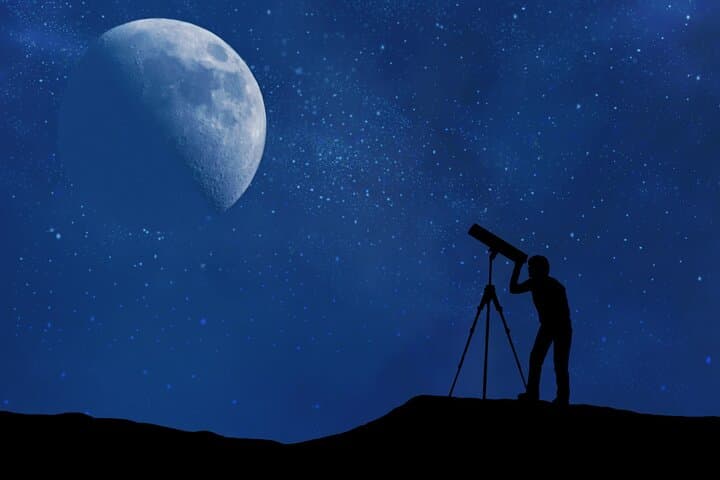
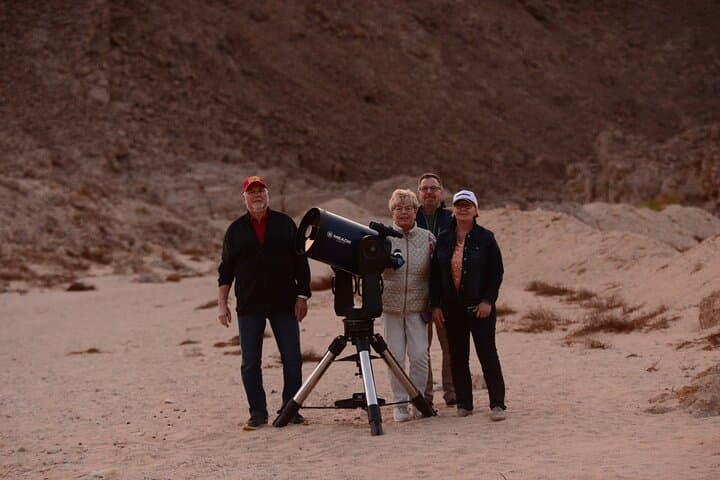
Dusk slides across the Red Sea mountains and the desert exhales heat that cools into a clean, bone-dry night. Your jeep climbs a ridgeline, tires chewing gravel, and the sun drops behind a silhouette of low volcanic hills. At the camp, a campfire sparks; tea steams in small glasses while a powerful telescope tilts toward the widening sky.
Verified experiences and guided adventures in the surrounding area.
Operated by E.T.O Travels · Hurghada, Red Sea Governorate
Dusk slides across the Red Sea mountains and the desert exhales heat that cools into a clean, bone-dry night. Your jeep climbs a ridgeline, tires chewing gravel, and the sun drops behind a silhouette of low volcanic hills. At the camp, a campfire sparks; tea steams in small glasses while a powerful telescope tilts toward the widening sky.
The stretch of desert east of Hurghada sits on the northern rim of the Eastern Desert—rocky outcrops and wind-sculpted sand that Egyptians and Bedouin have traversed for millennia. Here, astronomy and navigational lore are practical trades: Bedouin guides have used star patterns to find wells and safe tracks for generations. Geologically the area is dominated by ancient crystalline rocks and uplifted strata, which create the low mountains where the tour pauses for sunset.
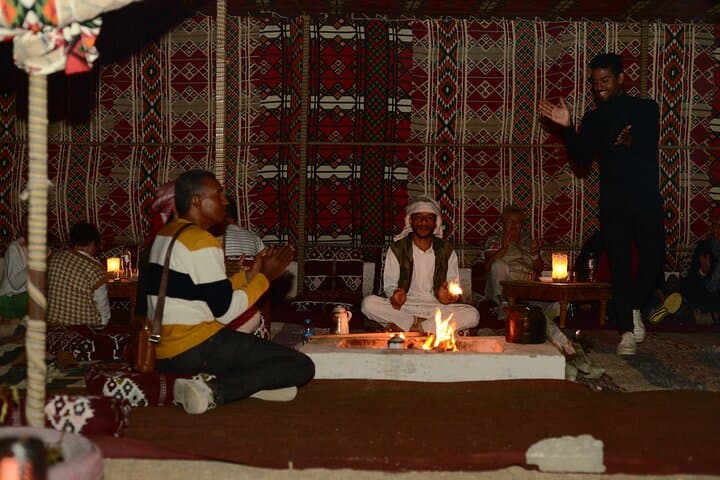
Culturally, the evening blends live drumming and simple hospitality—an open barbecue, candlelit seating, and a demonstration of camel handling that connects visitors to local rhythms. Then the telescopes come out; a guide points to Jupiter, Saturn, and clusters, translating constellations into stories and directions.
Practical guidance: dress in layers—desert nights chill quickly. Bring sun protection for the daytime transfer and closed shoes for walking around camp. Expect light physical activity: short camel walk, low-impact movement at camp, and quiet stretches while stargazing. Pickup from Hurghada hotels is typical; the full experience runs about four to six hours. Hydrate before arrival, keep cameras ready for sunset, and be prepared to trade city noise for the deliberate quiet of an open, star-dense sky.
easy.
4–6 hours.
Suitable for most travelers in light to moderate fitness; involves short walks and a camel ride.
Drive time varies with pickup location but typically 30–60 minutes to reach the desert staging area outside Hurghada.
Yes—children can join but infants are required to sit on an adult’s lap and some activities may not be suitable for very young children.
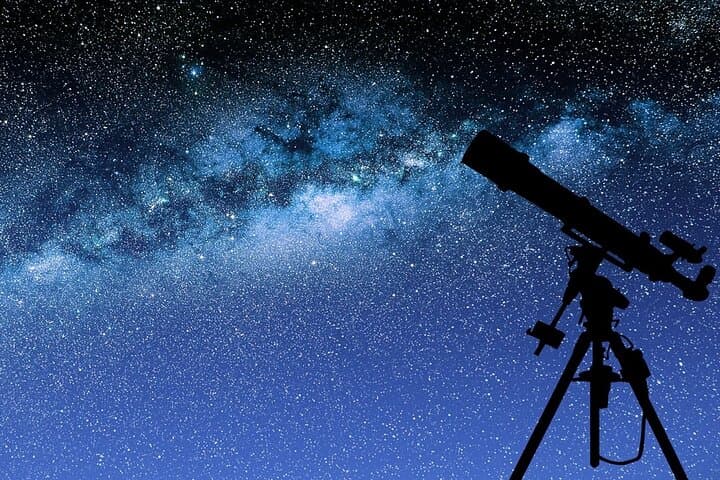
Professional, large-aperture telescopes are used—on clear nights you can see planets, star clusters and nebulae; seeing depends on atmospheric conditions.
Basic facilities are provided at the Bedouin-style camp; amenities are simple and suited to outdoor dining and stargazing.
Bedouin communities in the Eastern Desert have used stars for navigation and seasonal knowledge for centuries; the area also sits near ancient caravan routes to the Red Sea.
Tours should stick to established tracks and pack out waste—light pollution and off-road driving can disturb fragile desert soils and nocturnal wildlife.
E.T.O Travels operates guided outdoor trips and adventures with an emphasis on safety, stewardship, and memorable experiences.
Dusk slides across the Red Sea mountains and the desert exhales heat that cools into a clean, bone-dry night. Your jeep climbs a ridgeline, tires chewing gravel, and the sun drops behind a silhouette of low volcanic hills. At the camp, a campfire sparks; tea steams in small glasses while a powerful telescope tilts toward the widening sky.
Dusk slides across the Red Sea mountains and the desert exhales heat that cools into a clean, bone-dry night. Your jeep climbs a ridgeline, tires chewing gravel, and the sun drops behind a silhouette of low volcanic hills. At the camp, a campfire sparks; tea steams in small glasses while a powerful telescope tilts toward the widening sky.
The stretch of desert east of Hurghada sits on the northern rim of the Eastern Desert—rocky outcrops and wind-sculpted sand that Egyptians and Bedouin have traversed for millennia. Here, astronomy and navigational lore are practical trades: Bedouin guides have used star patterns to find wells and safe tracks for generations. Geologically the area is dominated by ancient crystalline rocks and uplifted strata, which create the low mountains where the tour pauses for sunset.
Culturally, the evening blends live drumming and simple hospitality—an open barbecue, candlelit seating, and a demonstration of camel handling that connects visitors to local rhythms. Then the telescopes come out; a guide points to Jupiter, Saturn, and clusters, translating constellations into stories and directions.
Practical guidance: dress in layers—desert nights chill quickly. Bring sun protection for the daytime transfer and closed shoes for walking around camp. Expect light physical activity: short camel walk, low-impact movement at camp, and quiet stretches while stargazing. Pickup from Hurghada hotels is typical; the full experience runs about four to six hours. Hydrate before arrival, keep cameras ready for sunset, and be prepared to trade city noise for the deliberate quiet of an open, star-dense sky.