THE ADVENTURE COLLECTIVE® · Independent discovery and booking for outdoor travel

Drive into the Red Sea desert for a 4x4 safari that ends with a camel ride, sunset climb, Bedouin-style barbecue and guided stargazing through professional telescopes. This family-friendly evening tour pairs cultural encounters with one of the clearest night skies on Earth.
Drive into the Red Sea desert for a 4x4 safari that ends with a camel ride, sunset climb, Bedouin-style barbecue and guided stargazing through professional telescopes. This family-friendly evening tour pairs cultural encounters with one of the clearest night skies on Earth.
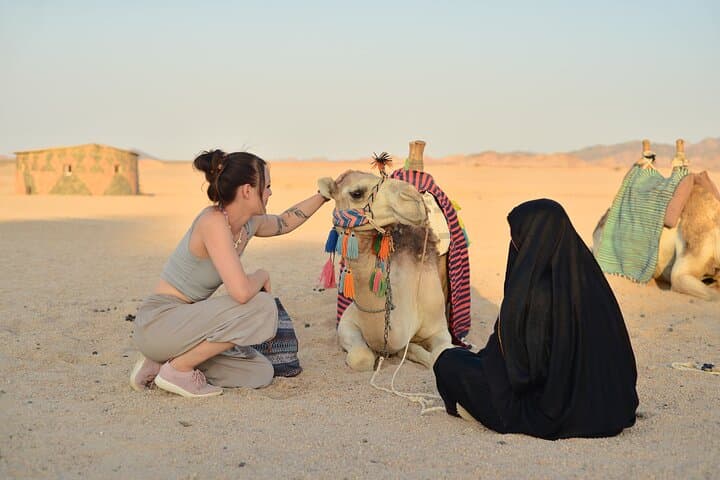
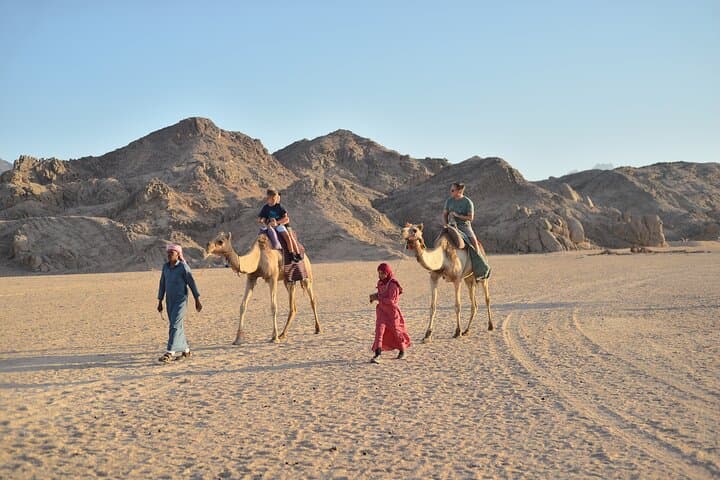
The sun leans toward the horizon and the Red Sea desert exhales heat that makes the sand shimmer like slow metal. You arrive by air-conditioned van, switch to a rumbling 4x4, and the grid of Hurghada falls away — only wind-scoured tracks, low ridges and a scattering of acacia bushes remain. A short camel ride and a quick climb to a little rise set the scene: the sun sinks, the temperature drops, and a barbecue starts to scent the air.
Verified experiences and guided adventures in the surrounding area.
Operated by Sharm Life Day Tours · Hurghada, Red Sea Governorate
The sun leans toward the horizon and the Red Sea desert exhales heat that makes the sand shimmer like slow metal. You arrive by air-conditioned van, switch to a rumbling 4x4, and the grid of Hurghada falls away — only wind-scoured tracks, low ridges and a scattering of acacia bushes remain. A short camel ride and a quick climb to a little rise set the scene: the sun sinks, the temperature drops, and a barbecue starts to scent the air.
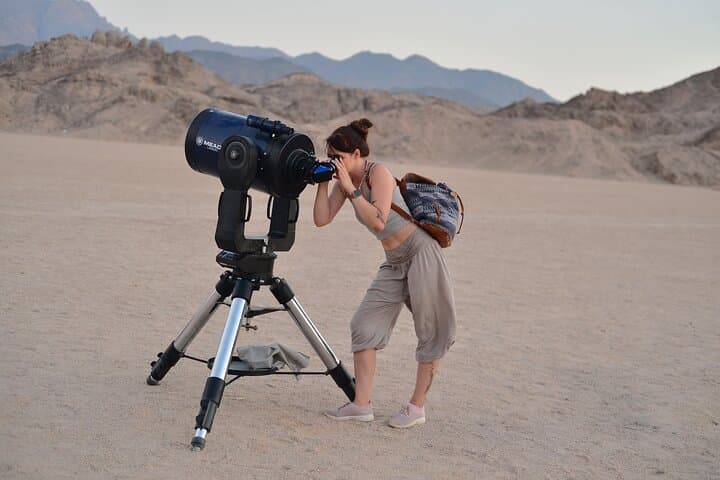
This strip of desert on Egypt’s Red Sea Governorate sits where coastal plain meets older crystalline rocks and sandy gravels — a place shaped by wind and infrequent, powerful rains. Bedouin communities have moved across these plains for centuries; the evening’s tea, bread-making demo and songs reflect a living culture shaped by scarcity and hospitality. By night, the thin atmosphere and lack of light turn the ceiling above into a catalog of constellations; professional telescopes make planets and star clusters unexpectedly immediate.
Practically speaking: expect a roughly 5–6 hour outing with hotel pickup and drop-off, short camel ride, a sunset viewpoint ascent that is brief but rocky underfoot, and an astronomy session using big telescopes. Bring sun protection, a warm layer for after sunset, closed-toe shoes for dunes and rocky slopes, and a camera with a low-light setting. The guides run the logistics — transfers, dinner buffet, and telescopes — but being prepared with water and sensible footwear makes the evening smoother. Timing your visit for clear, moonless nights improves stargazing; summer evenings are warm, winter nights crisp and better for long observations.
easy.
5–6 hours.
Suitable for most fitness levels; walking is minimal but there is a short uphill scramble to the sunset viewpoint.
The tour includes hotel transfers in Hurghada with a scheduled pickup window; confirm your pickup point and time when booking.
The camel ride is short and gentle, intended as a cultural experience rather than long-distance travel; most participants find it easy.
Yes — guides commonly point out bright planets (e.g., Saturn or Jupiter) and major star clusters when conditions and timing allow.
Basic facilities are available at the desert camp area where dinner and stargazing take place.
The region reflects millennia of Bedouin travel and seasonal grazing; coastal trade across the Red Sea influenced local culture and hospitality practices.
Tours operate in fragile desert environments—stick to vehicle tracks, avoid littering, and respect campfire rules to minimize impact.
Sharm Life Day Tours operates guided outdoor trips and adventures with an emphasis on safety, stewardship, and memorable experiences.

The sun leans toward the horizon and the Red Sea desert exhales heat that makes the sand shimmer like slow metal. You arrive by air-conditioned van, switch to a rumbling 4x4, and the grid of Hurghada falls away — only wind-scoured tracks, low ridges and a scattering of acacia bushes remain. A short camel ride and a quick climb to a little rise set the scene: the sun sinks, the temperature drops, and a barbecue starts to scent the air.
The sun leans toward the horizon and the Red Sea desert exhales heat that makes the sand shimmer like slow metal. You arrive by air-conditioned van, switch to a rumbling 4x4, and the grid of Hurghada falls away — only wind-scoured tracks, low ridges and a scattering of acacia bushes remain. A short camel ride and a quick climb to a little rise set the scene: the sun sinks, the temperature drops, and a barbecue starts to scent the air.
This strip of desert on Egypt’s Red Sea Governorate sits where coastal plain meets older crystalline rocks and sandy gravels — a place shaped by wind and infrequent, powerful rains. Bedouin communities have moved across these plains for centuries; the evening’s tea, bread-making demo and songs reflect a living culture shaped by scarcity and hospitality. By night, the thin atmosphere and lack of light turn the ceiling above into a catalog of constellations; professional telescopes make planets and star clusters unexpectedly immediate.
Practically speaking: expect a roughly 5–6 hour outing with hotel pickup and drop-off, short camel ride, a sunset viewpoint ascent that is brief but rocky underfoot, and an astronomy session using big telescopes. Bring sun protection, a warm layer for after sunset, closed-toe shoes for dunes and rocky slopes, and a camera with a low-light setting. The guides run the logistics — transfers, dinner buffet, and telescopes — but being prepared with water and sensible footwear makes the evening smoother. Timing your visit for clear, moonless nights improves stargazing; summer evenings are warm, winter nights crisp and better for long observations.