THE ADVENTURE COLLECTIVE® · Independent discovery and booking for outdoor travel

Race over Red Sea dunes, pause for black tea in a Bedouin village, and ride a camel on a compact 3-hour desert safari from Hurghada. This tour pairs hands-on quad driving with cultural contact—ideal for travelers seeking high-energy adventure with a short time commitment.
Race over Red Sea dunes, pause for black tea in a Bedouin village, and ride a camel on a compact 3-hour desert safari from Hurghada. This tour pairs hands-on quad driving with cultural contact—ideal for travelers seeking high-energy adventure with a short time commitment.
Sand throws up around the quad as you accelerate away from the paved road; wind scrapes at your face and the wide blue of the Red Sea sits like a distant promise. The dunes here are not static—they roll and shift with every gust, daring you to find the fastest line and the softest run. By mid-ride the Bedouin village appears: low stone structures, the scent of brewed black tea, and camels waiting with patient dignity.
Verified experiences and guided adventures in the surrounding area.
Operated by Get Your Trip · Hurghada, Red Sea Governorate
Sand throws up around the quad as you accelerate away from the paved road; wind scrapes at your face and the wide blue of the Red Sea sits like a distant promise. The dunes here are not static—they roll and shift with every gust, daring you to find the fastest line and the softest run. By mid-ride the Bedouin village appears: low stone structures, the scent of brewed black tea, and camels waiting with patient dignity.
This stretch of Egypt’s eastern desert formed where ancient sea beds hardened into limestone and sand, giving the landscape its characteristic ridged dunes and rocky flats. The Bedouin people who live in these villages have navigated this environment for generations; their tea rituals and camel handling are practical traditions shaped by scarcity of water and the need to move lightly across sands.
Expect a three-hour window that includes safety briefing, driving time across mixed sand and compact tracks, a short camel loop, and a tea stop. Terrain alternates between soft dunes that demand throttle control and firmer routes where you can pick up speed. Wear closed-toe shoes, protective eyewear, and a scarf to keep grit out of your face. Hydrate before you start and accept the instructor’s demo—quads handle differently on loose sand.
Practicalities: hotel pickup is common, helmets are provided, and most operators allow first-time riders under supervision. Aim for early morning or late afternoon departures to avoid peak heat and to see the dunes change color as the sun moves.
moderate.
3–4 hours.
Light to moderate fitness; able to mount a camel and handle short bursts of physical effort and balance on a quad.
No—most tours include a safety briefing and supervised practice; instructors will pair beginners with appropriate routes.
Yes, reputable operators supply helmets and often goggles; you should still bring your own sunglasses and a scarf for extra protection.
Many tour operators offer hotel transfers in Hurghada—confirm during booking and allow extra time for group pickup.
Yes; the camel loop is typically short (10–20 minutes) and designed as a cultural experience rather than a long trek.
Bedouin communities in the eastern desert have long used camels and water-conserving techniques to survive; the area’s dunes overlay ancient marine sediments.
Stay on designated tracks to limit dune erosion, take all rubbish with you, and avoid disturbing vegetation and archaeological features.
Get Your Trip operates guided outdoor trips and adventures with an emphasis on safety, stewardship, and memorable experiences.
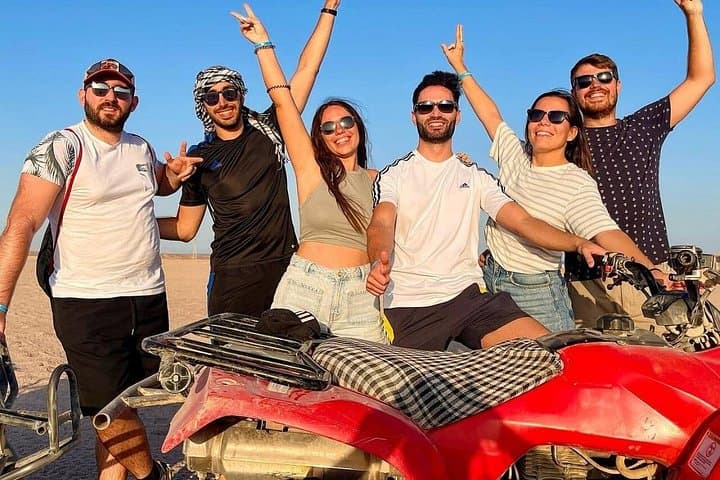
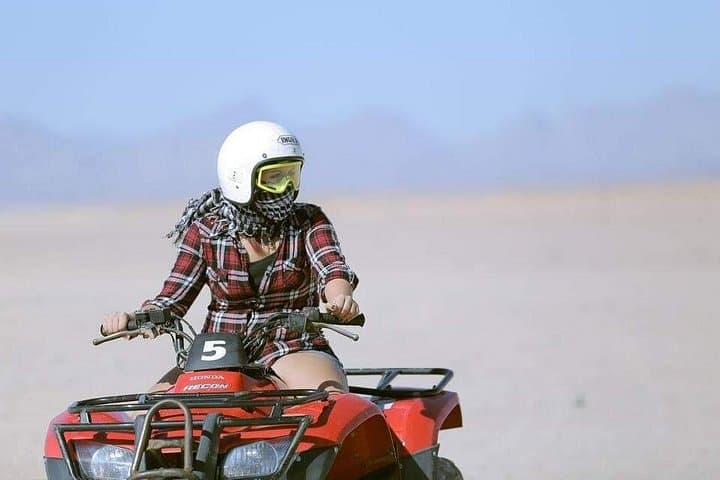
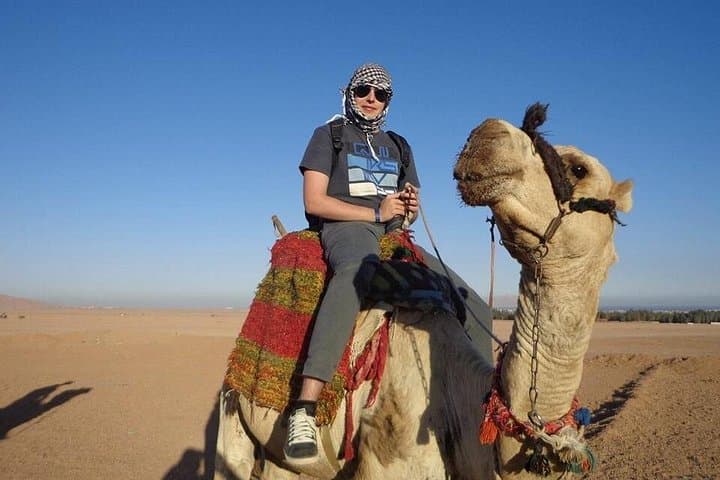
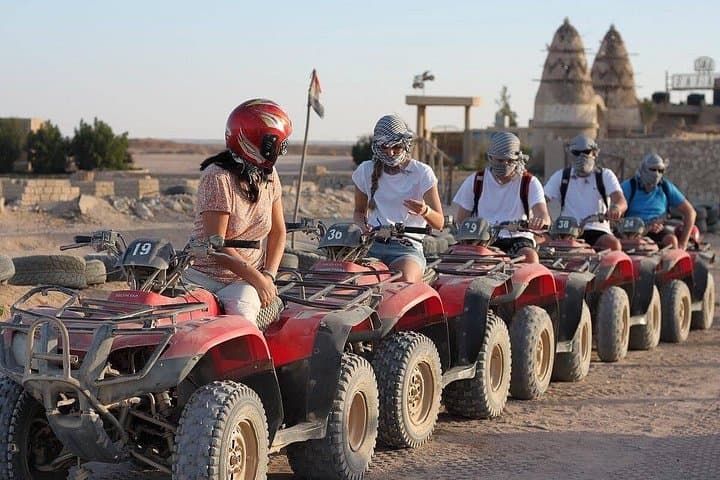
Sand throws up around the quad as you accelerate away from the paved road; wind scrapes at your face and the wide blue of the Red Sea sits like a distant promise. The dunes here are not static—they roll and shift with every gust, daring you to find the fastest line and the softest run. By mid-ride the Bedouin village appears: low stone structures, the scent of brewed black tea, and camels waiting with patient dignity.
Sand throws up around the quad as you accelerate away from the paved road; wind scrapes at your face and the wide blue of the Red Sea sits like a distant promise. The dunes here are not static—they roll and shift with every gust, daring you to find the fastest line and the softest run. By mid-ride the Bedouin village appears: low stone structures, the scent of brewed black tea, and camels waiting with patient dignity.
This stretch of Egypt’s eastern desert formed where ancient sea beds hardened into limestone and sand, giving the landscape its characteristic ridged dunes and rocky flats. The Bedouin people who live in these villages have navigated this environment for generations; their tea rituals and camel handling are practical traditions shaped by scarcity of water and the need to move lightly across sands.
Expect a three-hour window that includes safety briefing, driving time across mixed sand and compact tracks, a short camel loop, and a tea stop. Terrain alternates between soft dunes that demand throttle control and firmer routes where you can pick up speed. Wear closed-toe shoes, protective eyewear, and a scarf to keep grit out of your face. Hydrate before you start and accept the instructor’s demo—quads handle differently on loose sand.
Practicalities: hotel pickup is common, helmets are provided, and most operators allow first-time riders under supervision. Aim for early morning or late afternoon departures to avoid peak heat and to see the dunes change color as the sun moves.