THE ADVENTURE COLLECTIVE® · Independent discovery and booking for outdoor travel

Race across open dunes on a quad, then trade speed for the steady sway of a camel and a cup of Bedouin tea. This three‑hour Hurghada experience pairs high-adrenaline riding with a compact cultural visit to a desert village.
Race across open dunes on a quad, then trade speed for the steady sway of a camel and a cup of Bedouin tea. This three‑hour Hurghada experience pairs high-adrenaline riding with a compact cultural visit to a desert village.
A low sun throws long shadows across orange dunes as you snap into the quad’s throttle and the desert answers with soft, rolling resistance. The sand gives and pushes back; the quad hums and the horizon unrolls toward a small cluster of stone-and-tent homes where smoke and tea steam rise. After an hour of dune runs you slow to a measured pace, trading the roar of engines for the patient sway of a camel as you cross a final ridge into a Bedouin settlement.
Verified experiences and guided adventures in the surrounding area.
Operated by Aria tours · Hurghada, Red Sea Governorate
A low sun throws long shadows across orange dunes as you snap into the quad’s throttle and the desert answers with soft, rolling resistance. The sand gives and pushes back; the quad hums and the horizon unrolls toward a small cluster of stone-and-tent homes where smoke and tea steam rise. After an hour of dune runs you slow to a measured pace, trading the roar of engines for the patient sway of a camel as you cross a final ridge into a Bedouin settlement.
The Red Sea coastal desert around Hurghada is geologically young sand sheets and wind-sculpted dunes over a rocky base; ancient caravan routes once threaded these valleys. Bedouin communities here maintain oral traditions and tea rituals that have been practical culture for centuries, offering a direct glimpse of local life shaped by scarce water and shifting sand.
Expect rolling sand, loose starts, occasional gravel patches, and wide-open visibility with few landmarks. The trip’s rhythm alternates adrenaline and slow cultural immersion — quad time for maneuvering dunes, camel time for taking in the light and learning Bedouin tea etiquette.
Practical guidance: wear closed-toe shoes with good tread, secure eyewear and a scarf for dust. Bring at least 1–1.5 liters of water, sunscreen, and a light long sleeve to block windblown grit. Operators typically provide helmets and a short safety briefing; riders should practice throttle control on flat sand before tackling steeper faces. Aim for early morning or late afternoon to avoid peak heat and get cleaner light for photos. Respect private camps: ask before photographing people and leave no trace on fragile desert crust.
moderate.
3 hours.
Suitable for people in average fitness—ability to mount/dismount a quad and camel is required; expect short walking on sand.
No—operators provide a safety briefing and time to practice; however, confidence with a throttle and balance helps on soft sand.
Policies vary; many operators limit quad riders by age and require young children to sit with an adult—check the tour’s age rules before booking.
Most tours offer optional hotel pick-up and drop-off in Hurghada—confirm pickup details and meeting times when you book.
Comfortable, modest clothing that covers shoulders and knees is respectful; avoid skirts or slippery fabrics and remove loose items that could fall during mounting.
Bedouin tribes have traversed and lived in Egypt’s Eastern Desert for generations; their tea rituals and tented hospitality grew from a nomadic life adapted to scarce water and harsh sun.
Soft desert soils and biological soil crusts are fragile—stick to established tracks, avoid driving over vegetation, and pack out all waste to protect this ecosystem.
Aria tours operates guided outdoor trips and adventures with an emphasis on safety, stewardship, and memorable experiences.
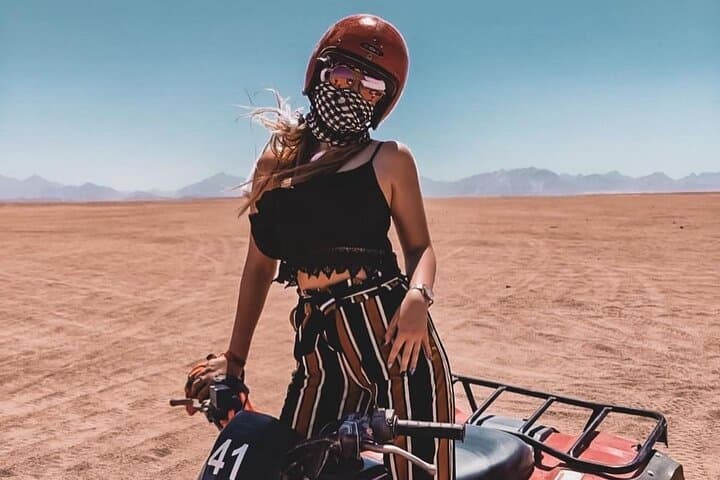
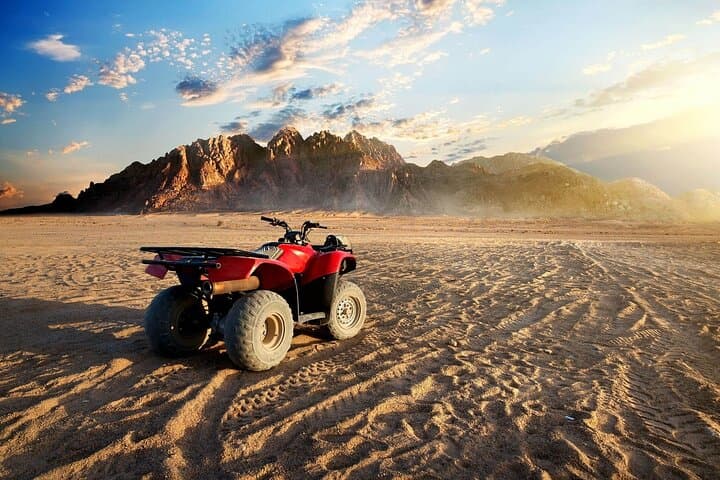
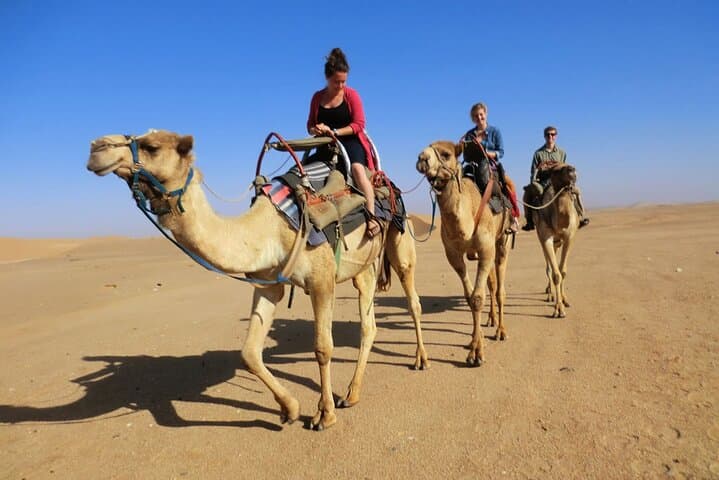
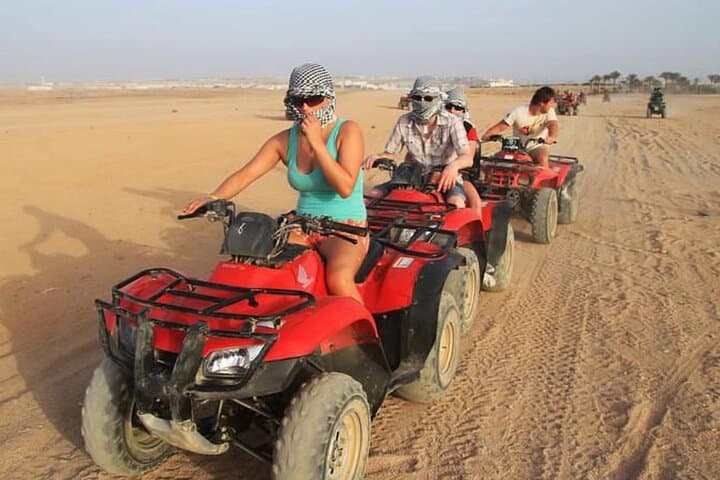
A low sun throws long shadows across orange dunes as you snap into the quad’s throttle and the desert answers with soft, rolling resistance. The sand gives and pushes back; the quad hums and the horizon unrolls toward a small cluster of stone-and-tent homes where smoke and tea steam rise. After an hour of dune runs you slow to a measured pace, trading the roar of engines for the patient sway of a camel as you cross a final ridge into a Bedouin settlement.
A low sun throws long shadows across orange dunes as you snap into the quad’s throttle and the desert answers with soft, rolling resistance. The sand gives and pushes back; the quad hums and the horizon unrolls toward a small cluster of stone-and-tent homes where smoke and tea steam rise. After an hour of dune runs you slow to a measured pace, trading the roar of engines for the patient sway of a camel as you cross a final ridge into a Bedouin settlement.
The Red Sea coastal desert around Hurghada is geologically young sand sheets and wind-sculpted dunes over a rocky base; ancient caravan routes once threaded these valleys. Bedouin communities here maintain oral traditions and tea rituals that have been practical culture for centuries, offering a direct glimpse of local life shaped by scarce water and shifting sand.
Expect rolling sand, loose starts, occasional gravel patches, and wide-open visibility with few landmarks. The trip’s rhythm alternates adrenaline and slow cultural immersion — quad time for maneuvering dunes, camel time for taking in the light and learning Bedouin tea etiquette.
Practical guidance: wear closed-toe shoes with good tread, secure eyewear and a scarf for dust. Bring at least 1–1.5 liters of water, sunscreen, and a light long sleeve to block windblown grit. Operators typically provide helmets and a short safety briefing; riders should practice throttle control on flat sand before tackling steeper faces. Aim for early morning or late afternoon to avoid peak heat and get cleaner light for photos. Respect private camps: ask before photographing people and leave no trace on fragile desert crust.