THE ADVENTURE COLLECTIVE® · Independent discovery and booking for outdoor travel

Ride across ochre dunes, share a Bedouin meal by candlelight and peer through a telescope at the Red Sea desert's vast night sky. This half-day Jeep safari blends adrenaline, culture and astronomy just outside Hurghada.
Ride across ochre dunes, share a Bedouin meal by candlelight and peer through a telescope at the Red Sea desert's vast night sky. This half-day Jeep safari blends adrenaline, culture and astronomy just outside Hurghada.
A low sun slices the horizon as a convoy of 4x4s climbs a ridge of ochre sand. Wind-sculpted dunes fall away to a wide plain; the jeep bumps and leans, the engine humming beneath a vault that will soon fill with stars. At the Bedouin camp, lantern light throws long shadows across woven mats while a guide prepares tea and points out constellations with a telescope.
Verified experiences and guided adventures in the surrounding area.
Operated by Adam's Tours · Hurghada, Red Sea Governorate
A low sun slices the horizon as a convoy of 4x4s climbs a ridge of ochre sand. Wind-sculpted dunes fall away to a wide plain; the jeep bumps and leans, the engine humming beneath a vault that will soon fill with stars. At the Bedouin camp, lantern light throws long shadows across woven mats while a guide prepares tea and points out constellations with a telescope.
This excursion sits at the intersection of natural history and human story: the Red Sea coastal desert is shaped by ancient marine sediments and wind—rock and sand that record a time when seawater stood higher. Bedouin families have moved these dunes for generations; their hospitality, food and camel traditions are living links to caravan routes that crossed Sinai and the Gulf centuries ago. Modern Egyptian astronomy also builds on a long regional legacy of sky lore and observation.
Practical side first: the tour runs roughly five hours, largely vehicle-based with short walks and a camel ride—good for most fitness levels. Nights in the desert cool quickly; bring a warm layer and closed-toe shoes for loose sand. Hydrate before departure and carry a small bottle — guides supply water but supplies can be limited. For stargazing, arrive after local lights dim; a small red-headlamp preserves night vision. Respect camp rules: stay on established paths, avoid flash photography during telescope sessions, and leave no trace of your dinner. Expect clear skies most nights, but operators may cancel in poor weather. This trip balances adrenaline on the dunes with slow, quiet hours under a wide African sky—ideal for travelers who want both motion and stillness in one evening.
easy.
4–5 hours.
Suitable for most people with basic mobility; includes short camel ride and walking on sand
Expect roughly 20–40 minutes of driving to reach dunes and the Bedouin camp depending on hotel location and route; total tour time is about five hours.
Yes — many operators welcome families; camel rides and jeep seats are adjusted for safety, but confirm age limits and child seats when booking.
Yes — professional guides typically provide a telescope and point out planets and deep-sky objects; telescopes are shared, so arrive early in the observing session.
Yes — tours may be canceled for high winds or safety reasons; operators usually offer full refunds or rescheduling if conditions are poor.
The coastal deserts around Hurghada were part of historic caravan corridors and retain Bedouin cultural practices; local astronomy knowledge ties into a long regional tradition of sky study.
The desert environment is fragile—stay on vehicle tracks, avoid disturbing wildlife, take all trash back to town, and limit single-use plastics.
Adam's Tours operates guided outdoor trips and adventures with an emphasis on safety, stewardship, and memorable experiences.
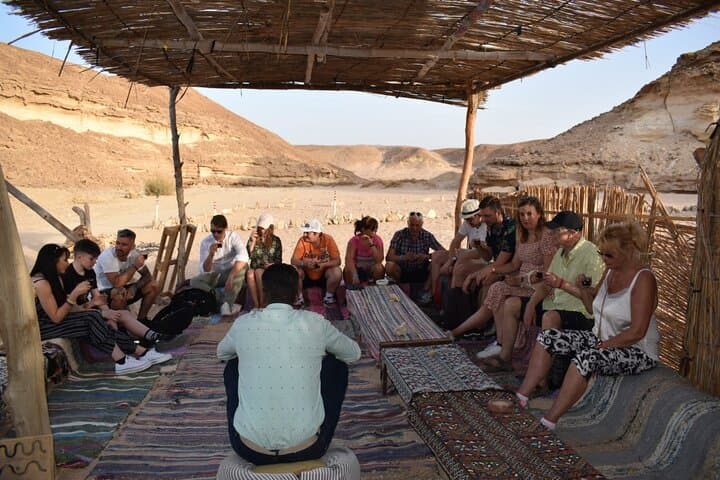
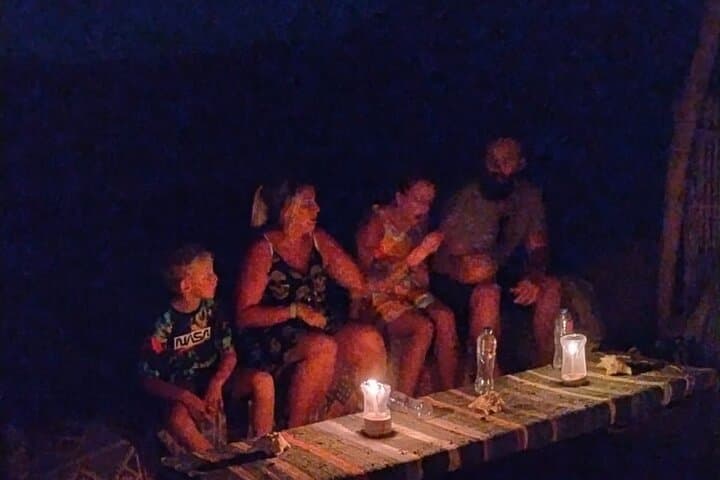
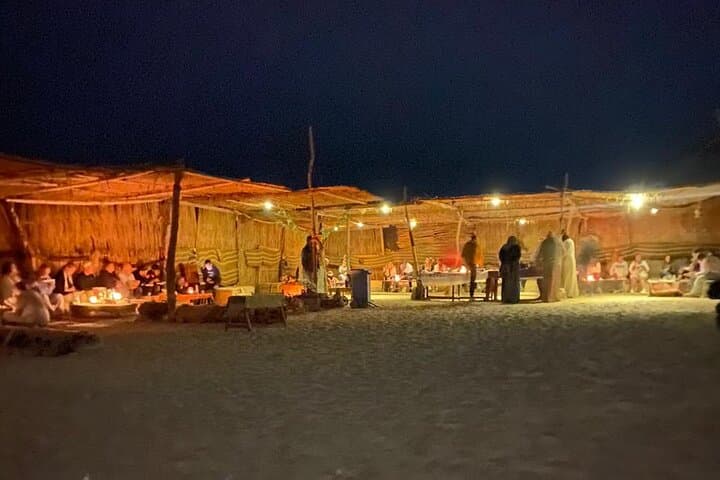
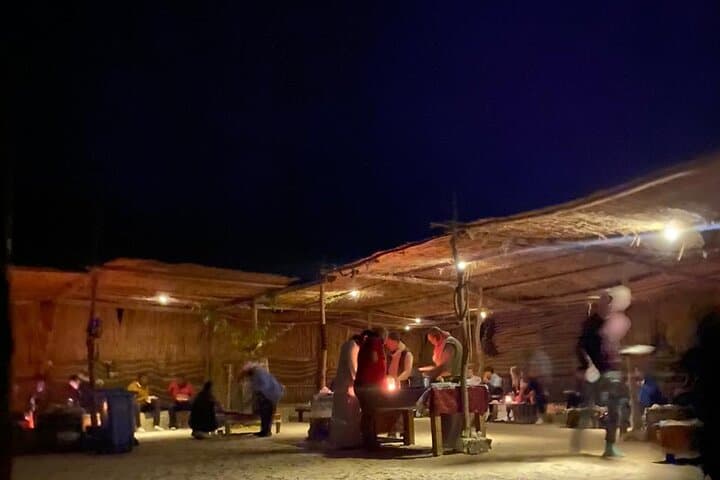
A low sun slices the horizon as a convoy of 4x4s climbs a ridge of ochre sand. Wind-sculpted dunes fall away to a wide plain; the jeep bumps and leans, the engine humming beneath a vault that will soon fill with stars. At the Bedouin camp, lantern light throws long shadows across woven mats while a guide prepares tea and points out constellations with a telescope.
A low sun slices the horizon as a convoy of 4x4s climbs a ridge of ochre sand. Wind-sculpted dunes fall away to a wide plain; the jeep bumps and leans, the engine humming beneath a vault that will soon fill with stars. At the Bedouin camp, lantern light throws long shadows across woven mats while a guide prepares tea and points out constellations with a telescope.
This excursion sits at the intersection of natural history and human story: the Red Sea coastal desert is shaped by ancient marine sediments and wind—rock and sand that record a time when seawater stood higher. Bedouin families have moved these dunes for generations; their hospitality, food and camel traditions are living links to caravan routes that crossed Sinai and the Gulf centuries ago. Modern Egyptian astronomy also builds on a long regional legacy of sky lore and observation.
Practical side first: the tour runs roughly five hours, largely vehicle-based with short walks and a camel ride—good for most fitness levels. Nights in the desert cool quickly; bring a warm layer and closed-toe shoes for loose sand. Hydrate before departure and carry a small bottle — guides supply water but supplies can be limited. For stargazing, arrive after local lights dim; a small red-headlamp preserves night vision. Respect camp rules: stay on established paths, avoid flash photography during telescope sessions, and leave no trace of your dinner. Expect clear skies most nights, but operators may cancel in poor weather. This trip balances adrenaline on the dunes with slow, quiet hours under a wide African sky—ideal for travelers who want both motion and stillness in one evening.