THE ADVENTURE COLLECTIVE® · Independent discovery and booking for outdoor travel

A rugged multi-day trek through Hunza Valley that links Karimabad, Passu Glacier and high yak pastures. Expect glacier crossings, extended camp nights and close encounters with mountain culture and dramatic geology.
A rugged multi-day trek through Hunza Valley that links Karimabad, Passu Glacier and high yak pastures. Expect glacier crossings, extended camp nights and close encounters with mountain culture and dramatic geology.
You step out where the Karakoram narrows and the river dares you to keep pace: a slate-colored torrent threads the valley, peaks pry the sky open, and the village roofs sit like watchful faces above terraced fields.
Verified experiences and guided adventures in the surrounding area.
Operated by North Pakistan Adventure · Karimabad, Gilgit-Baltistan
You step out where the Karakoram narrows and the river dares you to keep pace: a slate-colored torrent threads the valley, peaks pry the sky open, and the village roofs sit like watchful faces above terraced fields.
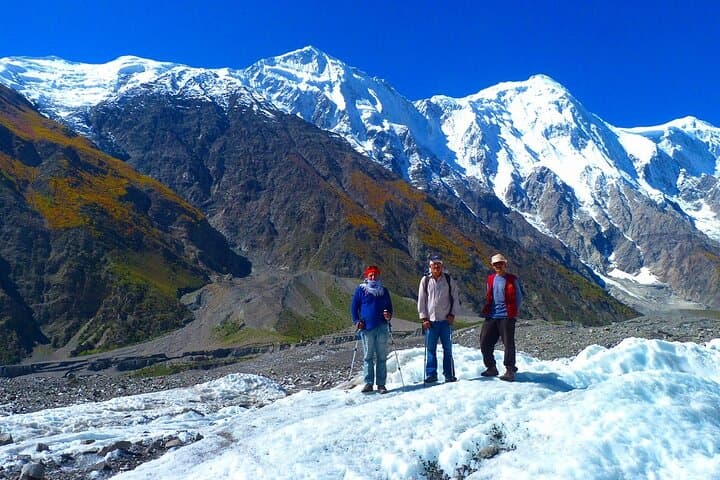
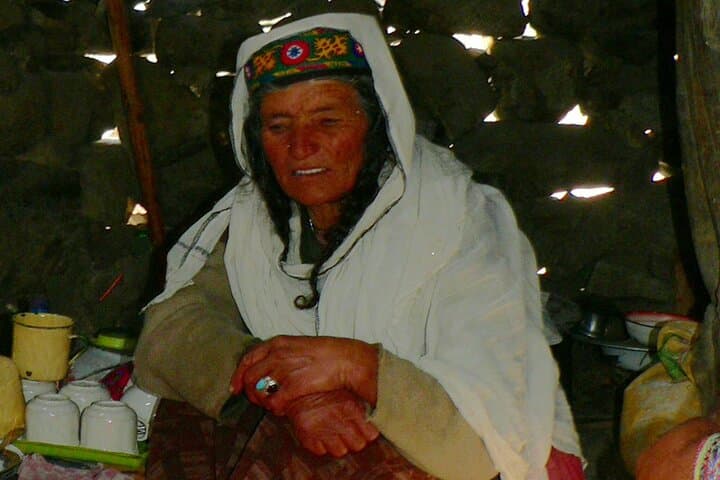
This multi-day trek threads Hunza’s high pastures and the Passu Glacier, passing places shaped by rock and history. The Hunza sits where the Himalaya, Karakoram and Hindu Kush collide — an arena of uplift and fracture that carved sharp ridgelines, moraines and glacier tongues. Cultural traces run across the route: Wakhi and Burusho hamlets, ancient rock carvings, the ruby workings near Passu and the more recent scar of the Attabad landslide-turned-lake.
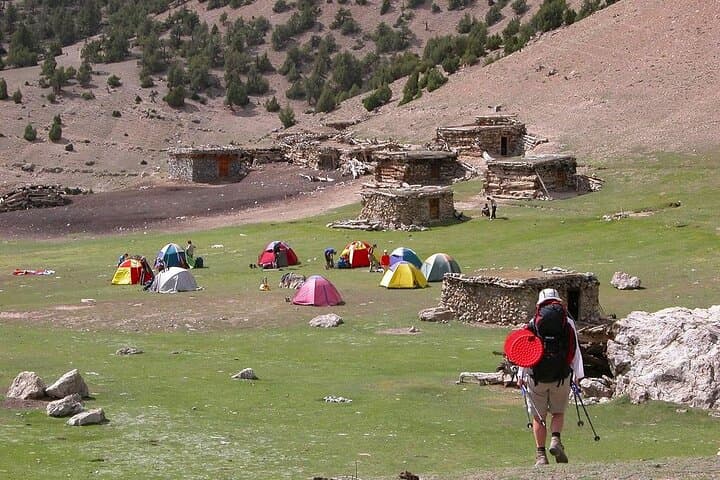
Expect long walking days between 2,400–3,400 m: routes climb moraines, cross glacial forefields and alpine meadows grazed by yak. Your nights are in two-person tents at campsites or basic guesthouses in Karimabad, Passu and Gilgit. Guides, cooks and porters handle camp logistics; solar power and shared mess tents are typical.
Practically: acclimatize in Karimabad or Gilgit, carry layered clothing for cold nights and strong sun, and plan for variable footing — loose scree, glacial silt and shepherd tracks. Hydrate early, use trekking poles for descents, and budget time for weather delays or domestic flights to Skardu. Respect local customs: conservative dress and asking before photographing people. Leave no trace — these glaciers and pastures are fragile and changing rapidly.
challenging.
10–12 days.
Good cardiovascular fitness and previous multi-day hiking experience; ability to carry or manage a 10–15 kg pack for several hours daily at altitude.
Challenging — expect 5–8 hour walking days at altitude with sustained climbs to 3,400 m; prior multi-day trekking experience is recommended.
Basic glacier crossings are included; guides supply route knowledge and porter support, but if conditions warrant rigid glacier travel (ropes, crampons) the operator will advise and provide guidance.
Summer (June–September) offers the most stable conditions for high passes; shoulder seasons can be colder and less predictable.
Combination of 2–3 star hotels in towns and two-person tents with camp mattresses and shared mess tents in high camps; solar power is available at base camp.
Hunza has long been a crossroads of mountain trade and local kingdoms; rock carvings and old trade routes reflect centuries of movement across these ranges.
Glacial retreat and changing water patterns are visible; follow leave-no-trace practices and support local guides to minimize impact.
North Pakistan Adventure operates guided outdoor trips and adventures with an emphasis on safety, stewardship, and memorable experiences.
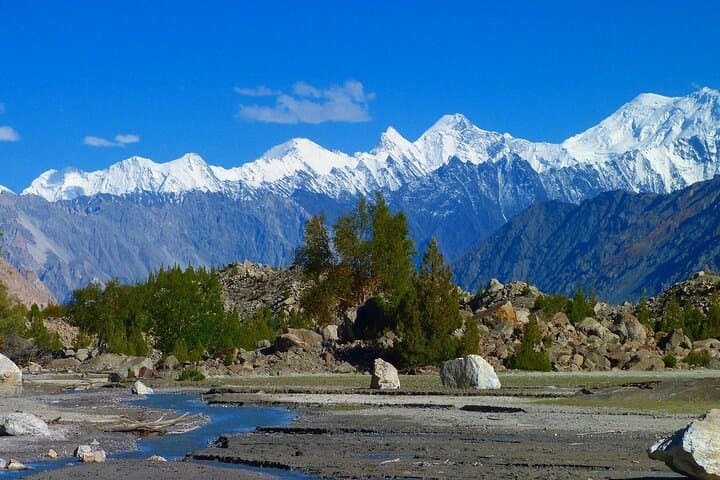
You step out where the Karakoram narrows and the river dares you to keep pace: a slate-colored torrent threads the valley, peaks pry the sky open, and the village roofs sit like watchful faces above terraced fields.
You step out where the Karakoram narrows and the river dares you to keep pace: a slate-colored torrent threads the valley, peaks pry the sky open, and the village roofs sit like watchful faces above terraced fields.
This multi-day trek threads Hunza’s high pastures and the Passu Glacier, passing places shaped by rock and history. The Hunza sits where the Himalaya, Karakoram and Hindu Kush collide — an arena of uplift and fracture that carved sharp ridgelines, moraines and glacier tongues. Cultural traces run across the route: Wakhi and Burusho hamlets, ancient rock carvings, the ruby workings near Passu and the more recent scar of the Attabad landslide-turned-lake.
Expect long walking days between 2,400–3,400 m: routes climb moraines, cross glacial forefields and alpine meadows grazed by yak. Your nights are in two-person tents at campsites or basic guesthouses in Karimabad, Passu and Gilgit. Guides, cooks and porters handle camp logistics; solar power and shared mess tents are typical.
Practically: acclimatize in Karimabad or Gilgit, carry layered clothing for cold nights and strong sun, and plan for variable footing — loose scree, glacial silt and shepherd tracks. Hydrate early, use trekking poles for descents, and budget time for weather delays or domestic flights to Skardu. Respect local customs: conservative dress and asking before photographing people. Leave no trace — these glaciers and pastures are fragile and changing rapidly.