THE ADVENTURE COLLECTIVE® · Independent discovery and booking for outdoor travel

Explore the ghostly remains of Humberstone’s saltpeter works and the unexpected greenery of Pica Oasis on a full-day guided tour from Iquique. This route pairs industrial history with desert ecology—ideal for history-minded travelers who can manage several short, uneven walks.
Explore the ghostly remains of Humberstone’s saltpeter works and the unexpected greenery of Pica Oasis on a full-day guided tour from Iquique. This route pairs industrial history with desert ecology—ideal for history-minded travelers who can manage several short, uneven walks.
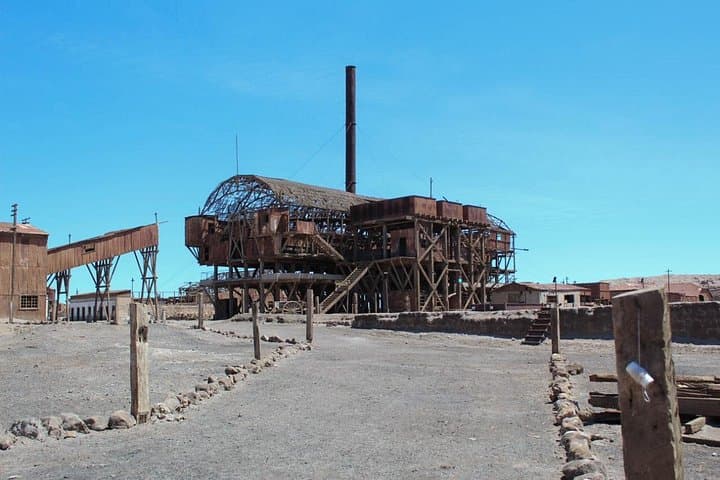
A pale sun lifts over the Atacama as a small convoy moves inland from the Pacific edge—by mid-morning the salt-scarred flats open and the ruined silhouettes of Humberstone appear, wooden beams and rusted machines outlined against an immense sky. The town's empty streets creak in the wind; towers once full of smoke and labor now stand quiet, daring visitors to read the graffiti of industry left behind.
Verified experiences and guided adventures in the surrounding area.
Operated by Altos del Norte Travel · Iquique, Tarapacá
A pale sun lifts over the Atacama as a small convoy moves inland from the Pacific edge—by mid-morning the salt-scarred flats open and the ruined silhouettes of Humberstone appear, wooden beams and rusted machines outlined against an immense sky. The town's empty streets creak in the wind; towers once full of smoke and labor now stand quiet, daring visitors to read the graffiti of industry left behind.
Humberstone and nearby Santa Laura were engines of Chile’s nitrate boom from the late 19th century through the 1930s, when saltpeter (nitrate) made fortunes and shaped regional migration. Geologically the sites sit on arid alluvial plains at the eastern rim of the coastal cordillera; the soils are mineral-rich, and nearby Pica’s groundwater supports a rare oasis where dates and citrus thrive. Cultural traces remain in workers’ houses, company offices, and in Pica’s market culture—local citrus and thermal baths reflect an oasis livelihood very different from the saltpeter ghost towns.
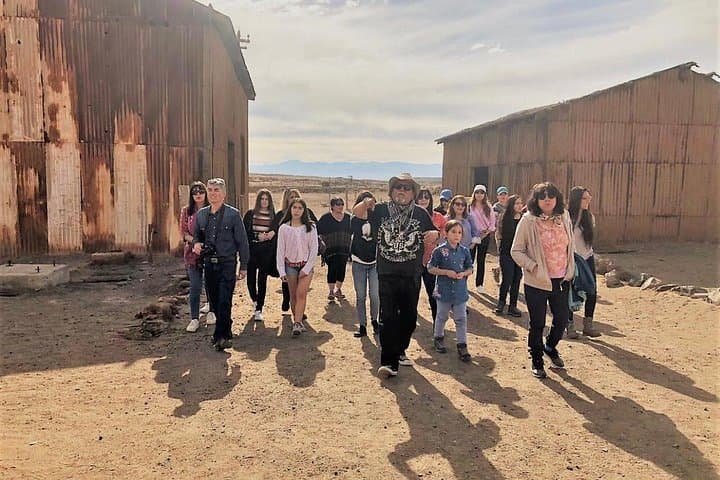
Practical guidance: this is a full-day, guided vehicle tour (≈11 hours) with short on-foot explorations totaling roughly 1–3 km over uneven, dusty ground and wooden boardwalks with minimal elevation gain (usually under 100 m cumulatively). Expect strong sun, variable winds, and loose gravel underfoot. Bring 2–3 liters of water, sun protection, closed-toe shoes, and a light layer for afternoon chills. Photography is rewarding; respect fenced-off structures and follow the guide’s route. The tour pairs industrial history with the surprising green pockets of Pica—an efficient, sensory day in the high desert.
moderate.
11–11.5 hours.
Suitable for travelers with moderate fitness who can handle several short walks (1–3 km) over uneven terrain and standing during explanations
The tour is roughly 11 hours; pickup is typically between 08:00 and 09:00 with return around 19:30–20:00.
Short walks are required; infants may ride in strollers during vehicle time but some site walking involves uneven ground—check accessibility with the operator.
Lunch is included and typically served at a local venue in or near Pica—notify guides of dietary restrictions ahead of time.
Many structures are fragile and fenced; visitors should follow the guide and avoid entering restricted buildings for safety and preservation.
Humberstone grew rapidly during Chile’s nitrate boom in the late 1800s and was later abandoned after synthetic nitrates reduced demand; it’s now a protected historic site.
The desert’s archaeological sites are fragile—stay on paths, avoid touching artifacts, and support local guides who help protect and interpret the landscape.
Altos del Norte Travel operates guided outdoor trips and adventures with an emphasis on safety, stewardship, and memorable experiences.
A pale sun lifts over the Atacama as a small convoy moves inland from the Pacific edge—by mid-morning the salt-scarred flats open and the ruined silhouettes of Humberstone appear, wooden beams and rusted machines outlined against an immense sky. The town's empty streets creak in the wind; towers once full of smoke and labor now stand quiet, daring visitors to read the graffiti of industry left behind.
A pale sun lifts over the Atacama as a small convoy moves inland from the Pacific edge—by mid-morning the salt-scarred flats open and the ruined silhouettes of Humberstone appear, wooden beams and rusted machines outlined against an immense sky. The town's empty streets creak in the wind; towers once full of smoke and labor now stand quiet, daring visitors to read the graffiti of industry left behind.
Humberstone and nearby Santa Laura were engines of Chile’s nitrate boom from the late 19th century through the 1930s, when saltpeter (nitrate) made fortunes and shaped regional migration. Geologically the sites sit on arid alluvial plains at the eastern rim of the coastal cordillera; the soils are mineral-rich, and nearby Pica’s groundwater supports a rare oasis where dates and citrus thrive. Cultural traces remain in workers’ houses, company offices, and in Pica’s market culture—local citrus and thermal baths reflect an oasis livelihood very different from the saltpeter ghost towns.
Practical guidance: this is a full-day, guided vehicle tour (≈11 hours) with short on-foot explorations totaling roughly 1–3 km over uneven, dusty ground and wooden boardwalks with minimal elevation gain (usually under 100 m cumulatively). Expect strong sun, variable winds, and loose gravel underfoot. Bring 2–3 liters of water, sun protection, closed-toe shoes, and a light layer for afternoon chills. Photography is rewarding; respect fenced-off structures and follow the guide’s route. The tour pairs industrial history with the surprising green pockets of Pica—an efficient, sensory day in the high desert.