THE ADVENTURE COLLECTIVE® · Independent discovery and booking for outdoor travel

A brisk, high-altitude day hike from Cusco that rewards steady breathing and firm boots with a striking turquoise lagoon below snowy peaks. Expect a steep 1–2 hour climb, glacier-fed water, and a full-day return to the city.
A brisk, high-altitude day hike from Cusco that rewards steady breathing and firm boots with a striking turquoise lagoon below snowy peaks. Expect a steep 1–2 hour climb, glacier-fed water, and a full-day return to the city.
Before sunrise the road uncoils from Cusco and the Andes open like a switchbacked map—dusty villages, terraced hills, and finally the thin-air plain at Soraypampa (3,850 m). From that high meadow a sharp band of rock and moraine gives way to an unexpected bowl of turquoise: Humantay Lagoon, fed by glacier melt from the Salkantay massif. The water looks foreign at this altitude, a vivid bank of color daring you closer.
Verified experiences and guided adventures in the surrounding area.
Operated by camino peru · Soraypampa, Cusco Region
Before sunrise the road uncoils from Cusco and the Andes open like a switchbacked map—dusty villages, terraced hills, and finally the thin-air plain at Soraypampa (3,850 m). From that high meadow a sharp band of rock and moraine gives way to an unexpected bowl of turquoise: Humantay Lagoon, fed by glacier melt from the Salkantay massif. The water looks foreign at this altitude, a vivid bank of color daring you closer.
Geology here is recent and active—glacial scouring carved the basin and seasonal snowmelt keeps the lake buoyant with suspended minerals. Salkantay is a sacred peak in Quechua cosmology, and the route threads past seasonal grazing plots and stone shelters used by local shepherds. Guides often point out Inca-era paths and the way the high plains were managed for centuries.
Practically, expect a steep 2–3 km climb from Soraypampa to the viewpoint, roughly 400–500 m of elevation gain; terrain alternates between packed dirt, scree and short rock steps. The round trip hike plus transport is commonly a 6-hour outing with breakfast and buffet lunch included. Altitude, not distance, is the chief challenge—move slowly, sip water, and test your breath on the first slopes. Footwear should be sturdy with grip; layers are non-negotiable: sun at midday, cold and wind at the lake.
Timing matters: morning departures beat crowds and unstable afternoon weather. Respect local shepherding activity, stay on trail to limit erosion, and carry out any trash. For a single-day Andean immersion, Humantay delivers sharp views, a compact high-altitude workout, and a close encounter with glacier-fed water in a landscape that still feels raw and immediate.
moderate.
6 hours.
Moderate cardiovascular fitness; ability to hike uphill at high altitude for 1–2 hours is recommended. Acclimatization is important.
The ascent is roughly 2–3 km one way with about 400–500 m of elevation gain; most people take 1–2 hours uphill depending on pace and acclimatization.
Yes—Soraypampa sits around 3,850 m and the route climbs higher; spending 24–48 hours in Cusco before the hike is strongly recommended.
Basic facilities and a breakfast stop are provided at lower elevations; the tour typically includes a buffet lunch after the hike back at Soraypampa or nearby.
The route is steep and at high altitude; it’s not ideal for very young children or those with significant mobility or cardiovascular limitations.
The lake sits in a glacial basin beneath Salkantay, a peak long revered in Quechua tradition; nearby routes follow pre-Columbian and Inca-era corridors used for trade and pastoralism.
Fragile alpine soils are vulnerable to erosion—stick to established paths, avoid trampling high-altitude vegetation, and pack out all waste.
camino peru operates guided outdoor trips and adventures with an emphasis on safety, stewardship, and memorable experiences.


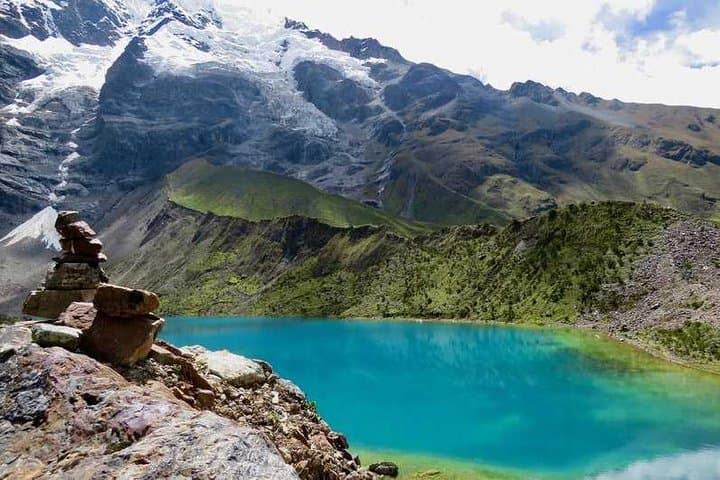
Before sunrise the road uncoils from Cusco and the Andes open like a switchbacked map—dusty villages, terraced hills, and finally the thin-air plain at Soraypampa (3,850 m). From that high meadow a sharp band of rock and moraine gives way to an unexpected bowl of turquoise: Humantay Lagoon, fed by glacier melt from the Salkantay massif. The water looks foreign at this altitude, a vivid bank of color daring you closer.
Before sunrise the road uncoils from Cusco and the Andes open like a switchbacked map—dusty villages, terraced hills, and finally the thin-air plain at Soraypampa (3,850 m). From that high meadow a sharp band of rock and moraine gives way to an unexpected bowl of turquoise: Humantay Lagoon, fed by glacier melt from the Salkantay massif. The water looks foreign at this altitude, a vivid bank of color daring you closer.
Geology here is recent and active—glacial scouring carved the basin and seasonal snowmelt keeps the lake buoyant with suspended minerals. Salkantay is a sacred peak in Quechua cosmology, and the route threads past seasonal grazing plots and stone shelters used by local shepherds. Guides often point out Inca-era paths and the way the high plains were managed for centuries.
Practically, expect a steep 2–3 km climb from Soraypampa to the viewpoint, roughly 400–500 m of elevation gain; terrain alternates between packed dirt, scree and short rock steps. The round trip hike plus transport is commonly a 6-hour outing with breakfast and buffet lunch included. Altitude, not distance, is the chief challenge—move slowly, sip water, and test your breath on the first slopes. Footwear should be sturdy with grip; layers are non-negotiable: sun at midday, cold and wind at the lake.
Timing matters: morning departures beat crowds and unstable afternoon weather. Respect local shepherding activity, stay on trail to limit erosion, and carry out any trash. For a single-day Andean immersion, Humantay delivers sharp views, a compact high-altitude workout, and a close encounter with glacier-fed water in a landscape that still feels raw and immediate.