THE ADVENTURE COLLECTIVE® · Independent discovery and booking for outdoor travel

A high-altitude day hike from Cusco to Humantay Lagoon rewards travelers with an intense turquoise lake framed by Salkantay’s snowfields. This guide covers history, what to expect on the trail, and practical tips for a successful full-day excursion.
A high-altitude day hike from Cusco to Humantay Lagoon rewards travelers with an intense turquoise lake framed by Salkantay’s snowfields. This guide covers history, what to expect on the trail, and practical tips for a successful full-day excursion.
Before sunrise the road out of Cusco narrows into high Andean valley, and the mountains start to show their teeth — ice-scored ridges and open sky. By the time the minibus reaches Soraypampa, the air is thin and cold; the lagoon’s turquoise face waits above, a sudden wound of color against gray moraine.
Verified experiences and guided adventures in the surrounding area.
Operated by GO PERU ADVENTURE · Soraypampa / Cusco, Cusco Region
Before sunrise the road out of Cusco narrows into high Andean valley, and the mountains start to show their teeth — ice-scored ridges and open sky. By the time the minibus reaches Soraypampa, the air is thin and cold; the lagoon’s turquoise face waits above, a sudden wound of color against gray moraine.
Humantay formed as part of the Salkantay massif’s glacial system; meltwater collects in a bowl carved by ice and mineral-rich runoff gives the lake its intense blue. Local Quechua communities regard the surrounding peaks as apus, or mountain spirits, and guides often point out seasonal grazing patterns and historic caravan routes that linked valleys to Cusco.
The hike itself is straightforward but high: most groups climb from Soraypampa up a steep trail for about 1.5–2 km one way with roughly 350–550 m of elevation gain, reaching the lake around 4,200 m (13,780 ft). Terrain is compacted earth and loose scree in places; hikers are rewarded with panoramic views of the Salkantay range and a bright, reflective lake that seems to dare you closer.
Practically, allow a full day for travel, acclimatization, and photos — the round trip including transport is typically 10–11 hours. Bring layers for wind and sun, hydrate well before starting, and move deliberately on the steeper pitches to manage altitude. Expect a guided stop for lunch at Soraypampa; restrooms are limited, and weather can change quickly. For many travelers, Humantay is a compact, high-altitude climb that delivers big scenery for relatively little distance.
moderate.
10–11 hours.
Moderate fitness; able to hike uphill on steep terrain at altitude for 1–3 hours
The lake sits around 4,200 meters (about 13,780 feet), so altitude effects are common; take precautions and rest if you feel unwell.
The uphill walk from Soraypampa is roughly 1.5–2 km one way with 350–550 m of gain; expect 45–90 minutes depending on fitness and acclimatization.
Facilities are limited; tours usually include a boxed lunch at Soraypampa but bring your own hand sanitizer and small toilet paper supply.
Children and older adults who are accustomed to hiking and have acclimatized can do the trek, but the steep sections and altitude make it unsuitable for those with serious cardiac or spinal conditions.
This basin was shaped by Pleistocene glaciers tied to the Salkantay massif; local Quechua people have long considered nearby peaks sacred and used the valleys for seasonal herding.
High visitor numbers and fragile alpine vegetation make stick-to-trails and pack-out-waste important; many operators support local entrance fees that fund trail maintenance.
GO PERU ADVENTURE operates guided outdoor trips and adventures with an emphasis on safety, stewardship, and memorable experiences.

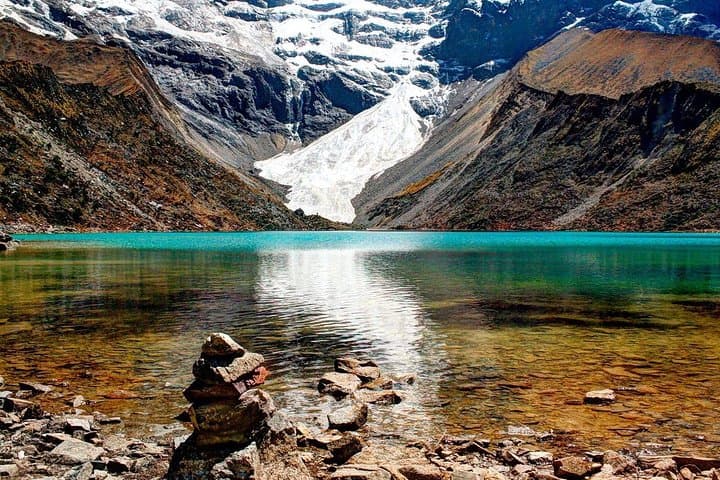


Before sunrise the road out of Cusco narrows into high Andean valley, and the mountains start to show their teeth — ice-scored ridges and open sky. By the time the minibus reaches Soraypampa, the air is thin and cold; the lagoon’s turquoise face waits above, a sudden wound of color against gray moraine.
Before sunrise the road out of Cusco narrows into high Andean valley, and the mountains start to show their teeth — ice-scored ridges and open sky. By the time the minibus reaches Soraypampa, the air is thin and cold; the lagoon’s turquoise face waits above, a sudden wound of color against gray moraine.
Humantay formed as part of the Salkantay massif’s glacial system; meltwater collects in a bowl carved by ice and mineral-rich runoff gives the lake its intense blue. Local Quechua communities regard the surrounding peaks as apus, or mountain spirits, and guides often point out seasonal grazing patterns and historic caravan routes that linked valleys to Cusco.
The hike itself is straightforward but high: most groups climb from Soraypampa up a steep trail for about 1.5–2 km one way with roughly 350–550 m of elevation gain, reaching the lake around 4,200 m (13,780 ft). Terrain is compacted earth and loose scree in places; hikers are rewarded with panoramic views of the Salkantay range and a bright, reflective lake that seems to dare you closer.
Practically, allow a full day for travel, acclimatization, and photos — the round trip including transport is typically 10–11 hours. Bring layers for wind and sun, hydrate well before starting, and move deliberately on the steeper pitches to manage altitude. Expect a guided stop for lunch at Soraypampa; restrooms are limited, and weather can change quickly. For many travelers, Humantay is a compact, high-altitude climb that delivers big scenery for relatively little distance.