THE ADVENTURE COLLECTIVE® · Independent discovery and booking for outdoor travel

A full-day loop through the Quebrada de Humahuaca that pairs the rainbow-striped Cerro de los Siete Colores with pre-Columbian ruins, highland markets and Andean flavors. Plan for long drives, short hikes and big light.
A full-day loop through the Quebrada de Humahuaca that pairs the rainbow-striped Cerro de los Siete Colores with pre-Columbian ruins, highland markets and Andean flavors. Plan for long drives, short hikes and big light.
You step out of the van and the hill greets you like an old, bright-faced neighbor: stripes of ochre, rose, green and rust stacked against a sky that feels thinner at altitude. Wind pinches the air; locals sell coca sweets and handwoven scarves while the plateau’s bones — folded sediment and salt — show the passage of ancient seas and Andean uplift.
Verified experiences and guided adventures in the surrounding area.
Operated by turismo la linda · Purmamarca, Jujuy
You step out of the van and the hill greets you like an old, bright-faced neighbor: stripes of ochre, rose, green and rust stacked against a sky that feels thinner at altitude. Wind pinches the air; locals sell coca sweets and handwoven scarves while the plateau’s bones — folded sediment and salt — show the passage of ancient seas and Andean uplift.
This day tour threads through the Quebrada de Humahuaca, a UNESCO-recognized corridor where ceramic shards, adobe churches and pre-Columbian ruins mark millennia of human presence. Geologically, those colors are oxidized minerals — iron, copper and manganese — revealed by tectonic tilting. Culturally, villages like Tilcara and Humahuaca keep Aymara and Quechua traditions alive: markets, ritual offerings and highland gastronomy based on corn, quinoa and llama.
Expect a travel rhythm of long scenic drives punctuated by 20–90 minute stops: ruins at Pucará de Tilcara, the Tropic of Capricorn marker, artisan stalls and the famous Cerro de los Siete Colores in Purmamarca. The terrain alternates paved roads, gravel shoulders and short, uneven path sections at viewpoints.
Practical guidance: start early to avoid midday heat, carry 2–3 liters of water, sunscreen and a windproof layer — high-altitude sun is intense and the temperature swings quick. Comfortable walking shoes with grip will handle loose stone at lookouts. Bring cash for small purchases; many stalls don’t accept cards. If you’re sensitive to altitude, move slowly, keep hydrated and avoid heavy meals before long drives. The day delivers landscape, history and hands-on culture in a single, vivid loop.
easy.
12–13 hours.
Light fitness required: mostly vehicle time with short walks and viewpoints; able to walk on uneven ground for 15–90 minutes.
The full-day excursion runs about 12–13 hours with several long scenic drives between villages and multiple short stops for viewpoints and markets.
The itinerary is rated easy and suitable for most fitness levels, but some lookouts have uneven ground; infants can use strollers in some towns but expect steps at ruins.
Elevation varies but can reach 2,500–3,500 m; stay hydrated, move slowly during walks and consult a doctor if you have heart or respiratory conditions.
This tour typically includes guide services and transport; entrance fees to ruins or meals are usually extra — bring cash for purchases at small vendors.
The Quebrada de Humahuaca has been a trade and ritual corridor for millennia; its pueblos preserve Aymara and Quechua customs alongside colonial-era churches.
Visitors should stick to marked paths, avoid removing rocks or plants and support local artisans to help sustain traditional economies and reduce environmental pressure.
turismo la linda operates guided outdoor trips and adventures with an emphasis on safety, stewardship, and memorable experiences.

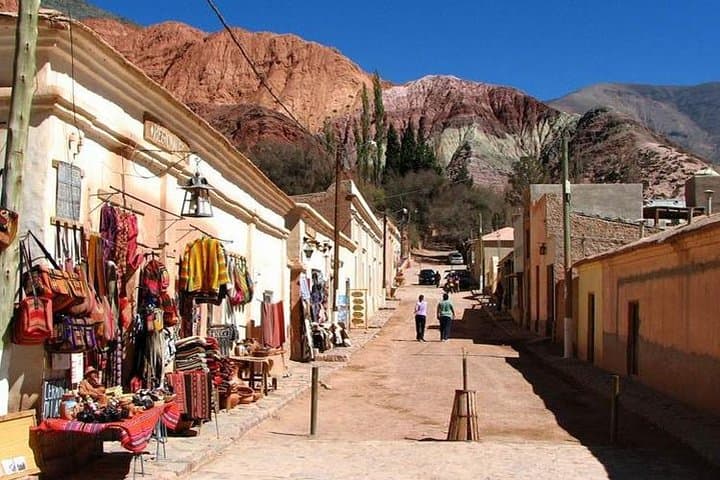
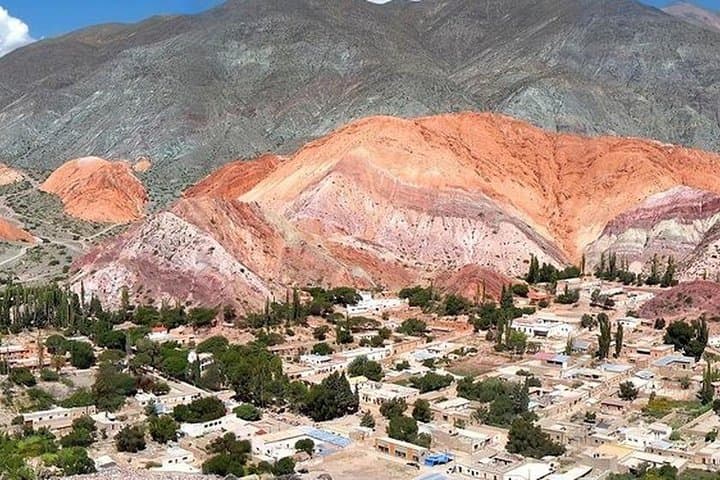
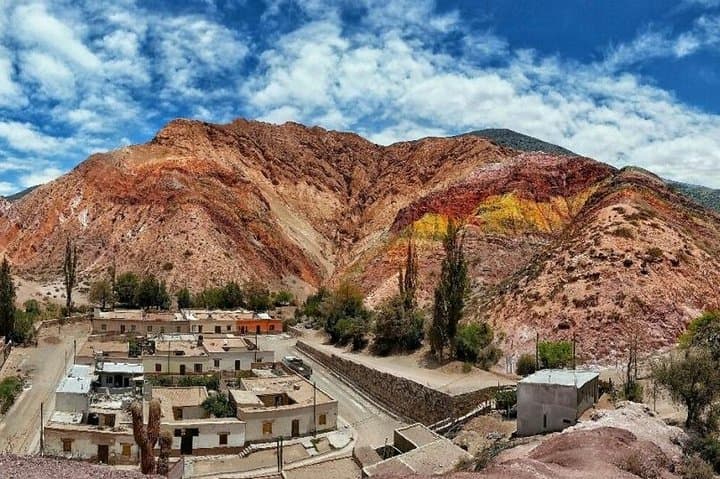
You step out of the van and the hill greets you like an old, bright-faced neighbor: stripes of ochre, rose, green and rust stacked against a sky that feels thinner at altitude. Wind pinches the air; locals sell coca sweets and handwoven scarves while the plateau’s bones — folded sediment and salt — show the passage of ancient seas and Andean uplift.
You step out of the van and the hill greets you like an old, bright-faced neighbor: stripes of ochre, rose, green and rust stacked against a sky that feels thinner at altitude. Wind pinches the air; locals sell coca sweets and handwoven scarves while the plateau’s bones — folded sediment and salt — show the passage of ancient seas and Andean uplift.
This day tour threads through the Quebrada de Humahuaca, a UNESCO-recognized corridor where ceramic shards, adobe churches and pre-Columbian ruins mark millennia of human presence. Geologically, those colors are oxidized minerals — iron, copper and manganese — revealed by tectonic tilting. Culturally, villages like Tilcara and Humahuaca keep Aymara and Quechua traditions alive: markets, ritual offerings and highland gastronomy based on corn, quinoa and llama.
Expect a travel rhythm of long scenic drives punctuated by 20–90 minute stops: ruins at Pucará de Tilcara, the Tropic of Capricorn marker, artisan stalls and the famous Cerro de los Siete Colores in Purmamarca. The terrain alternates paved roads, gravel shoulders and short, uneven path sections at viewpoints.
Practical guidance: start early to avoid midday heat, carry 2–3 liters of water, sunscreen and a windproof layer — high-altitude sun is intense and the temperature swings quick. Comfortable walking shoes with grip will handle loose stone at lookouts. Bring cash for small purchases; many stalls don’t accept cards. If you’re sensitive to altitude, move slowly, keep hydrated and avoid heavy meals before long drives. The day delivers landscape, history and hands-on culture in a single, vivid loop.