THE ADVENTURE COLLECTIVE® · Independent discovery and booking for outdoor travel

Drive the Quebrada de Humahuaca across color-banded cliffs, colonial churches and pre-Hispanic villages, then spend a night in cliffside Iruya. This practical two-day journey blends geology, culture and high-altitude vistas with short village walks and artisan markets.
Drive the Quebrada de Humahuaca across color-banded cliffs, colonial churches and pre-Hispanic villages, then spend a night in cliffside Iruya. This practical two-day journey blends geology, culture and high-altitude vistas with short village walks and artisan markets.
A dawn departure from Salta unspools across altiplano light—wind pulls at jackets, and the road climbs into ochre folds of mountain. By midmorning the Cerro de los Siete Colores in Purmamarca looms like a painted wall; later, switchbacks and hairpins lead higher, the air thinning toward Abra del Cóndor at roughly 3,900 m.
Verified experiences and guided adventures in the surrounding area.
Operated by Tangol · Iruya, Jujuy
A dawn departure from Salta unspools across altiplano light—wind pulls at jackets, and the road climbs into ochre folds of mountain. By midmorning the Cerro de los Siete Colores in Purmamarca looms like a painted wall; later, switchbacks and hairpins lead higher, the air thinning toward Abra del Cóndor at roughly 3,900 m.
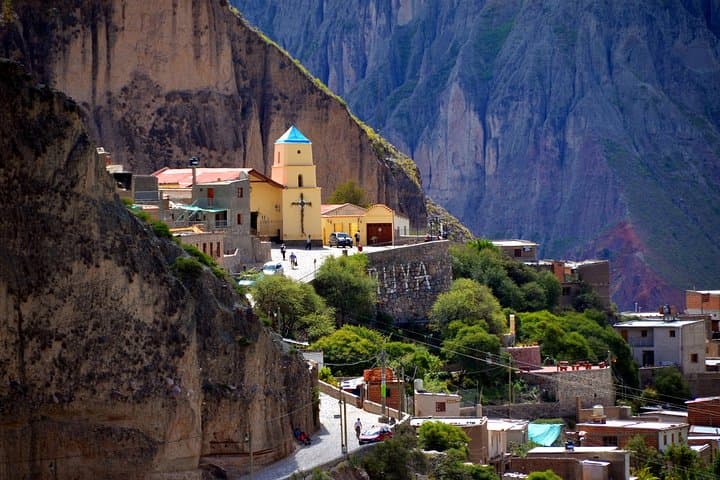
This two-day loop follows the Quebrada de Humahuaca, a UNESCO-recognized corridor of geological strata and human history. The route threads colonial churches, Inca and pre-Hispanic settlements, and the white-washed church of Uquía with its Cuzco-style Angels Arcabuceros paintings. Iruya itself perches on a steep arroyo—streets are cobbled, houses cling to the slope, and the town retains a pre-18th-century cadence.
Geology here is blunt: layered sediment and volcanic debris have been tilted by tectonics into bands of rust, ochre and green; rivers have carved the gorge, daring you to look over narrow viewpoints. Culturally, expect Quechua and local Andean influences—artisan markets in Tilcara and Purmamarca sell woven goods and local salts and spices.
Practicalities: the tour covers roughly 300–350 km round trip by air-conditioned vehicle with up to 8–10 hours of driving across two days and short walks in villages and archaeological sites. Altitude is the main consideration—bring layered clothing, sun protection and allow for slower pace when climbing. Accommodation in Iruya is not included; cash and sturdy shoes are recommended for uneven village streets. Pickup is from centrally located hotels in Salta; confirm pickup point in advance.
moderate.
2 days.
Suitable for travelers in good general health; must be able to walk short distances on uneven ground and tolerate high altitude.
No—accommodation is not included; the itinerary notes an overnight in Iruya and travelers should pre-book local hostels or guesthouses.
Abra del Cóndor reaches about 3,900 meters (12,800 ft), so take altitude precautions if you are sensitive to high elevations.
Yes—carry Argentine pesos for small purchases, markets and remote services where cards may not be accepted.
Meals are not specified as included; plan for stops at village eateries or bring snacks for the road.
The Quebrada de Humahuaca has been a trade and pilgrimage corridor for millennia; Iruya and surrounding towns show pre-Hispanic settlement patterns layered with colonial churches and iconography.
This high-altitude corridor hosts fragile puna ecosystems—stay on trails, carry out trash, and support local artisans to help preserve cultural landscapes.
Tangol operates guided outdoor trips and adventures with an emphasis on safety, stewardship, and memorable experiences.


A dawn departure from Salta unspools across altiplano light—wind pulls at jackets, and the road climbs into ochre folds of mountain. By midmorning the Cerro de los Siete Colores in Purmamarca looms like a painted wall; later, switchbacks and hairpins lead higher, the air thinning toward Abra del Cóndor at roughly 3,900 m.
A dawn departure from Salta unspools across altiplano light—wind pulls at jackets, and the road climbs into ochre folds of mountain. By midmorning the Cerro de los Siete Colores in Purmamarca looms like a painted wall; later, switchbacks and hairpins lead higher, the air thinning toward Abra del Cóndor at roughly 3,900 m.
This two-day loop follows the Quebrada de Humahuaca, a UNESCO-recognized corridor of geological strata and human history. The route threads colonial churches, Inca and pre-Hispanic settlements, and the white-washed church of Uquía with its Cuzco-style Angels Arcabuceros paintings. Iruya itself perches on a steep arroyo—streets are cobbled, houses cling to the slope, and the town retains a pre-18th-century cadence.
Geology here is blunt: layered sediment and volcanic debris have been tilted by tectonics into bands of rust, ochre and green; rivers have carved the gorge, daring you to look over narrow viewpoints. Culturally, expect Quechua and local Andean influences—artisan markets in Tilcara and Purmamarca sell woven goods and local salts and spices.
Practicalities: the tour covers roughly 300–350 km round trip by air-conditioned vehicle with up to 8–10 hours of driving across two days and short walks in villages and archaeological sites. Altitude is the main consideration—bring layered clothing, sun protection and allow for slower pace when climbing. Accommodation in Iruya is not included; cash and sturdy shoes are recommended for uneven village streets. Pickup is from centrally located hotels in Salta; confirm pickup point in advance.