THE ADVENTURE COLLECTIVE® · Independent discovery and booking for outdoor travel

Leave Hue before sunrise for a full-day run into Phong Nha-Ke Bang National Park. Explore river caves by boat or walk Paradise Cave’s wooden boardwalk—this tour blends wartime history and limestone wonders into a long, satisfying day.
Leave Hue before sunrise for a full-day run into Phong Nha-Ke Bang National Park. Explore river caves by boat or walk Paradise Cave’s wooden boardwalk—this tour blends wartime history and limestone wonders into a long, satisfying day.
The day begins before dawn on Hue’s quiet streets, the van easing out of the city as limestone hills draw nearer on the horizon. By late morning the road has threaded past rice paddies and small towns; pilgrim lanterns at La Vang and the solemn rows of the Truong Son Martyrs Cemetery punctuate the journey before the karst edges of Phong Nha appear.
Verified experiences and guided adventures in the surrounding area.
Operated by Vietnam Explorer · Phong Nha, Quang Binh
The day begins before dawn on Hue’s quiet streets, the van easing out of the city as limestone hills draw nearer on the horizon. By late morning the road has threaded past rice paddies and small towns; pilgrim lanterns at La Vang and the solemn rows of the Truong Son Martyrs Cemetery punctuate the journey before the karst edges of Phong Nha appear.
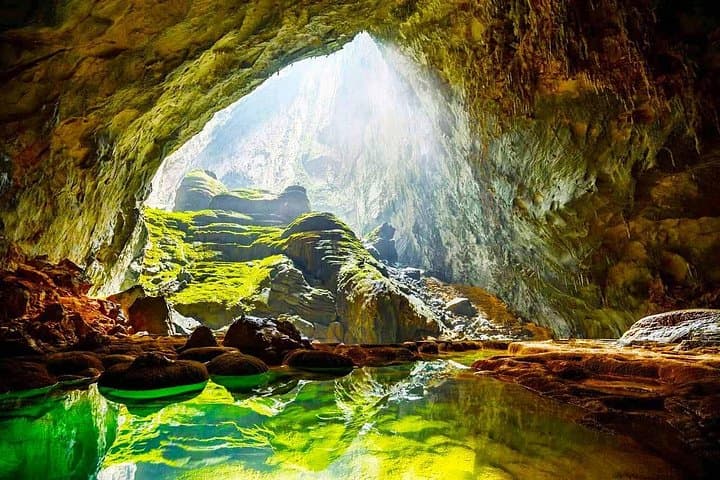
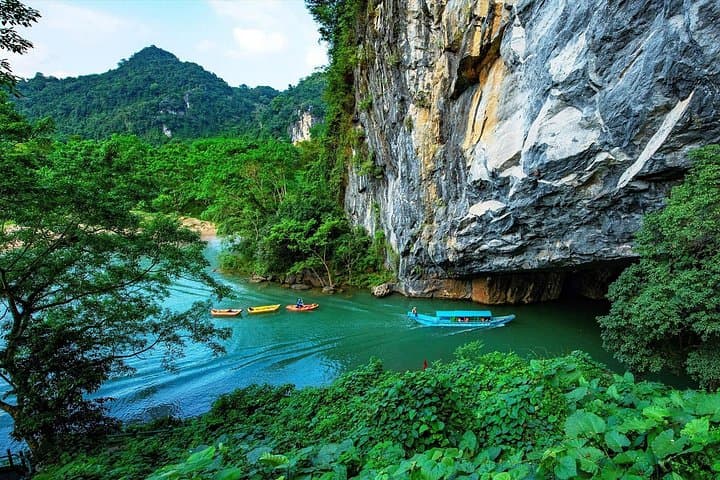
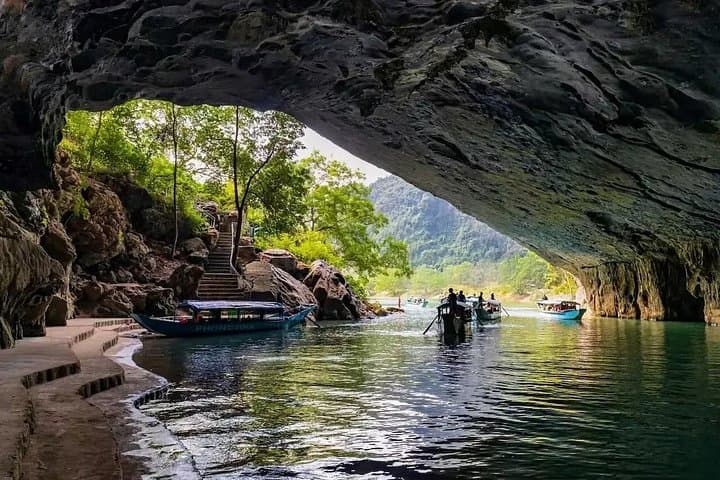
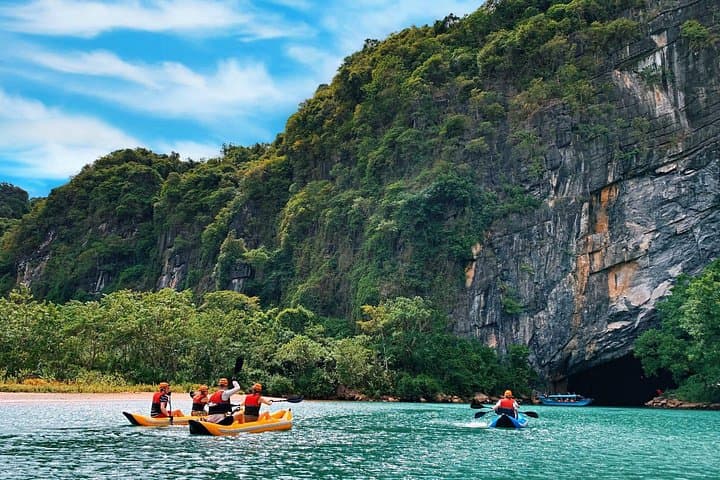
Phong Nha-Ke Bang National Park, a UNESCO site formed from 400-million-year-old limestone, contains river caves carved by the Son River and dry caverns crowded with columns and draping stalactites. Visitors typically board a small boat to move through Phong Nha’s flooded passages, where low ceilings and reflective water create a calm, otherworldly light. Alternatively, Paradise Cave offers a one-kilometer wooden walkway through a dry show cave—part of a cavern system measured in tens of kilometers—where vast chambers and delicate formations earn it the nickname “Royal Palace on Earth.”
Culturally the route crosses Quang Tri Province, a landscape marked by wartime history and enduring Catholic pilgrimage at La Vang; both add human context to the geology.
Practical notes: the full round trip from Hue covers roughly 200–240 km with long stretches by road, so expect a 10–12 hour day. Wear sturdy shoes for uneven cave walkways and bring a lightweight rain jacket—tropical downpours are common. Photography is permitted but bring a fast lens for dim interiors. Hydrate before boarding the boat and keep hands off formations—stalactites take millennia to grow. With a thoughtful pace and basic preparation, this is a single-day route that pairs Vietnam’s complex history with two of its most arresting subterranean landscapes.
moderate.
12 hours.
Suitable for most travelers in reasonable health; requires walking up to 1 km on wooden boardwalks and boarding small boats.
This tour includes admission to the caves as listed in the program (one visit turn) and arranged boat transfers where applicable.
Pickup is arranged from Hue meeting points and you return to Hue at the end of the day; specific pickup locations are confirmed at booking.
The tour is classified as easy to moderate; boats and walkways are used—infants should sit on laps and those with mobility issues may find some sections challenging.
Yes—many itineraries let you choose the river cave boat ride (Phong Nha) or the dry, 1 km Paradise Cave walkway depending on preference and availability.
The route passes sites tied to the Vietnam War era and Quang Tri’s Catholic pilgrimage tradition at La Vang; Phong Nha-Ke Bang was declared a UNESCO World Heritage Site in 2003 for its karst and cave systems.
Phong Nha-Ke Bang is actively managed to protect fragile cave formations and endemic species—visitors should avoid touching formations, dispose of waste properly, and follow guide instructions.
Vietnam Explorer operates guided outdoor trips and adventures with an emphasis on safety, stewardship, and memorable experiences.
The day begins before dawn on Hue’s quiet streets, the van easing out of the city as limestone hills draw nearer on the horizon. By late morning the road has threaded past rice paddies and small towns; pilgrim lanterns at La Vang and the solemn rows of the Truong Son Martyrs Cemetery punctuate the journey before the karst edges of Phong Nha appear.
The day begins before dawn on Hue’s quiet streets, the van easing out of the city as limestone hills draw nearer on the horizon. By late morning the road has threaded past rice paddies and small towns; pilgrim lanterns at La Vang and the solemn rows of the Truong Son Martyrs Cemetery punctuate the journey before the karst edges of Phong Nha appear.
Phong Nha-Ke Bang National Park, a UNESCO site formed from 400-million-year-old limestone, contains river caves carved by the Son River and dry caverns crowded with columns and draping stalactites. Visitors typically board a small boat to move through Phong Nha’s flooded passages, where low ceilings and reflective water create a calm, otherworldly light. Alternatively, Paradise Cave offers a one-kilometer wooden walkway through a dry show cave—part of a cavern system measured in tens of kilometers—where vast chambers and delicate formations earn it the nickname “Royal Palace on Earth.”
Culturally the route crosses Quang Tri Province, a landscape marked by wartime history and enduring Catholic pilgrimage at La Vang; both add human context to the geology.
Practical notes: the full round trip from Hue covers roughly 200–240 km with long stretches by road, so expect a 10–12 hour day. Wear sturdy shoes for uneven cave walkways and bring a lightweight rain jacket—tropical downpours are common. Photography is permitted but bring a fast lens for dim interiors. Hydrate before boarding the boat and keep hands off formations—stalactites take millennia to grow. With a thoughtful pace and basic preparation, this is a single-day route that pairs Vietnam’s complex history with two of its most arresting subterranean landscapes.