THE ADVENTURE COLLECTIVE® · Independent discovery and booking for outdoor travel

Take a full-day journey from Hue into Phong Nha-Kẻ Bàng National Park to walk into one of the world’s longest wet caves and visit key wartime landmarks along the way. This odd-days-only tour combines geology, history and a dragon-boat entrance into subterranean passages.
Take a full-day journey from Hue into Phong Nha-Kẻ Bàng National Park to walk into one of the world’s longest wet caves and visit key wartime landmarks along the way. This odd-days-only tour combines geology, history and a dragon-boat entrance into subterranean passages.
You step onto the minivan before sunrise in Hue and the road unfurls—rice paddies giving way to low karst ridges, rivers that dare you to follow them inland. The day moves in chapters: imperial gates and colonial echoes at Huế, a quiet pause at La Vang’s basilica, the historic Ben Hai River and Hien Luong Bridge where the country’s midline once kept people apart, and finally the damp, echoing mouth of Phong Nha Cave.
Verified experiences and guided adventures in the surrounding area.
Operated by Authentic Travel HOI AN · Phong Nha, Quảng Bình Province
You step onto the minivan before sunrise in Hue and the road unfurls—rice paddies giving way to low karst ridges, rivers that dare you to follow them inland. The day moves in chapters: imperial gates and colonial echoes at Huế, a quiet pause at La Vang’s basilica, the historic Ben Hai River and Hien Luong Bridge where the country’s midline once kept people apart, and finally the damp, echoing mouth of Phong Nha Cave.
Phong Nha-Kẻ Bàng is limestone written in water: caves cut by ancient rivers, passages that reach 7,729 meters, and underground beaches layered with centuries of flow. The park’s UNESCO status protects karst formations and a living geological record—stalactites and stalagmites that grew drip by patient drip. Locals in Quảng Bình balance tourism with farming and boat-based livelihoods; dragon-boat rides on the Son River remain the most immediate way into the wet cave system.
Practically, this is a long but accessible day—about 12–13 hours roundtrip from Hue, with vehicular transfers, a guided dragon boat, and walking on flat cave paths. Expect humid, cool cave air, uneven wooden walkways, and sections lit by torches or installed lighting. Bring a light rain jacket, sturdy shoes with grip, motion-sickness remedies for the river, and a charged phone for photos.
The tour is ideal for travelers wanting a concentrated introduction to central Vietnam’s natural and wartime history in one organized day. Note the tour runs on odd days only, includes lunch, entrance fees and bilingual guides, and isn’t recommended for pregnant travelers or those with serious spinal or heart conditions.
moderate.
12–13 hours.
Suitable for travelers in general good health comfortable with a full day of travel, short walks, and boat transfers.
Expect about 12–13 hours door-to-door; the itinerary includes several stops and time inside Phong Nha Cave.
No technical climbing is required—walks use flat paths and wooden walkways, but there are slippery areas and uneven ground.
Yes—lunch and all entrance fees listed on the itinerary are included in the tour price.
No—the operator advises this tour is not recommended for pregnant travelers or those with serious spinal or cardiovascular conditions.
The area served strategic roles during the American War—Phong Nha’s caves were used as hospitals and shelters, and the Ben Hai River and Hien Luong Bridge mark the historic division of Vietnam at the 17th parallel.
Phong Nha-Kẻ Bàng is protected as a UNESCO World Heritage Site; visitors should stay on designated paths, avoid littering, and follow guide instructions to limit impact on fragile cave formations.
Authentic Travel HOI AN operates guided outdoor trips and adventures with an emphasis on safety, stewardship, and memorable experiences.


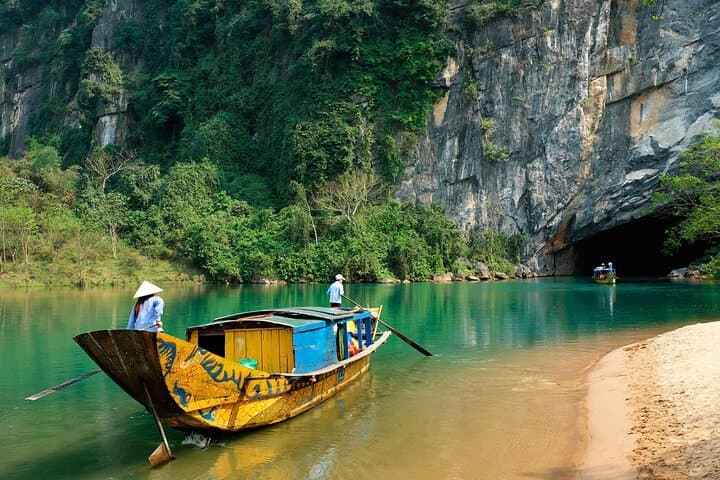

You step onto the minivan before sunrise in Hue and the road unfurls—rice paddies giving way to low karst ridges, rivers that dare you to follow them inland. The day moves in chapters: imperial gates and colonial echoes at Huế, a quiet pause at La Vang’s basilica, the historic Ben Hai River and Hien Luong Bridge where the country’s midline once kept people apart, and finally the damp, echoing mouth of Phong Nha Cave.
You step onto the minivan before sunrise in Hue and the road unfurls—rice paddies giving way to low karst ridges, rivers that dare you to follow them inland. The day moves in chapters: imperial gates and colonial echoes at Huế, a quiet pause at La Vang’s basilica, the historic Ben Hai River and Hien Luong Bridge where the country’s midline once kept people apart, and finally the damp, echoing mouth of Phong Nha Cave.
Phong Nha-Kẻ Bàng is limestone written in water: caves cut by ancient rivers, passages that reach 7,729 meters, and underground beaches layered with centuries of flow. The park’s UNESCO status protects karst formations and a living geological record—stalactites and stalagmites that grew drip by patient drip. Locals in Quảng Bình balance tourism with farming and boat-based livelihoods; dragon-boat rides on the Son River remain the most immediate way into the wet cave system.
Practically, this is a long but accessible day—about 12–13 hours roundtrip from Hue, with vehicular transfers, a guided dragon boat, and walking on flat cave paths. Expect humid, cool cave air, uneven wooden walkways, and sections lit by torches or installed lighting. Bring a light rain jacket, sturdy shoes with grip, motion-sickness remedies for the river, and a charged phone for photos.
The tour is ideal for travelers wanting a concentrated introduction to central Vietnam’s natural and wartime history in one organized day. Note the tour runs on odd days only, includes lunch, entrance fees and bilingual guides, and isn’t recommended for pregnant travelers or those with serious spinal or heart conditions.