THE ADVENTURE COLLECTIVE® · Independent discovery and booking for outdoor travel

A full-day loop from Hue through Quang Tri’s historic sites to Paradise Cave in Phong Nha. Experience wartime landmarks in the morning and walk through one of Asia’s largest dry cave systems in the afternoon.
A full-day loop from Hue through Quang Tri’s historic sites to Paradise Cave in Phong Nha. Experience wartime landmarks in the morning and walk through one of Asia’s largest dry cave systems in the afternoon.
Morning light in Hue lifts off the Perfume River and the bus eases east toward Quang Binh, the road opening into low karst ridges and rice paddies. By late morning the group passes La Vang’s pilgrimage grounds and the wartime markers of Quang Tri — Hien Luong Bridge and the Ben Hai River — where history sits plainly on the landscape.
Verified experiences and guided adventures in the surrounding area.
Operated by Vietnam Explorer · Phong Nha, Quang Binh
Morning light in Hue lifts off the Perfume River and the bus eases east toward Quang Binh, the road opening into low karst ridges and rice paddies. By late morning the group passes La Vang’s pilgrimage grounds and the wartime markers of Quang Tri — Hien Luong Bridge and the Ben Hai River — where history sits plainly on the landscape.
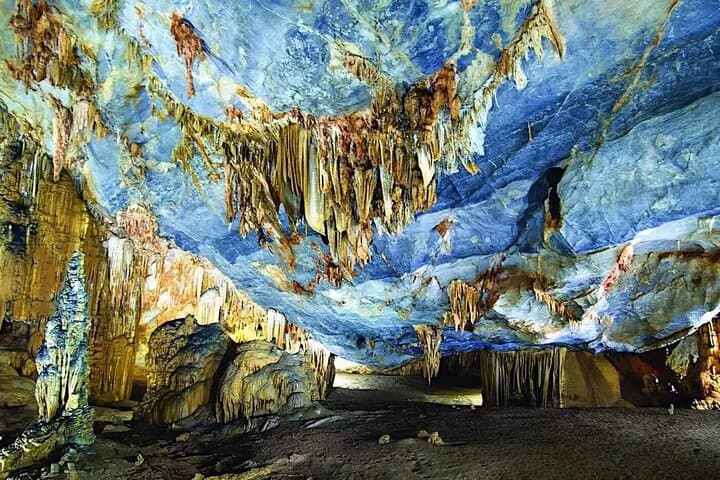
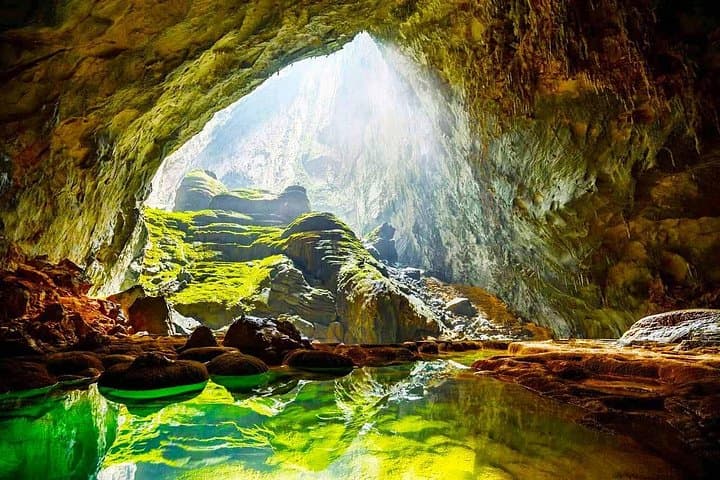
Geology takes the stage at Phong Nha: limestone laid down over millions of years, sculpted by underground rivers into vast caverns. Paradise Cave (Hang Thien Duong) reveals a dry, cathedral-scale passage lined with stalactites, columns and formations locals liken to terraces and towers. Discovered by scientific teams in the 2000s, the cave is part of Phong Nha–Ke Bang, a UNESCO-listed karst massif whose biodiversity and karst features define the region.
Culturally the route threads central Vietnam’s resilient past — revolutionary sites in Quang Tri stand near modern pilgrimage at La Vang — so the day pairs natural spectacle with stark historical context.
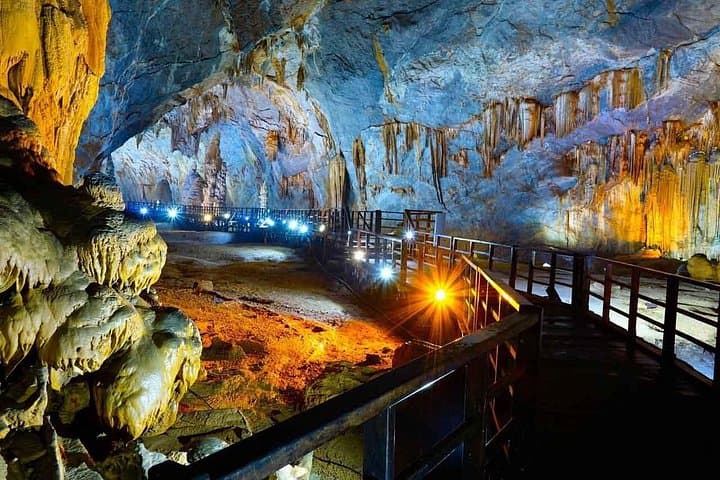
Practical guidance: the visit uses a tram from parking to the cave entrance, then a marked wooden walkway and steps through the main galleries; expect 1.5–2 hours inside including photography stops. Wear grippy closed shoes and bring a lightweight jacket — temperatures inside are cool and humid. Carry water and protect electronics from moisture; groups move at a steady, guided pace and the trip returns to Hue the same day. This is a full, accessible day of walking, history and one of Southeast Asia’s most dramatic dry caves.
moderate.
12 hours.
Suitable for travelers with basic fitness who can handle several hours of walking and stairs
Expect roughly 3.5–4.5 hours total one-way depending on stops and traffic; this tour schedules morning historical stops en route.
No technical climbing is required; however the visit involves walking on steps and boardwalks for up to two hours—comfortable shoes are recommended.
Yes — the tour price includes entrance tickets, tram transfer to the cave foothills, and a set lunch in Phong Nha as listed in the itinerary.
Children can join but must be supervised; the cave walkway has many steps and is not fully accessible for wheelchair users or those with limited mobility.
Quang Tri’s Hien Luong Bridge and Ben Hai River mark the former 17th parallel DMZ; the route threads wartime memorials alongside pilgrimage at La Vang.
Phong Nha–Ke Bang is a UNESCO World Heritage site; follow marked paths, avoid touching formations, and dispose of waste to protect fragile karst ecosystems.
Vietnam Explorer operates guided outdoor trips and adventures with an emphasis on safety, stewardship, and memorable experiences.
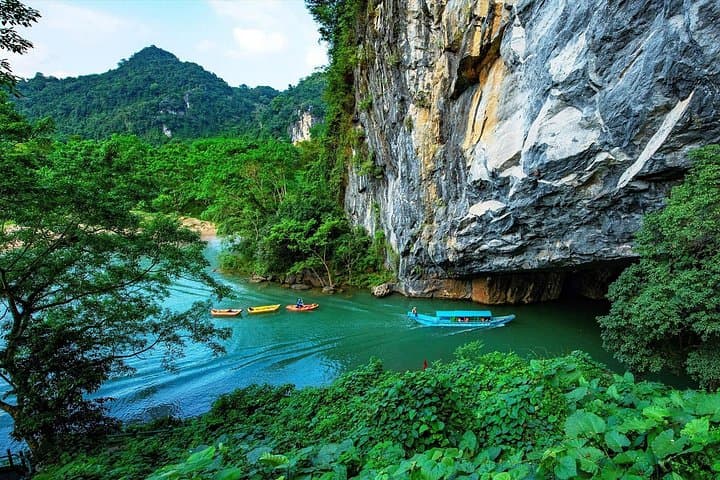
Morning light in Hue lifts off the Perfume River and the bus eases east toward Quang Binh, the road opening into low karst ridges and rice paddies. By late morning the group passes La Vang’s pilgrimage grounds and the wartime markers of Quang Tri — Hien Luong Bridge and the Ben Hai River — where history sits plainly on the landscape.
Morning light in Hue lifts off the Perfume River and the bus eases east toward Quang Binh, the road opening into low karst ridges and rice paddies. By late morning the group passes La Vang’s pilgrimage grounds and the wartime markers of Quang Tri — Hien Luong Bridge and the Ben Hai River — where history sits plainly on the landscape.
Geology takes the stage at Phong Nha: limestone laid down over millions of years, sculpted by underground rivers into vast caverns. Paradise Cave (Hang Thien Duong) reveals a dry, cathedral-scale passage lined with stalactites, columns and formations locals liken to terraces and towers. Discovered by scientific teams in the 2000s, the cave is part of Phong Nha–Ke Bang, a UNESCO-listed karst massif whose biodiversity and karst features define the region.
Culturally the route threads central Vietnam’s resilient past — revolutionary sites in Quang Tri stand near modern pilgrimage at La Vang — so the day pairs natural spectacle with stark historical context.
Practical guidance: the visit uses a tram from parking to the cave entrance, then a marked wooden walkway and steps through the main galleries; expect 1.5–2 hours inside including photography stops. Wear grippy closed shoes and bring a lightweight jacket — temperatures inside are cool and humid. Carry water and protect electronics from moisture; groups move at a steady, guided pace and the trip returns to Hue the same day. This is a full, accessible day of walking, history and one of Southeast Asia’s most dramatic dry caves.