THE ADVENTURE COLLECTIVE® · Independent discovery and booking for outdoor travel

Taste Hue’s royal-influenced street foods on a guided 4-hour walk across Truong Tien Bridge, through Dong Ba Market and into alleyway stalls. Sample iconic dishes while a local guide explains ingredients, history, and where to find the city’s best bites.
Taste Hue’s royal-influenced street foods on a guided 4-hour walk across Truong Tien Bridge, through Dong Ba Market and into alleyway stalls. Sample iconic dishes while a local guide explains ingredients, history, and where to find the city’s best bites.
Walkers cross Truong Tien Bridge as evening light slides across the Perfume River; the river seems to nudge the city toward its markets, where steam and smoke rise in parallel. This four-hour walking food tour threads through Dong Ba Market, narrow alleys, and handpicked street stalls, putting travelers face-to-bowl with Bún Bò Huế, Bánh Khoái, Bánh Bèo, Nem Lụi and seasonal chè.
Verified experiences and guided adventures in the surrounding area.
Operated by Charm Tourist · Hue, Thua Thien-Hue Province
Walkers cross Truong Tien Bridge as evening light slides across the Perfume River; the river seems to nudge the city toward its markets, where steam and smoke rise in parallel. This four-hour walking food tour threads through Dong Ba Market, narrow alleys, and handpicked street stalls, putting travelers face-to-bowl with Bún Bò Huế, Bánh Khoái, Bánh Bèo, Nem Lụi and seasonal chè.
Hue’s cuisine carries the imprint of its imperial past: precise presentations, delicate broths, and sauces developed for the Nguyễn court. Geologically, the low Perfume River plain funnels humidity and mangrove-rich soils that have long supported rice paddies and herbs central to central-Vietnamese cooking. Culturally, food here is communal—vendors refine techniques passed down across generations, and markets remain civic centers at dawn and dusk.
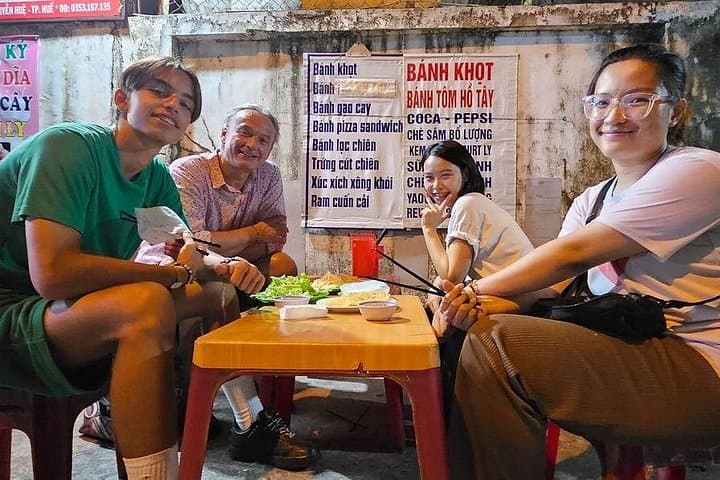
Expect tight, lively streets; vendors cooking on low charcoal pits; and lessons in balancing heat, sour, and fish sauce. The guide will explain ingredients and point out where dishes originate within the city’s neighborhoods.
Practical guidance: bring small notes for payments, carry a reusable water bottle (a single bottle is provided), and wear comfortable, broken-in walking shoes for uneven pavement. If you have dietary restrictions, notify the operator when booking so your guide can adapt stops. Evening tours are cooler and showcase the night market; daytime tours emphasize fresh-market rituals. This tour suits anyone able to walk and stand for short periods who wants a concentrated, flavorful introduction to Hue’s food culture.
easy.
3–4 hours.
Suitable for most fitness levels; expect moderate walking and standing with short uphill or uneven sections.
The tour lasts about four hours and covers a few kilometers of mostly flat city streets and alleys, with frequent food stops and short seated breaks.
Yes—many Hue snacks can be adapted; notify the operator when booking so the guide can select appropriate stops.
The price covers the tastings listed on the itinerary, one bottle of water and coffee/chè at the end; any extra purchases are out-of-pocket.
The tour typically includes pickup and drop-off from centrally located hotels—confirm your pickup point when booking.
Hue was Vietnam’s imperial capital under the Nguyễn dynasty (1802–1945), and its cuisine reflects courtly refinement and regional spice balances developed for royal tables.
Pack out wrappers and avoid single-use plastics; support vendors using reusable or compostable serving materials to reduce market waste.
Charm Tourist operates guided outdoor trips and adventures with an emphasis on safety, stewardship, and memorable experiences.
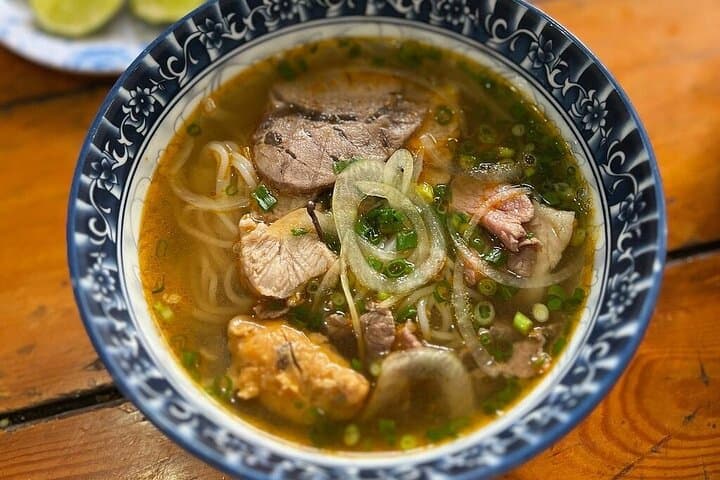
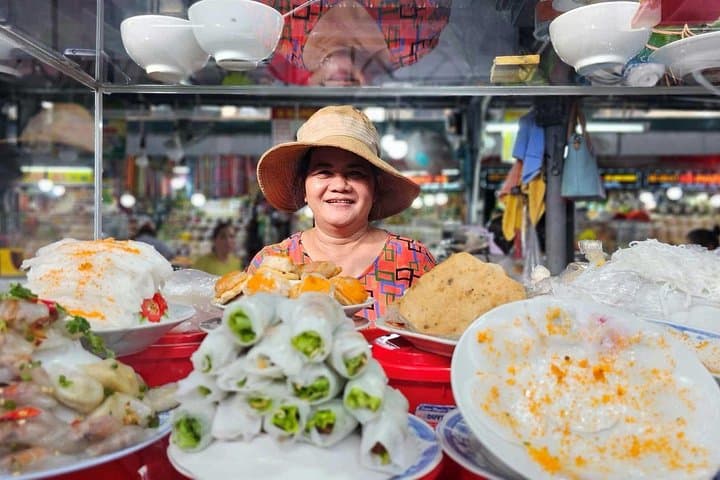
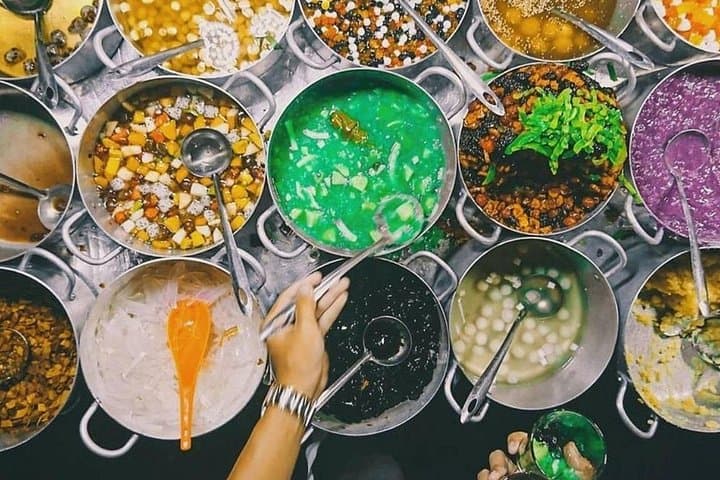
Walkers cross Truong Tien Bridge as evening light slides across the Perfume River; the river seems to nudge the city toward its markets, where steam and smoke rise in parallel. This four-hour walking food tour threads through Dong Ba Market, narrow alleys, and handpicked street stalls, putting travelers face-to-bowl with Bún Bò Huế, Bánh Khoái, Bánh Bèo, Nem Lụi and seasonal chè.
Walkers cross Truong Tien Bridge as evening light slides across the Perfume River; the river seems to nudge the city toward its markets, where steam and smoke rise in parallel. This four-hour walking food tour threads through Dong Ba Market, narrow alleys, and handpicked street stalls, putting travelers face-to-bowl with Bún Bò Huế, Bánh Khoái, Bánh Bèo, Nem Lụi and seasonal chè.
Hue’s cuisine carries the imprint of its imperial past: precise presentations, delicate broths, and sauces developed for the Nguyễn court. Geologically, the low Perfume River plain funnels humidity and mangrove-rich soils that have long supported rice paddies and herbs central to central-Vietnamese cooking. Culturally, food here is communal—vendors refine techniques passed down across generations, and markets remain civic centers at dawn and dusk.
Expect tight, lively streets; vendors cooking on low charcoal pits; and lessons in balancing heat, sour, and fish sauce. The guide will explain ingredients and point out where dishes originate within the city’s neighborhoods.
Practical guidance: bring small notes for payments, carry a reusable water bottle (a single bottle is provided), and wear comfortable, broken-in walking shoes for uneven pavement. If you have dietary restrictions, notify the operator when booking so your guide can adapt stops. Evening tours are cooler and showcase the night market; daytime tours emphasize fresh-market rituals. This tour suits anyone able to walk and stand for short periods who wants a concentrated, flavorful introduction to Hue’s food culture.