THE ADVENTURE COLLECTIVE® · Independent discovery and booking for outdoor travel

Taste Hue’s imperial flavors on a guided 3–4 hour walking tour that samples bun bo Hue, grilled nem lụi, rice cakes and chè. Expect market stops, café breaks and local storytelling from an English-speaking guide.
Taste Hue’s imperial flavors on a guided 3–4 hour walking tour that samples bun bo Hue, grilled nem lụi, rice cakes and chè. Expect market stops, café breaks and local storytelling from an English-speaking guide.
A dawn mist lifts off the Perfume River as a small group gathers outside a traditional guesthouse in Hue. The guide checks names, the streetlights still hum, and the city’s scent—lemongrass, charcoal, fish sauce—begins to widen like an opening door. Over the next three to four hours you move at the city’s pace: short walks between market stalls, a lined-up eatery where steam clouds the doorway, and a quiet café where condensed milk and black coffee meet.
Verified experiences and guided adventures in the surrounding area.
Operated by Hanoi Food Tasting Tours · Hue, Thua Thien-Hue
A dawn mist lifts off the Perfume River as a small group gathers outside a traditional guesthouse in Hue. The guide checks names, the streetlights still hum, and the city’s scent—lemongrass, charcoal, fish sauce—begins to widen like an opening door. Over the next three to four hours you move at the city’s pace: short walks between market stalls, a lined-up eatery where steam clouds the doorway, and a quiet café where condensed milk and black coffee meet.
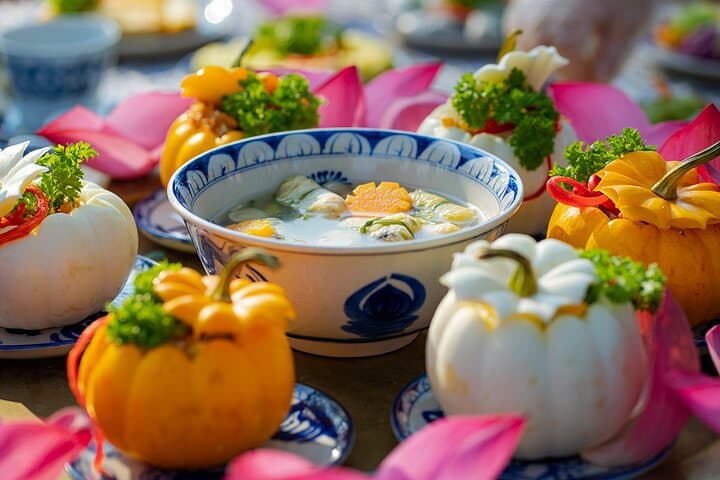
Hue was Vietnam’s imperial capital under the Nguyen dynasty, and its royal kitchens shaped the region’s refined flavors: tangy, layered broths and delicate rice cake preparations meant to balance texture and color. Geologically, the city sits on the low-lying plains of the Perfume River, which moderates humidity and feeds the rice-based staples that define local dishes. Culturally, food here is family and ceremony—expect explanations about ancestral recipes as much as tasting notes.
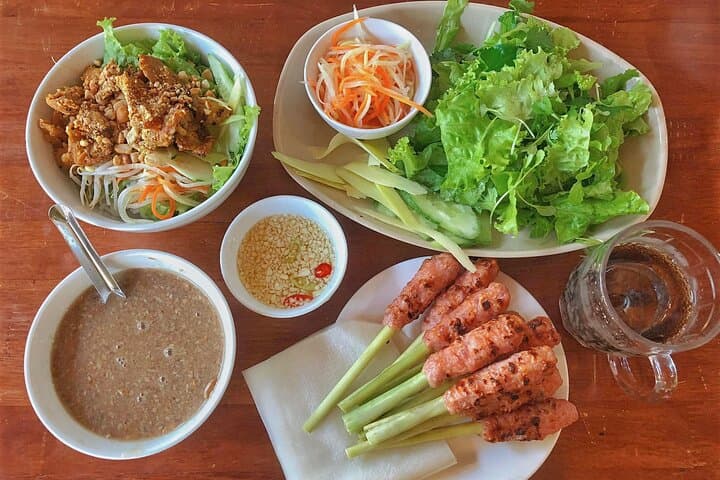
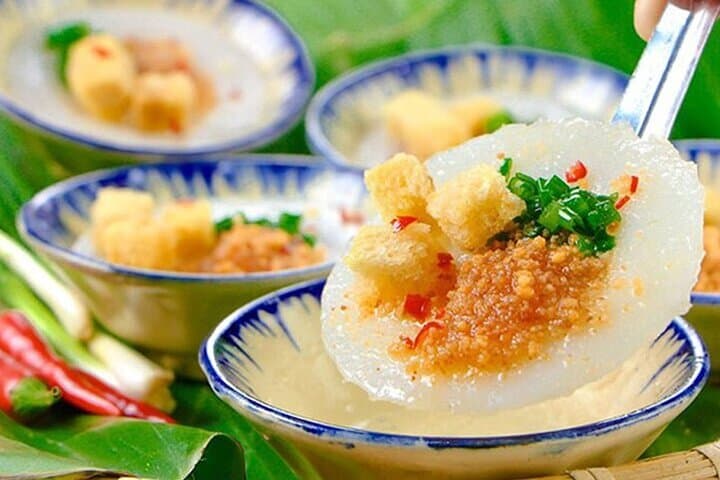
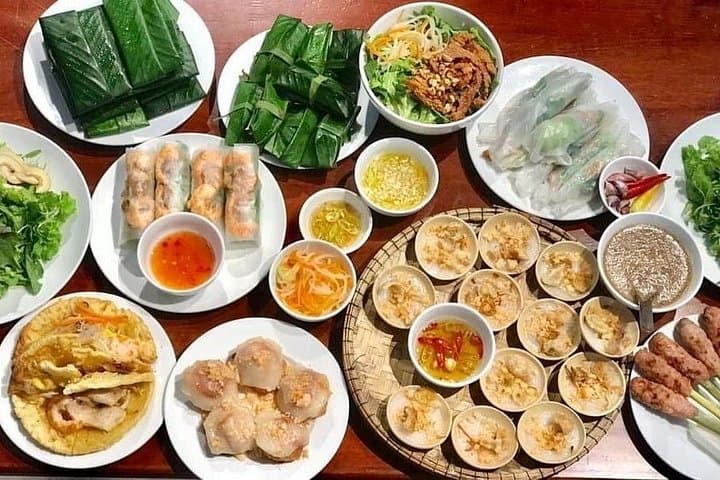
Practical guidance: bring cash for small vendors, wear comfortable shoes for uneven sidewalks, and have a light rain layer in the wet season. The tour includes tastings of bun bo Hue, banh beo, nem lui, banh khoai and chè, and a stop for traditional Vietnamese coffee; mineral water is provided. Plan for 3–4 hours with frequent sitting breaks and toilet access at cafés and restaurants.
This walk suits curious eaters more than athletes—it's about conversation, texture, and timing. Move slowly, ask about ingredients, and leave room for a sweet finish: chè's cool sweetness closes the loop between river-borne produce and Hue’s culinary history.
easy.
3–4 hours.
Light walking ability; suitable for most fitness levels and those comfortable standing and walking short distances.
Yes—many vendors can provide vegetarian versions of dishes if notified in advance; inform the operator at booking.
The tour description lists an English-speaking local guide; check at booking for other language options.
All food and drink tastings listed on the itinerary are included, and mineral water is provided.
Children are welcome; infants must sit on an adult’s lap and the pace is family-friendly with frequent stops.
Hue served as the Nguyễn dynasty’s imperial capital (1802–1945), and many city dishes trace to royal court kitchens that emphasized presentation and balance.
Support small vendors, avoid single-use plastics when possible, and follow the guide’s advice to reduce food waste and respect local food systems.
Hanoi Food Tasting Tours operates guided outdoor trips and adventures with an emphasis on safety, stewardship, and memorable experiences.
A dawn mist lifts off the Perfume River as a small group gathers outside a traditional guesthouse in Hue. The guide checks names, the streetlights still hum, and the city’s scent—lemongrass, charcoal, fish sauce—begins to widen like an opening door. Over the next three to four hours you move at the city’s pace: short walks between market stalls, a lined-up eatery where steam clouds the doorway, and a quiet café where condensed milk and black coffee meet.
A dawn mist lifts off the Perfume River as a small group gathers outside a traditional guesthouse in Hue. The guide checks names, the streetlights still hum, and the city’s scent—lemongrass, charcoal, fish sauce—begins to widen like an opening door. Over the next three to four hours you move at the city’s pace: short walks between market stalls, a lined-up eatery where steam clouds the doorway, and a quiet café where condensed milk and black coffee meet.
Hue was Vietnam’s imperial capital under the Nguyen dynasty, and its royal kitchens shaped the region’s refined flavors: tangy, layered broths and delicate rice cake preparations meant to balance texture and color. Geologically, the city sits on the low-lying plains of the Perfume River, which moderates humidity and feeds the rice-based staples that define local dishes. Culturally, food here is family and ceremony—expect explanations about ancestral recipes as much as tasting notes.
Practical guidance: bring cash for small vendors, wear comfortable shoes for uneven sidewalks, and have a light rain layer in the wet season. The tour includes tastings of bun bo Hue, banh beo, nem lui, banh khoai and chè, and a stop for traditional Vietnamese coffee; mineral water is provided. Plan for 3–4 hours with frequent sitting breaks and toilet access at cafés and restaurants.
This walk suits curious eaters more than athletes—it's about conversation, texture, and timing. Move slowly, ask about ingredients, and leave room for a sweet finish: chè's cool sweetness closes the loop between river-borne produce and Hue’s culinary history.