THE ADVENTURE COLLECTIVE® · Independent discovery and booking for outdoor travel

Board a dragon boat on the Perfume River, explore the UNESCO-listed Imperial Citadel, haggle at Đông Ba Market, and visit the ornate royal tombs and craft villages—all in a single, full-day guided experience.
Board a dragon boat on the Perfume River, explore the UNESCO-listed Imperial Citadel, haggle at Đông Ba Market, and visit the ornate royal tombs and craft villages—all in a single, full-day guided experience.
Dawn on the Perfume River casts a slow silver on the water as a dragon boat slips from the quay toward Thien Mu Pagoda. The bell above the pagoda seems to count the city’s long hours—quiet, deliberate—while the river dares you to slow down and watch the day arrive.
Verified experiences and guided adventures in the surrounding area.
Operated by Authentic PHU QUOC · Hue, Thừa Thiên Huế
Dawn on the Perfume River casts a slow silver on the water as a dragon boat slips from the quay toward Thien Mu Pagoda. The bell above the pagoda seems to count the city’s long hours—quiet, deliberate—while the river dares you to slow down and watch the day arrive.
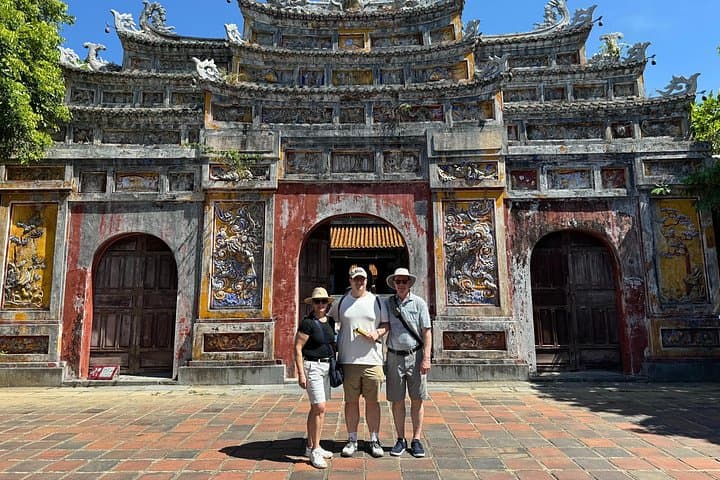
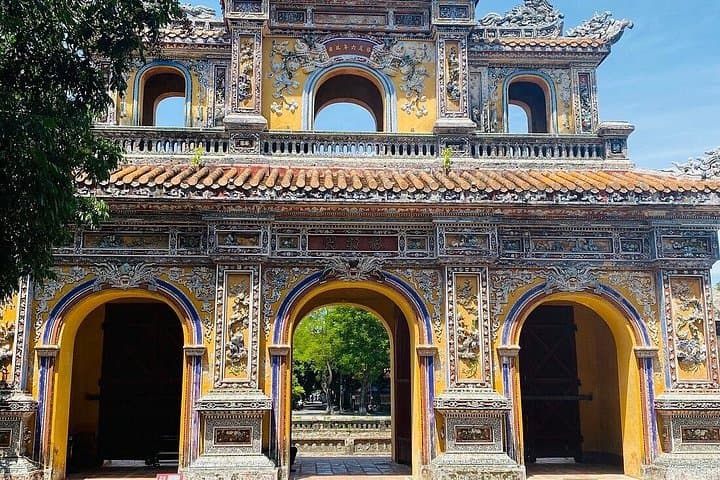
Hue was Vietnam’s imperial heart under the Nguyen emperors; the Citadel still carries that measured authority in weathered gates, pillared halls, and broad courtyards. Walk its grid of palaces and imagine the procession routes; smell incense at Thien Mu and hear vendors arranging the first bundles in Đông Ba Market. South of the city, the royal tombs—Minh Mang’s classical symmetry and Khai Dinh’s ornate mosaic—offer contrasting interpretations of imperial power and funerary art.
Geology here is gentle: low plains fed by the Perfume River, silted banks that supported rice and craft villages for centuries. Local culture centers on craft traditions—conical hats, incense, lacquer—handed down in family workshops that still rise early to shape reed and clay.
Practical guidance: this is a full-day, low-impact cultural tour (roughly 8–9 hours). Wear breathable, conservative clothing for temples, a sun hat, and cushioned walking shoes for uneven stone and market alleys. Carry small bills for market purchases and tip locally for guides who explain complex history and etiquette. Start early to avoid midday heat; bring bottled water and a light rain layer during the monsoon season. The tour balances calm river moments with the steady pace of historical exploration—manageable, vivid, and rich in detail.
easy.
8–9 hours.
Suitable for most fitness levels; expect several short walks and standing during visits
Yes—hotel pickup in Hue city center is included as part of the itinerary.
Yes, entrance fees to listed sites and a local lunch are included in the tour price.
Yes—the operator can accommodate vegetarian and vegan requests if noted in advance.
No—the product is not wheelchair accessible and involves steps and uneven surfaces at several sites.
Hue was the capital of the Nguyen Dynasty (1802–1945); the Imperial Citadel and royal tombs reflect its role as Vietnam’s last feudal seat and are UNESCO-inscribed.
Tourism affects fragile temple grounds and riverbanks—opt for bottled water alternatives when possible and buy directly from artisans to support local economies.
Authentic PHU QUOC operates guided outdoor trips and adventures with an emphasis on safety, stewardship, and memorable experiences.
Dawn on the Perfume River casts a slow silver on the water as a dragon boat slips from the quay toward Thien Mu Pagoda. The bell above the pagoda seems to count the city’s long hours—quiet, deliberate—while the river dares you to slow down and watch the day arrive.
Dawn on the Perfume River casts a slow silver on the water as a dragon boat slips from the quay toward Thien Mu Pagoda. The bell above the pagoda seems to count the city’s long hours—quiet, deliberate—while the river dares you to slow down and watch the day arrive.
Hue was Vietnam’s imperial heart under the Nguyen emperors; the Citadel still carries that measured authority in weathered gates, pillared halls, and broad courtyards. Walk its grid of palaces and imagine the procession routes; smell incense at Thien Mu and hear vendors arranging the first bundles in Đông Ba Market. South of the city, the royal tombs—Minh Mang’s classical symmetry and Khai Dinh’s ornate mosaic—offer contrasting interpretations of imperial power and funerary art.
Geology here is gentle: low plains fed by the Perfume River, silted banks that supported rice and craft villages for centuries. Local culture centers on craft traditions—conical hats, incense, lacquer—handed down in family workshops that still rise early to shape reed and clay.
Practical guidance: this is a full-day, low-impact cultural tour (roughly 8–9 hours). Wear breathable, conservative clothing for temples, a sun hat, and cushioned walking shoes for uneven stone and market alleys. Carry small bills for market purchases and tip locally for guides who explain complex history and etiquette. Start early to avoid midday heat; bring bottled water and a light rain layer during the monsoon season. The tour balances calm river moments with the steady pace of historical exploration—manageable, vivid, and rich in detail.