THE ADVENTURE COLLECTIVE® · Independent discovery and booking for outdoor travel

Spend a full day moving from the Perfume River’s riverside pagodas to the sculpted imperial tombs and busy Dong Ba Market. This guided tour pairs history-rich sites with a local lunch and all entrance fees included.
Spend a full day moving from the Perfume River’s riverside pagodas to the sculpted imperial tombs and busy Dong Ba Market. This guided tour pairs history-rich sites with a local lunch and all entrance fees included.
Morning light slides across the Perfume River as a small group steps from an air-conditioned coach into the hush of Thien Mu Pagoda — rooflines and a seven-tiered tower leaning toward the water as if listening.
Verified experiences and guided adventures in the surrounding area.
Operated by Local Tours PU LUONG · Hue, Thừa Thiên Huế
Morning light slides across the Perfume River as a small group steps from an air-conditioned coach into the hush of Thien Mu Pagoda — rooflines and a seven-tiered tower leaning toward the water as if listening.
This full-day route threads the city's layered past: the Nguyen Dynasty’s Imperial City with its citadel walls and ornate gates, the geometric serenity of Minh Mang’s landscaped tombs, and Khai Dinh’s mosaic-rich mausoleum perched on Chau Chu Mountain where colonial and Vietnamese tastes collide. The day folds in Dong Ba Market’s clamor—fresh herbs, rice paper, lacquerware—and a working craft village where conical hats and incense are still made by hand.
Geology is subtle here: low coastal plains fed by the Huong (Perfume) River, silted channels and verdant floodplains that shaped Hue’s role as a transport and imperial center. Culturally, the city balances ceremonial formality—ritual altars, incense, court architecture—with the practical rhythm of markets and riverboats.
Practical guidance: expect about eight hours of mixed walking, stairs and short transfers by van; arrive mid-morning for cooler light at the tombs and best photo angles. Modest clothing is required at pagodas and mausoleums; bring cash for market purchases and small donations. Hydrate often—central Vietnam can grow sharply warm by late morning—and set aside time after the tour to sip one of Hue’s legendary royal-style soups.
This itinerary is immersive without requiring special fitness; it’s a concentrated primer on Hue’s imperial heart and daily life, useful for travelers wanting history, architecture and street-level culture in a single day.
easy.
8 hours.
Suitable for most travelers able to walk several hours on paved or stone surfaces and climb short flights of temple steps.
Yes — the tour includes all entrance fees for listed sites such as the Imperial City, Thien Mu Pagoda, Minh Mang and Khai Dinh tombs.
Yes — the itinerary includes a scheduled stop at Dong Ba Market for browsing and purchases; bring small notes of Vietnamese dong.
Yes — high-quality transport and a local lunch are included, along with bottled water and tissue as listed in the inclusions.
The tour is family-friendly but involves walking and stairs; it is not recommended for those with serious back, heart, or mobility problems and infants must sit on laps.
Hue served as the Nguyen Dynasty’s imperial capital (1802–1945); many tombs and the citadel reflect court rituals and Confucian cosmology interpreted in garden layouts and axial architecture.
Tourism pressure and river pollution are local concerns; visitors can help by staying on designated paths, avoiding single-use plastics, and supporting locally run craft workshops.
Local Tours PU LUONG operates guided outdoor trips and adventures with an emphasis on safety, stewardship, and memorable experiences.
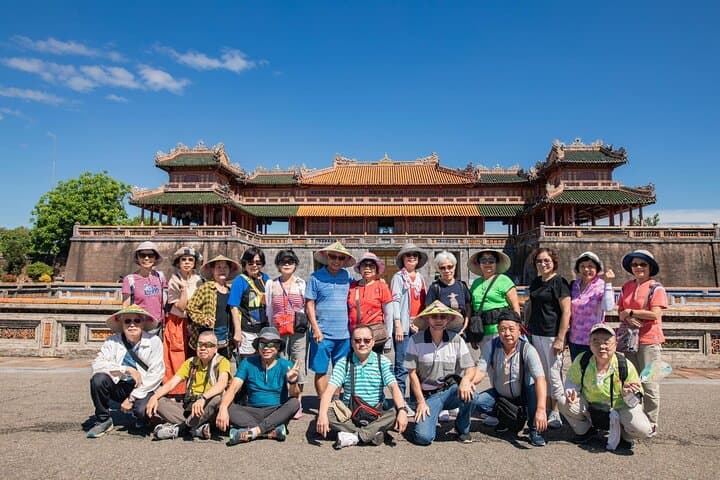
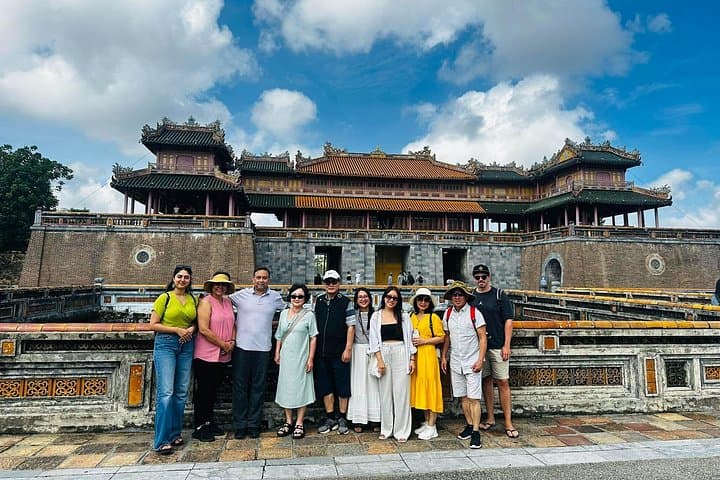
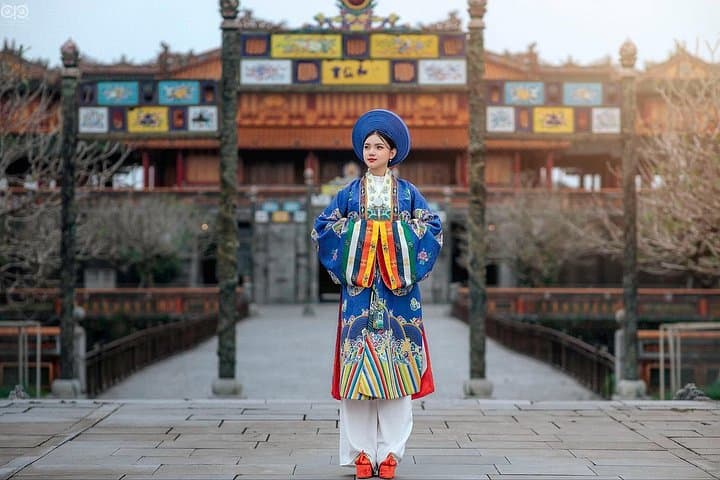
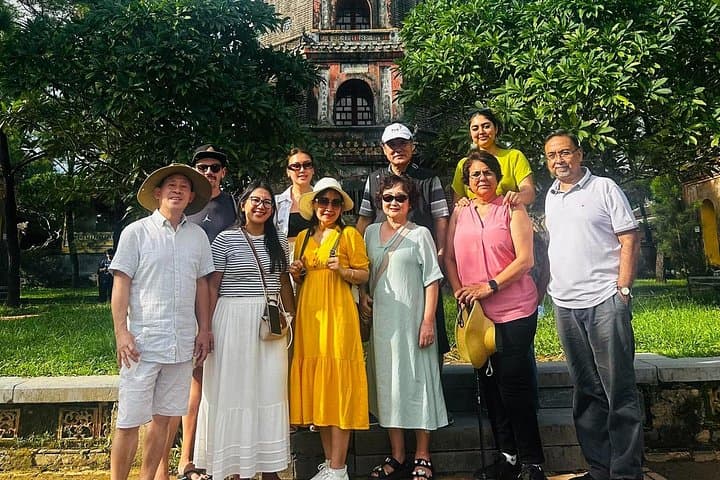
Morning light slides across the Perfume River as a small group steps from an air-conditioned coach into the hush of Thien Mu Pagoda — rooflines and a seven-tiered tower leaning toward the water as if listening.
Morning light slides across the Perfume River as a small group steps from an air-conditioned coach into the hush of Thien Mu Pagoda — rooflines and a seven-tiered tower leaning toward the water as if listening.
This full-day route threads the city's layered past: the Nguyen Dynasty’s Imperial City with its citadel walls and ornate gates, the geometric serenity of Minh Mang’s landscaped tombs, and Khai Dinh’s mosaic-rich mausoleum perched on Chau Chu Mountain where colonial and Vietnamese tastes collide. The day folds in Dong Ba Market’s clamor—fresh herbs, rice paper, lacquerware—and a working craft village where conical hats and incense are still made by hand.
Geology is subtle here: low coastal plains fed by the Huong (Perfume) River, silted channels and verdant floodplains that shaped Hue’s role as a transport and imperial center. Culturally, the city balances ceremonial formality—ritual altars, incense, court architecture—with the practical rhythm of markets and riverboats.
Practical guidance: expect about eight hours of mixed walking, stairs and short transfers by van; arrive mid-morning for cooler light at the tombs and best photo angles. Modest clothing is required at pagodas and mausoleums; bring cash for market purchases and small donations. Hydrate often—central Vietnam can grow sharply warm by late morning—and set aside time after the tour to sip one of Hue’s legendary royal-style soups.
This itinerary is immersive without requiring special fitness; it’s a concentrated primer on Hue’s imperial heart and daily life, useful for travelers wanting history, architecture and street-level culture in a single day.