THE ADVENTURE COLLECTIVE® · Independent discovery and booking for outdoor travel

Travel the Perfume River, step through the gates of the Imperial Citadel, and shop where Hue’s daily life happens—this small-group tour pairs royal history with hands-on market culture. Ideal for history lovers and first-time visitors who want a full-day cultural immersion.
Travel the Perfume River, step through the gates of the Imperial Citadel, and shop where Hue’s daily life happens—this small-group tour pairs royal history with hands-on market culture. Ideal for history lovers and first-time visitors who want a full-day cultural immersion.
The dragon boat cuts a slow, bright line across the Perfume River as morning light slides over tiled roofs; Thien Mu Pagoda rises on the riverbank like a quiet watchtower, incense smoke tugging at your collar. That opening stretch is the tone-setter for a full day in Hue: a city where stone courtyards and lacquered roofs keep records of dynasties, and markets still trade in the rhythms of daily life.
Verified experiences and guided adventures in the surrounding area.
Operated by Authentic Travel HOI AN · Hue, Thua Thien Hue
The dragon boat cuts a slow, bright line across the Perfume River as morning light slides over tiled roofs; Thien Mu Pagoda rises on the riverbank like a quiet watchtower, incense smoke tugging at your collar. That opening stretch is the tone-setter for a full day in Hue: a city where stone courtyards and lacquered roofs keep records of dynasties, and markets still trade in the rhythms of daily life.
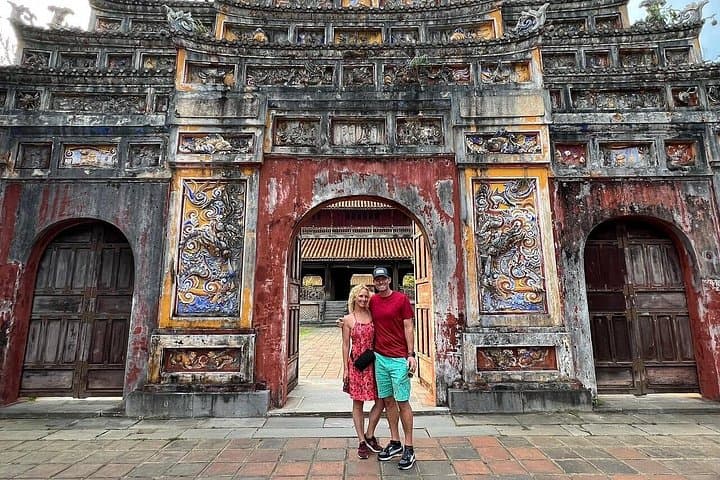
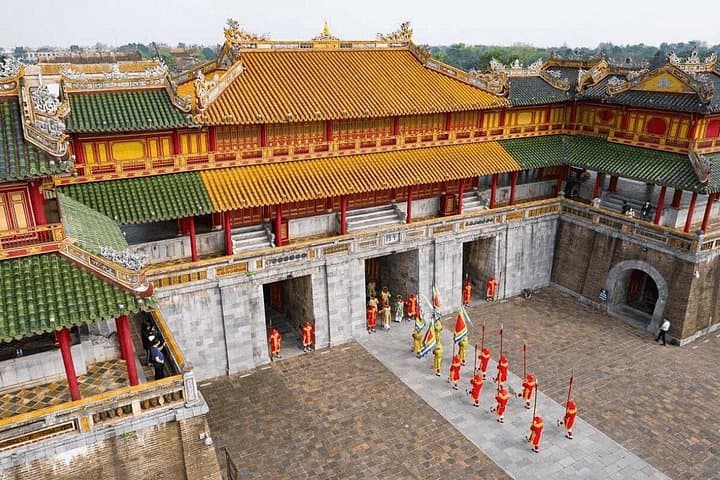
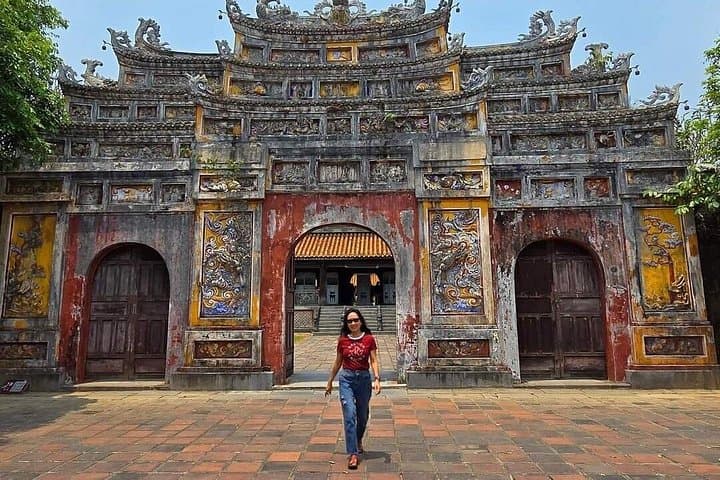
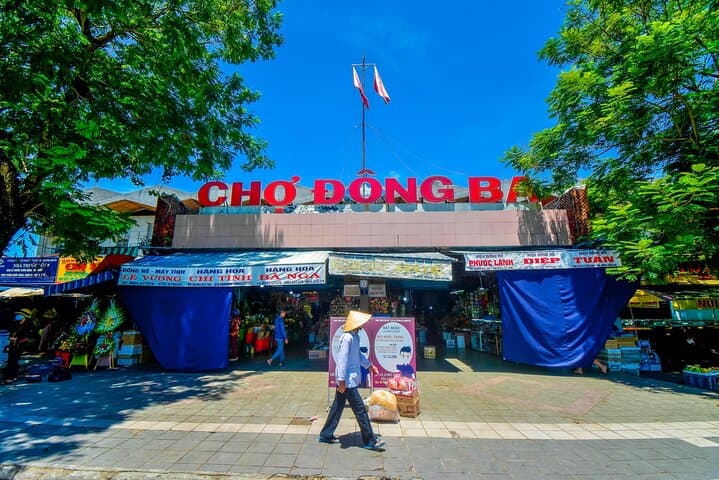
The Imperial Citadel, a UNESCO site, lays out Nguyen-era power in moats, gates, and the Emperor’s private halls—architecture designed around feng shui and hydraulic control. A short drive brings you to Minh Mang and Khai Dinh tombs, contrasting philosophies in stone: classical symmetry versus ornate, mosaic-clad modernity. Dong Ba Market offers a cultural counterpoint—fresh herbs, bánh bèo vendors, and household trades that have supplied the city for generations.
Expect easy walking on paved courtyards and market alleys, some low steps at tomb entrances, and a few short transfers by 16-seater vehicle. Guides will narrate historical context and point out decorative motifs, while local craftsmen at the incense village demonstrate a centuries-old craft.
Practical edge: start with sun protection and a refillable bottle—Hue’s midday humidity and long museum queues make hydration and shade priorities. Comfortable, grippy shoes handle slick stone and riverfront paths; modest dress is required at religious sites. Plan this as a full 9-hour day with breaks for lunch and photo stops; the itinerary balances cultural immersion with manageable pacing so you leave with both context and a clear route back to the river.
easy.
8–9 hours.
Suitable for travelers in average physical condition; requires ability to walk on paved paths and climb short sets of stairs.
The tour runs about 9 hours and typically starts in the morning with hotel pickup in Hue city center; confirm exact pickup time when booking.
Yes—this tour includes entrance fees to listed sites and a restaurant lunch as stated in the inclusions.
The tour is generally suitable for children and travelers with average mobility, but it involves walking and stairs; those with significant mobility issues should check pickup accessibility and tomb stairways in advance.
Yes—there is a scheduled stop at Dong Ba Market with time to browse food stalls, crafts, and local goods; bring small bills for purchases.
Hue was Vietnam’s imperial capital under the Nguyen dynasty (1802–1945); its citadel, tombs, and pagodas reflect imperial ceremony, Confucian planning, and French colonial interactions.
Tour operators encourage staying on designated paths in tomb complexes and limiting single-use plastics; local initiatives support preservation of historical masonry and riverside ecosystems.
Authentic Travel HOI AN operates guided outdoor trips and adventures with an emphasis on safety, stewardship, and memorable experiences.
The dragon boat cuts a slow, bright line across the Perfume River as morning light slides over tiled roofs; Thien Mu Pagoda rises on the riverbank like a quiet watchtower, incense smoke tugging at your collar. That opening stretch is the tone-setter for a full day in Hue: a city where stone courtyards and lacquered roofs keep records of dynasties, and markets still trade in the rhythms of daily life.
The dragon boat cuts a slow, bright line across the Perfume River as morning light slides over tiled roofs; Thien Mu Pagoda rises on the riverbank like a quiet watchtower, incense smoke tugging at your collar. That opening stretch is the tone-setter for a full day in Hue: a city where stone courtyards and lacquered roofs keep records of dynasties, and markets still trade in the rhythms of daily life.
The Imperial Citadel, a UNESCO site, lays out Nguyen-era power in moats, gates, and the Emperor’s private halls—architecture designed around feng shui and hydraulic control. A short drive brings you to Minh Mang and Khai Dinh tombs, contrasting philosophies in stone: classical symmetry versus ornate, mosaic-clad modernity. Dong Ba Market offers a cultural counterpoint—fresh herbs, bánh bèo vendors, and household trades that have supplied the city for generations.
Expect easy walking on paved courtyards and market alleys, some low steps at tomb entrances, and a few short transfers by 16-seater vehicle. Guides will narrate historical context and point out decorative motifs, while local craftsmen at the incense village demonstrate a centuries-old craft.
Practical edge: start with sun protection and a refillable bottle—Hue’s midday humidity and long museum queues make hydration and shade priorities. Comfortable, grippy shoes handle slick stone and riverfront paths; modest dress is required at religious sites. Plan this as a full 9-hour day with breaks for lunch and photo stops; the itinerary balances cultural immersion with manageable pacing so you leave with both context and a clear route back to the river.