THE ADVENTURE COLLECTIVE® · Independent discovery and booking for outdoor travel

Step ashore and follow the Perfume River to Hue’s Imperial Citadel, Thien Mu Pagoda and the ornate tombs of the Nguyen emperors. This private shore excursion combines concentrated cultural history, a riverside boat ride and a local lunch in a single full-day itinerary.
Step ashore and follow the Perfume River to Hue’s Imperial Citadel, Thien Mu Pagoda and the ornate tombs of the Nguyen emperors. This private shore excursion combines concentrated cultural history, a riverside boat ride and a local lunch in a single full-day itinerary.
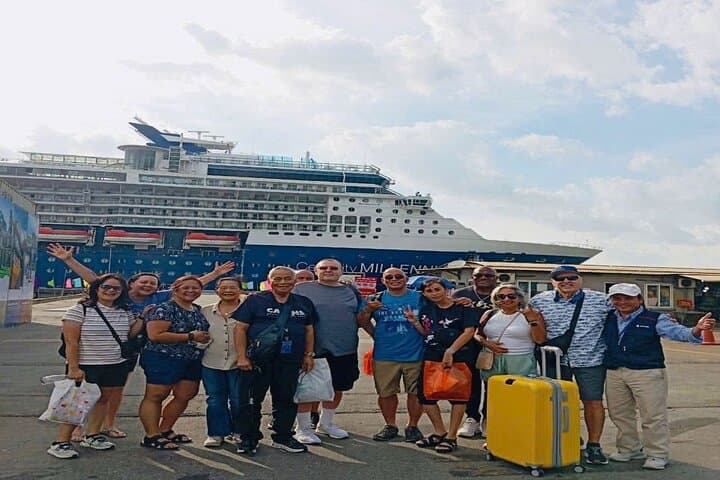
The morning begins at the port gate: a private van hums to life and the Perfume River slides parallel to the road, guiding the convoy toward the old capital. By the time visitors step into the Citadel’s broad courtyards, the air tastes faintly of incense and the slow current seems to press the city’s stories forward.
Verified experiences and guided adventures in the surrounding area.
Operated by Hiep Hoi An Travel · Hue, Thua Thien-Hue
The morning begins at the port gate: a private van hums to life and the Perfume River slides parallel to the road, guiding the convoy toward the old capital. By the time visitors step into the Citadel’s broad courtyards, the air tastes faintly of incense and the slow current seems to press the city’s stories forward.
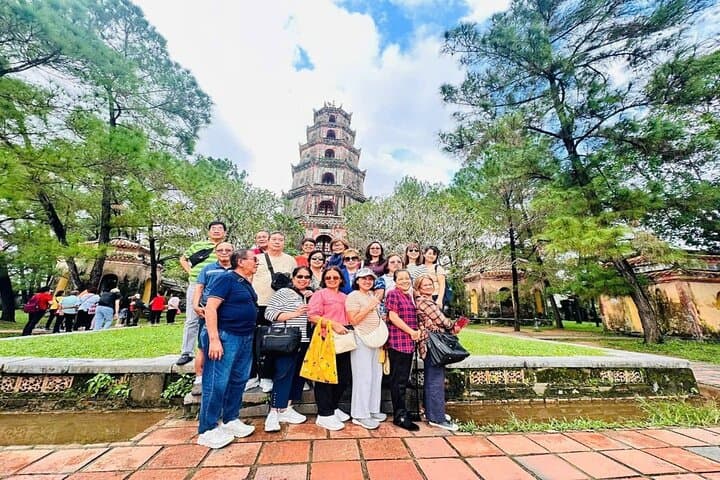
Hue’s Imperial Citadel was the political center of the Nguyen Dynasty (1802–1945). Stone walls, lacquered beams and restored gates mark the footprint of a court shaped by Confucian ritual and French colonial encounters. Downriver, Thien Mu Pagoda perches above a bend in the Perfume; its tiered tower and riverside stairs reflect Buddhist practice and landscape planning that privileges axial views and feng shui balance.
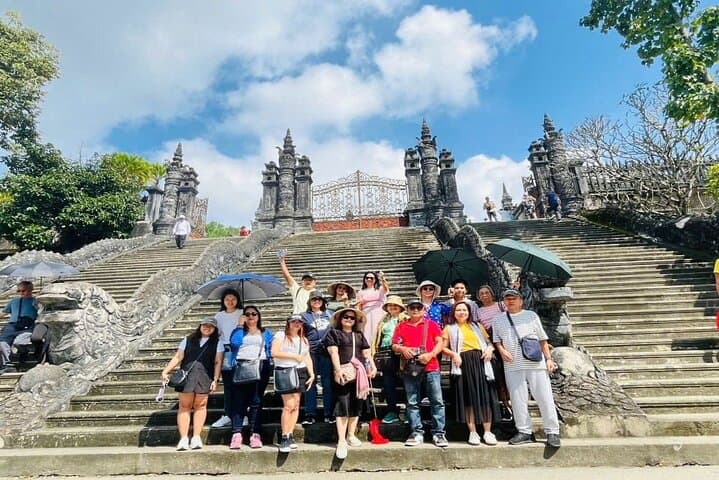
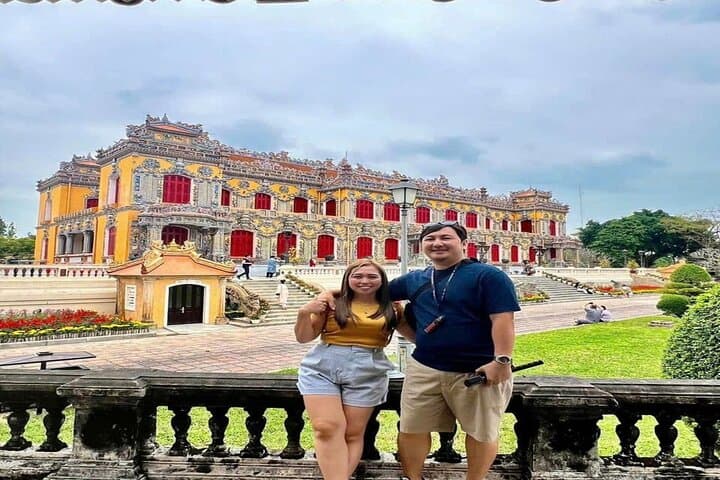
Geologically this stretch of central Vietnam sits on a low coastal plain fed by alluvial deposits from the Bo and Huong (Perfume) rivers — which made Hue accessible by water and desirable for imperial settlement. Cultural notes: imperial tombs such as Khai Dinh fuse Vietnamese symbolism with European mosaics, revealing the late dynasty’s complex identity.
Practically, expect a full 8–9 hour day with several short walks across uneven stone and tiled steps, guided museum-style stops, a dragon-boat segment on calm river water and a local lunch spotlighting Hue cuisine. Wear grippy, breathable shoes, carry sun protection and a small daypack for water and camera gear. Allow extra time for photos at tomb terraces and conserve space for market souvenirs; ports require punctual returns. This excursion suits travelers who want concentrated cultural history with easy to moderate physical demands.
moderate.
8–9 hours.
Light to moderate fitness: able to walk short distances, climb stairs, and stand during guided stops.
Visa requirements depend on your nationality; check Vietnam entry rules before travel and ensure your passport is valid for the required period.
Most listings include entrance fees to the Imperial Citadel and specified tombs—confirm with the operator at booking for any optional sites.
Port pickup and transport may be wheelchair accessible, but expect uneven terrain and steps at historic sites; contact the operator to discuss mobility needs.
Yes, the operator typically offers vegetarian options and can handle allergies if notified in advance.
Hue served as Vietnam’s imperial capital under the Nguyen Dynasty and contains ceremonial architecture and royal tombs that blend Confucian order with later colonial influences.
The Citadel and surrounding sites are under ongoing restoration efforts; visitors should avoid touching fragile mosaics and follow designated paths to minimize wear.
Hiep Hoi An Travel operates guided outdoor trips and adventures with an emphasis on safety, stewardship, and memorable experiences.
The morning begins at the port gate: a private van hums to life and the Perfume River slides parallel to the road, guiding the convoy toward the old capital. By the time visitors step into the Citadel’s broad courtyards, the air tastes faintly of incense and the slow current seems to press the city’s stories forward.
The morning begins at the port gate: a private van hums to life and the Perfume River slides parallel to the road, guiding the convoy toward the old capital. By the time visitors step into the Citadel’s broad courtyards, the air tastes faintly of incense and the slow current seems to press the city’s stories forward.
Hue’s Imperial Citadel was the political center of the Nguyen Dynasty (1802–1945). Stone walls, lacquered beams and restored gates mark the footprint of a court shaped by Confucian ritual and French colonial encounters. Downriver, Thien Mu Pagoda perches above a bend in the Perfume; its tiered tower and riverside stairs reflect Buddhist practice and landscape planning that privileges axial views and feng shui balance.
Geologically this stretch of central Vietnam sits on a low coastal plain fed by alluvial deposits from the Bo and Huong (Perfume) rivers — which made Hue accessible by water and desirable for imperial settlement. Cultural notes: imperial tombs such as Khai Dinh fuse Vietnamese symbolism with European mosaics, revealing the late dynasty’s complex identity.
Practically, expect a full 8–9 hour day with several short walks across uneven stone and tiled steps, guided museum-style stops, a dragon-boat segment on calm river water and a local lunch spotlighting Hue cuisine. Wear grippy, breathable shoes, carry sun protection and a small daypack for water and camera gear. Allow extra time for photos at tomb terraces and conserve space for market souvenirs; ports require punctual returns. This excursion suits travelers who want concentrated cultural history with easy to moderate physical demands.