THE ADVENTURE COLLECTIVE® · Independent discovery and booking for outdoor travel

Board a dragon boat on the Perfume River and move from serene pagoda to sprawling imperial citadel on a full‑day small group tour of Hue. Combine riverside ritual, royal tomb architecture, and a bustling market for a compact cultural immersion.
Board a dragon boat on the Perfume River and move from serene pagoda to sprawling imperial citadel on a full‑day small group tour of Hue. Combine riverside ritual, royal tomb architecture, and a bustling market for a compact cultural immersion.
Dawn on the Perfume River feels deliberate — the dragon boat cuts a steady line across dark water while incense smoke curls from Thien Mu Pagoda and village dogs call from riverbank alleys.
Verified experiences and guided adventures in the surrounding area.
Operated by Authentic PHU QUOC · Hue, Thua Thien-Hue
Dawn on the Perfume River feels deliberate — the dragon boat cuts a steady line across dark water while incense smoke curls from Thien Mu Pagoda and village dogs call from riverbank alleys.
You arrive by water, which frames Hue as both a living city and a historical stage. The morning visit to Thien Mu places you in a spiritual calm; later the Imperial Citadel reveals the scale of the Nguyen Dynasty’s court with broad courtyards, faded murals, and the layered defenses of an 19th‑century capital. Between palace halls and temple pavilions, guides point out construction techniques, mandarin offices, and the citadel’s UNESCO designation.
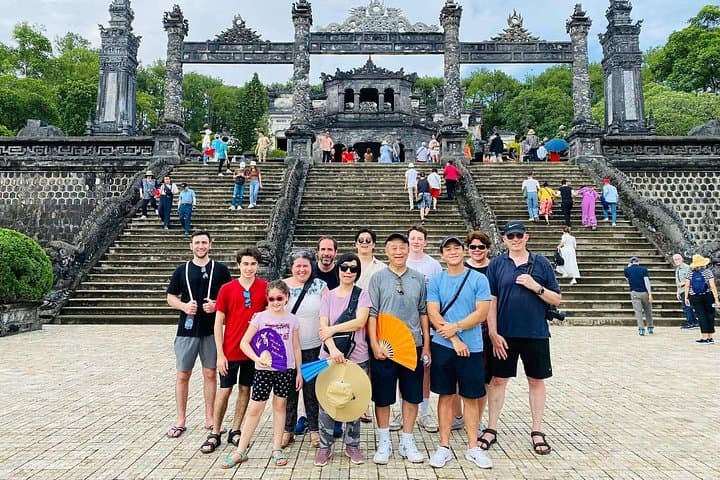
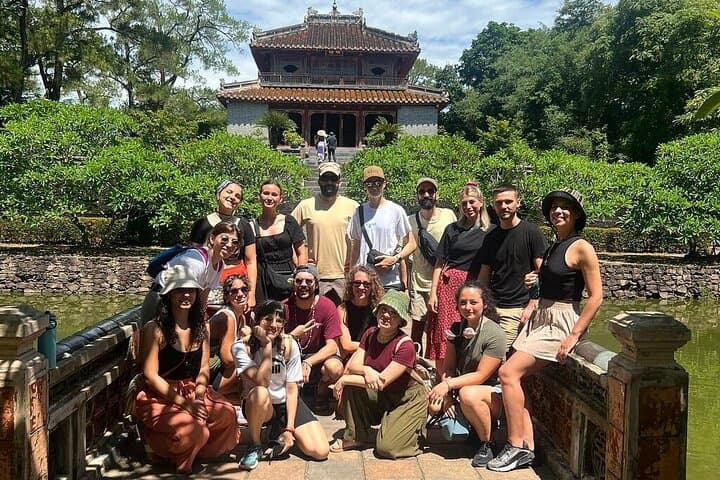
Geology and setting matter here: the low, alluvial plains of the Perfume River built Hue as a riverine hub, making boat travel central to daily life and ceremony. Minh Mang and Khai Dinh tombs show evolving architectural tastes — the former ordered and axial, the latter ornate and mosaic‑heavy — offering a clear contrast in imperial funerary design.
By midday you’ll move from history to market life at Đông Ba, where morning produce and street snacks create a bracing, sensory counterpoint to palaces. A village visit completes the loop: watch conical hat makers and incense artisans shape materials by hand.
Practical guidance: expect 8–9 hours of mostly easy walking on stone and paved surfaces, intermittent steps at tombs, and sharp sun on the river. Pack sun protection, a light rain layer in monsoon season, comfortable shoes for uneven stone, and small cash for market purchases. Aim for an early start to avoid crowds and the peak heat of the afternoon.
easy.
8–9 hours.
Suitable for travelers with basic mobility; expect several short walks and stairs at historical sites
Yes — the boat ride is calm and family‑friendly, though young children should wear life jackets if provided and remain seated during the crossing.
Yes — the tour includes entrance fees to the Citadel and the royal tombs as part of the package.
Yes — operators can usually accommodate vegetarian and vegan requests if noted at booking; inform the guide of allergies in advance.
No — many historical sites have steps and uneven surfaces and the tour is not wheelchair accessible.
Hue served as the seat of the Nguyen Dynasty (1802–1945); the Imperial Citadel and royal tombs reflect the city’s role as Vietnam’s last feudal capital and are UNESCO‑recognized.
Heritage sites in Hue are sensitive to foot traffic and humidity; stick to marked paths, avoid touching fragile murals, and support local craftspeople directly to spur sustainable tourism.
Authentic PHU QUOC operates guided outdoor trips and adventures with an emphasis on safety, stewardship, and memorable experiences.
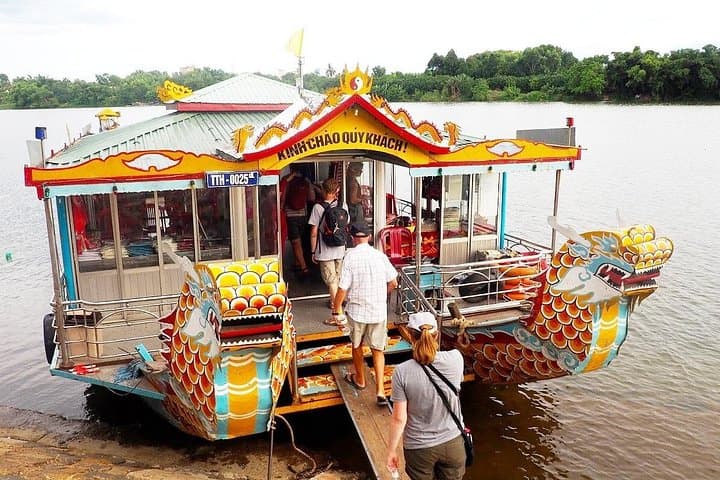

Dawn on the Perfume River feels deliberate — the dragon boat cuts a steady line across dark water while incense smoke curls from Thien Mu Pagoda and village dogs call from riverbank alleys.
Dawn on the Perfume River feels deliberate — the dragon boat cuts a steady line across dark water while incense smoke curls from Thien Mu Pagoda and village dogs call from riverbank alleys.
You arrive by water, which frames Hue as both a living city and a historical stage. The morning visit to Thien Mu places you in a spiritual calm; later the Imperial Citadel reveals the scale of the Nguyen Dynasty’s court with broad courtyards, faded murals, and the layered defenses of an 19th‑century capital. Between palace halls and temple pavilions, guides point out construction techniques, mandarin offices, and the citadel’s UNESCO designation.
Geology and setting matter here: the low, alluvial plains of the Perfume River built Hue as a riverine hub, making boat travel central to daily life and ceremony. Minh Mang and Khai Dinh tombs show evolving architectural tastes — the former ordered and axial, the latter ornate and mosaic‑heavy — offering a clear contrast in imperial funerary design.
By midday you’ll move from history to market life at Đông Ba, where morning produce and street snacks create a bracing, sensory counterpoint to palaces. A village visit completes the loop: watch conical hat makers and incense artisans shape materials by hand.
Practical guidance: expect 8–9 hours of mostly easy walking on stone and paved surfaces, intermittent steps at tombs, and sharp sun on the river. Pack sun protection, a light rain layer in monsoon season, comfortable shoes for uneven stone, and small cash for market purchases. Aim for an early start to avoid crowds and the peak heat of the afternoon.