THE ADVENTURE COLLECTIVE® · Independent discovery and booking for outdoor travel

Glide the Perfume River by dragon boat to Thien Mu Pagoda, Hon Chen Temple and the ornate tombs of the Nguyen emperors—an immersive half-day that pairs calm river scenery with imperial history.
Glide the Perfume River by dragon boat to Thien Mu Pagoda, Hon Chen Temple and the ornate tombs of the Nguyen emperors—an immersive half-day that pairs calm river scenery with imperial history.
A low-slung dragon boat parts the slow current of the Perfume River as early light sharpens the silhouettes of cajeput trees and tiled roofs. The motor hums, stoking the river’s mood — gentle, reflective, and quietly insistent — while the city of Hue unspools on both banks: faded imperial walls, temple roofs, and quiet docks where morning vendors push baskets of fruit.
Verified experiences and guided adventures in the surrounding area.
Operated by Samtour Vietnam · Hue, Thua Thien-Hue
A low-slung dragon boat parts the slow current of the Perfume River as early light sharpens the silhouettes of cajeput trees and tiled roofs. The motor hums, stoking the river’s mood — gentle, reflective, and quietly insistent — while the city of Hue unspools on both banks: faded imperial walls, temple roofs, and quiet docks where morning vendors push baskets of fruit.
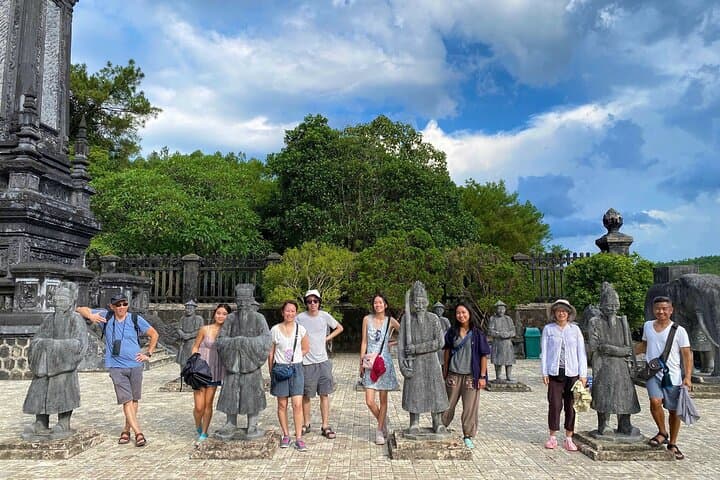
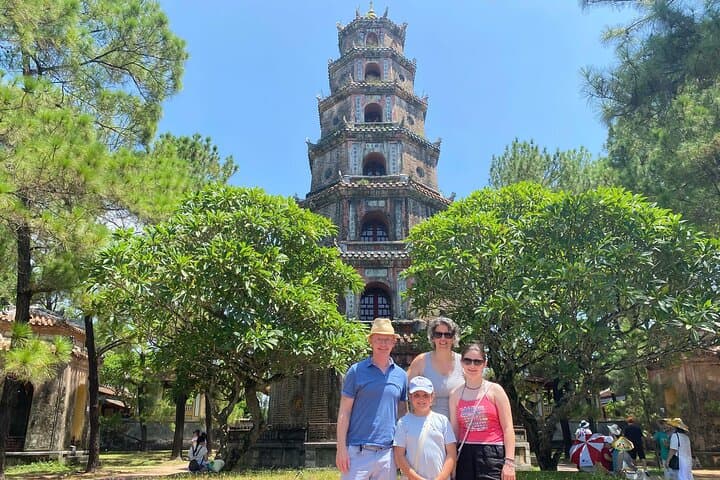
This route stitches together Hue’s living history. Thien Mu Pagoda, rising from the riverbank with its iconic seven-story tower, marks the city's deep Buddhist ties; further upriver the Hon Chen complex perches on Ngoc Tran Mountain, a palace of ritual and legend. The mausoleums of Minh Mang and Khai Dinh illustrate two contrasting visions of the Nguyen dynasty—classical symmetry and ornate, cross-cultural excess—set into landscaped ponds and axial gardens that follow traditional feng shui lines.
Geologically the Perfume River is a slow lowland waterway fed from upstream highlands; its banks collect silt and support mangled banyans and cajeput trees that shade roving waterbirds. Culturally the ride is as much about sightlines—the river framing imperial architecture—as it is about the tactile: boat spray, stone-carved dragons, incense smoke.
Practical guide: expect a 6–7 hour private tour with hotel pickup, a series of short boat hops, guided temple visits, and a few easy walks across tomb complexes. Wear sturdy walking shoes, a light rain layer, sun protection, and bring cash for any tomb entrance fees or donations. Morning departures avoid heat and provide cleaner river views; carry water and move at the guide’s pace to respect sacred sites.
easy.
6–7 hours.
Light activity with short walks and steps; suitable for most fitness levels.
Yes — the tour includes pickup and drop-off from hotels within central Hue as stated in the itinerary.
Boat cruise and some pagoda admissions are included; entrance fees for certain royal tombs are commonly paid on-site—confirm with the operator at booking.
Life jackets are provided; the river is calm but children and non-swimmers should remain seated when the vessel is moving and follow guide instructions.
Expect several short walks of 10–30 minutes across level to moderately stepped terrain at pagodas and tomb complexes; most routes are suitable for standard mobility, but uneven ground exists.
Hue was Vietnam’s imperial capital under the Nguyen dynasty (1802–1945); the river served as a ceremonial artery linking palaces, pagodas and mausoleums.
The Perfume River faces urban runoff and seasonal siltation—respect marked paths, avoid littering, and prefer operators who limit boat size to reduce wake and bank erosion.
Samtour Vietnam operates guided outdoor trips and adventures with an emphasis on safety, stewardship, and memorable experiences.
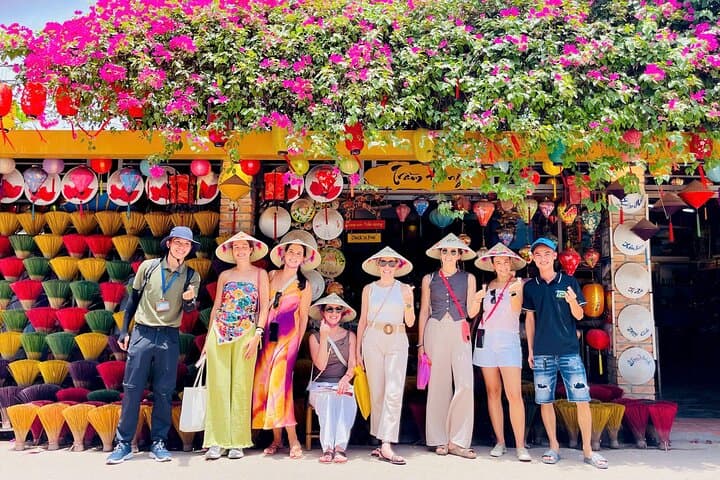
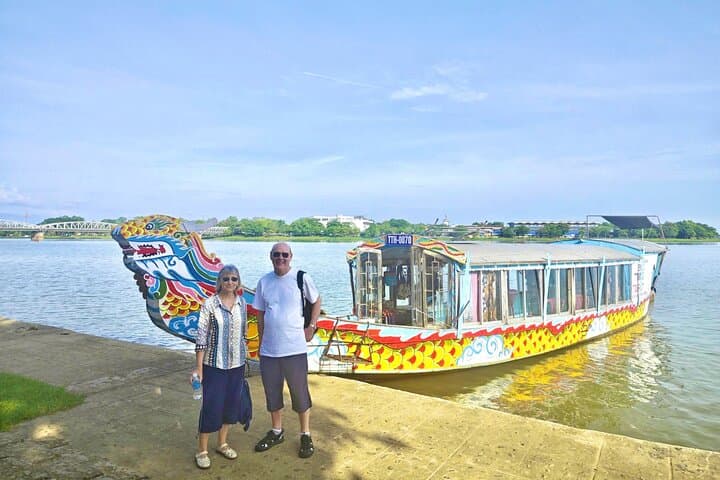
A low-slung dragon boat parts the slow current of the Perfume River as early light sharpens the silhouettes of cajeput trees and tiled roofs. The motor hums, stoking the river’s mood — gentle, reflective, and quietly insistent — while the city of Hue unspools on both banks: faded imperial walls, temple roofs, and quiet docks where morning vendors push baskets of fruit.
A low-slung dragon boat parts the slow current of the Perfume River as early light sharpens the silhouettes of cajeput trees and tiled roofs. The motor hums, stoking the river’s mood — gentle, reflective, and quietly insistent — while the city of Hue unspools on both banks: faded imperial walls, temple roofs, and quiet docks where morning vendors push baskets of fruit.
This route stitches together Hue’s living history. Thien Mu Pagoda, rising from the riverbank with its iconic seven-story tower, marks the city's deep Buddhist ties; further upriver the Hon Chen complex perches on Ngoc Tran Mountain, a palace of ritual and legend. The mausoleums of Minh Mang and Khai Dinh illustrate two contrasting visions of the Nguyen dynasty—classical symmetry and ornate, cross-cultural excess—set into landscaped ponds and axial gardens that follow traditional feng shui lines.
Geologically the Perfume River is a slow lowland waterway fed from upstream highlands; its banks collect silt and support mangled banyans and cajeput trees that shade roving waterbirds. Culturally the ride is as much about sightlines—the river framing imperial architecture—as it is about the tactile: boat spray, stone-carved dragons, incense smoke.
Practical guide: expect a 6–7 hour private tour with hotel pickup, a series of short boat hops, guided temple visits, and a few easy walks across tomb complexes. Wear sturdy walking shoes, a light rain layer, sun protection, and bring cash for any tomb entrance fees or donations. Morning departures avoid heat and provide cleaner river views; carry water and move at the guide’s pace to respect sacred sites.