THE ADVENTURE COLLECTIVE® · Independent discovery and booking for outdoor travel

Spend a focused eight hours moving from temple pagodas on the Perfume River to the gates of the Imperial City and the ornate royal tombs. This guided day tour mixes short river cruise time with hands-on village visits and air-conditioned transport.
Spend a focused eight hours moving from temple pagodas on the Perfume River to the gates of the Imperial City and the ornate royal tombs. This guided day tour mixes short river cruise time with hands-on village visits and air-conditioned transport.
A bell chimes across the Perfume River as the boat nudges away from Toa Kham — cool water sliding past the hull, the river daring you to look up where Thien Mu Pagoda crowns the hill. The day moves in measured chapters: a dim temple porch, a low teak house where sticky rice steams on bamboo trays, the broad stone gateways of the Imperial City.
Verified experiences and guided adventures in the surrounding area.
Operated by Le Gia Travel · Hue, Thua Thien-Hue
A bell chimes across the Perfume River as the boat nudges away from Toa Kham — cool water sliding past the hull, the river daring you to look up where Thien Mu Pagoda crowns the hill. The day moves in measured chapters: a dim temple porch, a low teak house where sticky rice steams on bamboo trays, the broad stone gateways of the Imperial City.
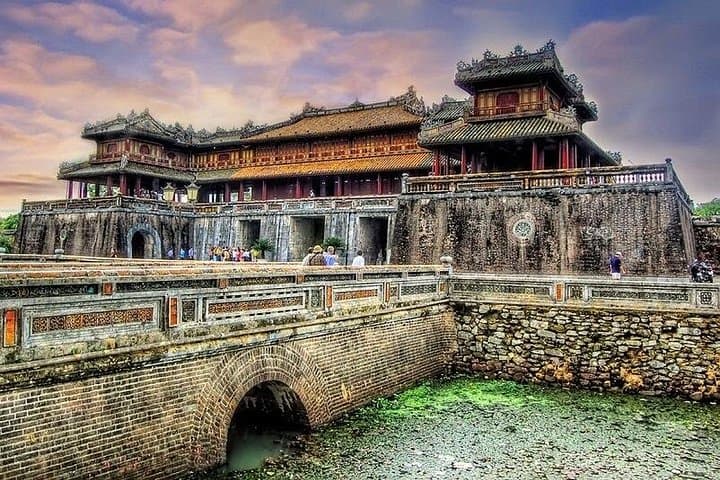
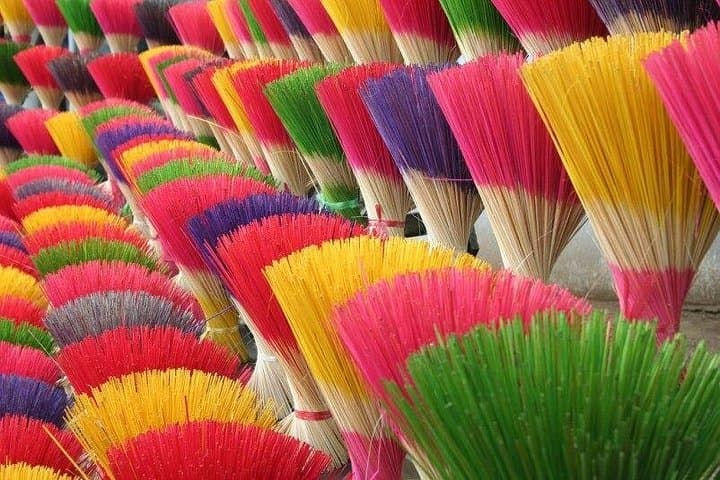
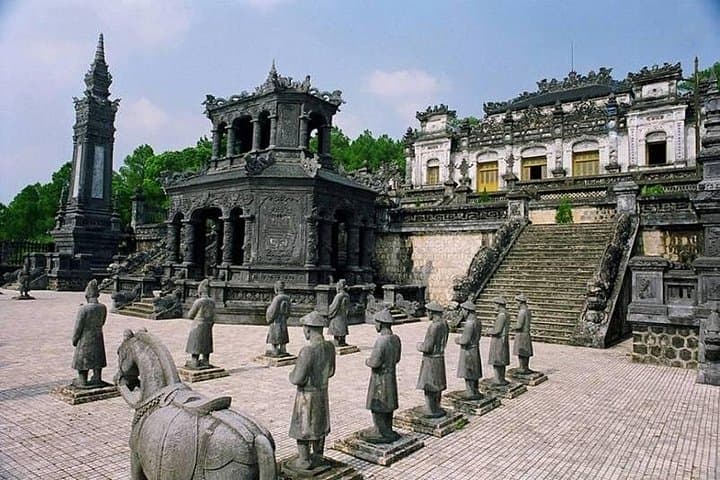
Hue sits on a low plain cut by the Perfume River and shaped by alluvial silt from upstream; geology here made room for citadels and tombs. The Nguyen emperors left a compact set of sites — the Citadel’s Ngo Mon gate, Minh Mang’s axial gardens, Khai Dinh’s baroque-influenced mausoleum — that show late imperial Vietnam and European touches side-by-side. Local crafts persist in small ways: villages that still roll incense and stitch conical hats offer hands-on visits rather than staged markets.
Practical side: this is an easy, full-day loop (about 8 hours) run by air-conditioned vans with a short river cruise; expect 30–120 minute stops and walking on uneven stone and packed earth. Carry sun protection, a modest amount of cash for village stalls and entrance fees already included at major tombs, and shoes that can handle temple steps and riverbank mud. Bring a light rain layer during monsoon months and plan for hotel pickup in central Hue.
By daylight or late afternoon on Vong Canh Hill, the city opens up; the tour gives a concentrated, approachable portrait of Hue’s layered history and living traditions.
easy.
8 hours.
Suitable for travelers with basic mobility; involves repeated short walks and some steps
Major tombs and the Imperial City are included as noted in the itinerary; always confirm on booking for any recent pricing changes.
Yes — pickup from central Hue hotels is typically included; confirm your pickup point when you book.
The tour is rated easy and suitable for most ages, but expect some walking and stairs; inform the operator of mobility needs in advance.
Guides are commonly available in English; other languages may require advance request, so check at booking.
Hue was the seat of the Nguyen Dynasty (1802–1945); the Imperial City and nearby royal tombs reflect imperial rituals and 19th–early 20th-century architecture, including Western influences visible at Khai Dinh's tomb.
Conservation efforts focus on protecting fragile citadel structures and limiting wear from tourism; visitors should avoid touching painted surfaces and support local craft workshops rather than markets that sell mass-produced goods.
Le Gia Travel operates guided outdoor trips and adventures with an emphasis on safety, stewardship, and memorable experiences.
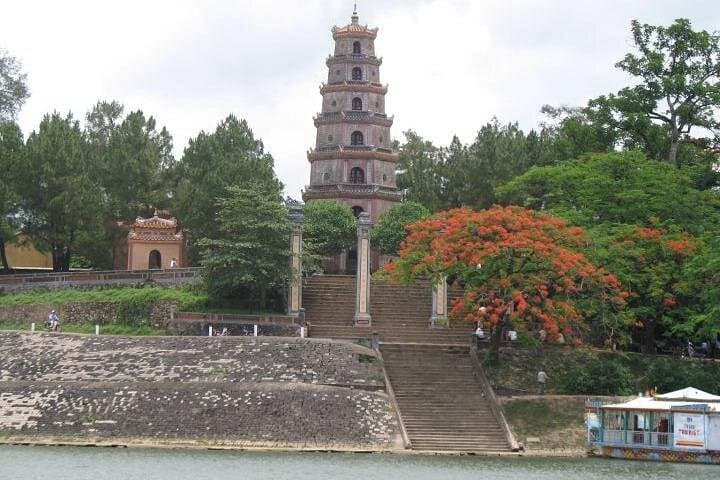
A bell chimes across the Perfume River as the boat nudges away from Toa Kham — cool water sliding past the hull, the river daring you to look up where Thien Mu Pagoda crowns the hill. The day moves in measured chapters: a dim temple porch, a low teak house where sticky rice steams on bamboo trays, the broad stone gateways of the Imperial City.
A bell chimes across the Perfume River as the boat nudges away from Toa Kham — cool water sliding past the hull, the river daring you to look up where Thien Mu Pagoda crowns the hill. The day moves in measured chapters: a dim temple porch, a low teak house where sticky rice steams on bamboo trays, the broad stone gateways of the Imperial City.
Hue sits on a low plain cut by the Perfume River and shaped by alluvial silt from upstream; geology here made room for citadels and tombs. The Nguyen emperors left a compact set of sites — the Citadel’s Ngo Mon gate, Minh Mang’s axial gardens, Khai Dinh’s baroque-influenced mausoleum — that show late imperial Vietnam and European touches side-by-side. Local crafts persist in small ways: villages that still roll incense and stitch conical hats offer hands-on visits rather than staged markets.
Practical side: this is an easy, full-day loop (about 8 hours) run by air-conditioned vans with a short river cruise; expect 30–120 minute stops and walking on uneven stone and packed earth. Carry sun protection, a modest amount of cash for village stalls and entrance fees already included at major tombs, and shoes that can handle temple steps and riverbank mud. Bring a light rain layer during monsoon months and plan for hotel pickup in central Hue.
By daylight or late afternoon on Vong Canh Hill, the city opens up; the tour gives a concentrated, approachable portrait of Hue’s layered history and living traditions.