THE ADVENTURE COLLECTIVE® · Independent discovery and booking for outdoor travel

Spend a calm day cycling through rice paddies and lotus ponds at La Chu Village, harvesting vegetables, sharing a home-cooked meal with villagers, and soaking in traditional rural life just outside Hue.
Spend a calm day cycling through rice paddies and lotus ponds at La Chu Village, harvesting vegetables, sharing a home-cooked meal with villagers, and soaking in traditional rural life just outside Hue.
A mist-laced lane opens before you — a narrow ribbon of packed earth framed by low brick walls and rows of banana leaves that whisper as bicycles pass. Morning sunlight slips across lotus ponds while the village dog watches from a stilted doorway. This six-hour loop from central Hue moves at the pace of the fields: deliberate, sensory, small discoveries between temple gates and family plots.
Verified experiences and guided adventures in the surrounding area.
Operated by Madam Thu Farm · Hue, Thua Thien-Hue
A mist-laced lane opens before you — a narrow ribbon of packed earth framed by low brick walls and rows of banana leaves that whisper as bicycles pass. Morning sunlight slips across lotus ponds while the village dog watches from a stilted doorway. This six-hour loop from central Hue moves at the pace of the fields: deliberate, sensory, small discoveries between temple gates and family plots.
La Chu sits in the flat alluvial plain south of the Perfume River, where centuries of rice cultivation and lotus farming shape the land. The area carries Hue’s imperial echoes — communal houses and pagodas reflect traditional village governance and religious life stretching back through the Nguyen era. The soil here is river-silted and fertile, and you’ll see it in the patchwork of vegetable beds, lotus ponds, and small-scale organic methods still used by local farmers.
Culturally the day centers on hands-on exchange: pedal quiet lanes, visit a market and a family temple, harvest vegetables at Madam Thu’s farm, and join hosts to prepare a rustic meal. Nature has agency here — ponds dare you to slow down; the monsoon can arrive like a fast, cooling hand. Practicalities matter: rides are short and flat, English-speaking guides handle logistics, and transfers from Hue are included.
Bring sun protection, a modest respect for temple spaces, and an appetite for home-cooked food. Timing is everything — early starts avoid humidity and give you clearer light for photos. The tour suits anyone comfortable on a bicycle and curious about rural life — a gentle, immersive counterpoint to Hue’s citadel and riverfront bustle.
easy.
5–6 hours.
Suitable for most fitness levels; participants should be comfortable cycling short distances and standing during demonstrations.
Yes — a bicycle for the village tour is included; guides will match bike size and offer basic safety orientation.
The home-cooked lunch is prepared from local ingredients; notify booking of dietary restrictions and hosts will accommodate when possible.
The itinerary is gentle and family-friendly, but participants should be able to ride a bike and walk short distances; it’s not recommended for those with serious mobility or heart conditions.
An English-speaking local guide is included; interactions with village hosts may be translated by the guide.
Villages around Hue preserved village-level institutions and agricultural practices that supported the imperial capital; communal houses and pagodas are focal points of local life.
The village economy relies on small-scale farming and homestays; visitors are encouraged to support local producers, minimize plastic waste, and stick to paths to avoid trampling crops.
Madam Thu Farm operates guided outdoor trips and adventures with an emphasis on safety, stewardship, and memorable experiences.
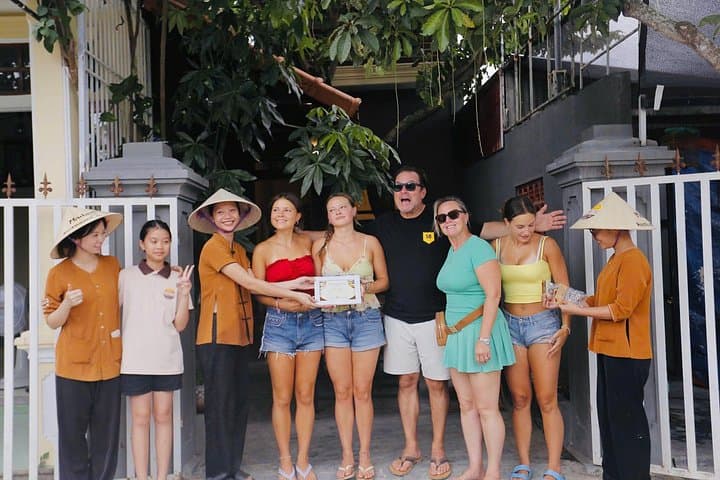
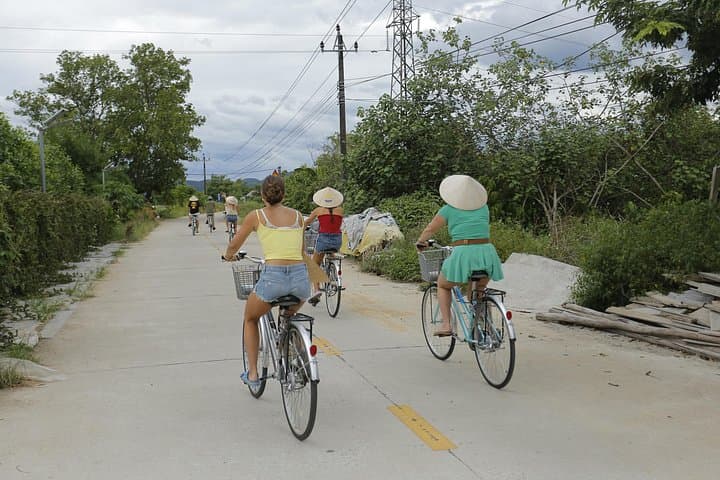
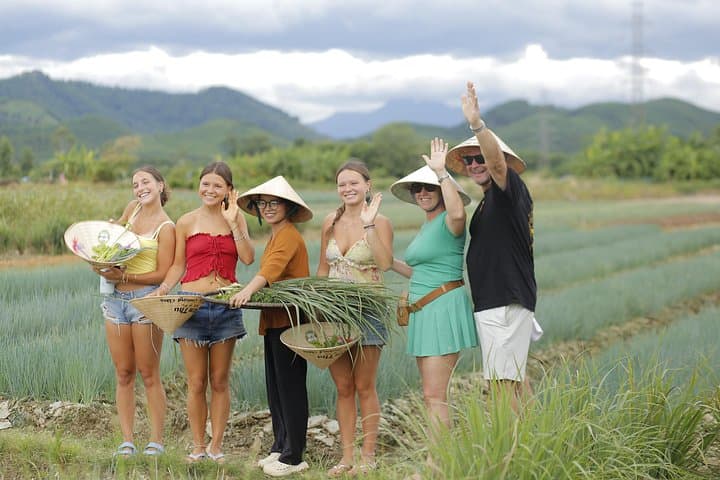
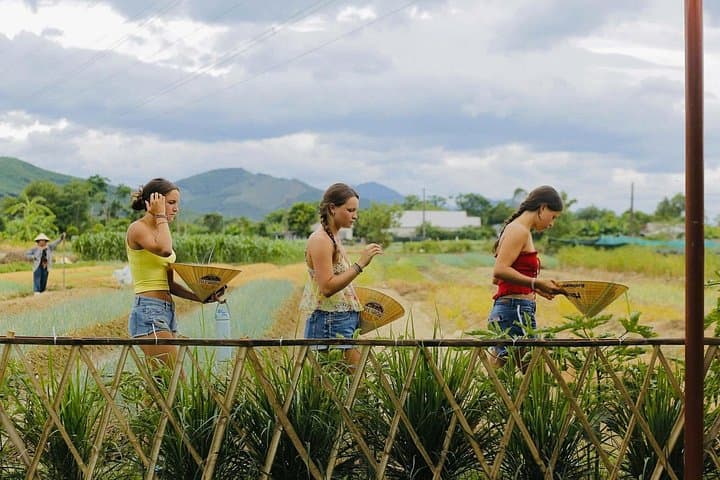
A mist-laced lane opens before you — a narrow ribbon of packed earth framed by low brick walls and rows of banana leaves that whisper as bicycles pass. Morning sunlight slips across lotus ponds while the village dog watches from a stilted doorway. This six-hour loop from central Hue moves at the pace of the fields: deliberate, sensory, small discoveries between temple gates and family plots.
A mist-laced lane opens before you — a narrow ribbon of packed earth framed by low brick walls and rows of banana leaves that whisper as bicycles pass. Morning sunlight slips across lotus ponds while the village dog watches from a stilted doorway. This six-hour loop from central Hue moves at the pace of the fields: deliberate, sensory, small discoveries between temple gates and family plots.
La Chu sits in the flat alluvial plain south of the Perfume River, where centuries of rice cultivation and lotus farming shape the land. The area carries Hue’s imperial echoes — communal houses and pagodas reflect traditional village governance and religious life stretching back through the Nguyen era. The soil here is river-silted and fertile, and you’ll see it in the patchwork of vegetable beds, lotus ponds, and small-scale organic methods still used by local farmers.
Culturally the day centers on hands-on exchange: pedal quiet lanes, visit a market and a family temple, harvest vegetables at Madam Thu’s farm, and join hosts to prepare a rustic meal. Nature has agency here — ponds dare you to slow down; the monsoon can arrive like a fast, cooling hand. Practicalities matter: rides are short and flat, English-speaking guides handle logistics, and transfers from Hue are included.
Bring sun protection, a modest respect for temple spaces, and an appetite for home-cooked food. Timing is everything — early starts avoid humidity and give you clearer light for photos. The tour suits anyone comfortable on a bicycle and curious about rural life — a gentle, immersive counterpoint to Hue’s citadel and riverfront bustle.