THE ADVENTURE COLLECTIVE® · Independent discovery and booking for outdoor travel

Spend a day moving from Xi'an to the sheer granite ridges of Mount Hua with a private driver waiting while you hike. Expect steep stone steps, exposed ridgelines, and summit winds — a demanding but highly rewarding day trip.
Spend a day moving from Xi'an to the sheer granite ridges of Mount Hua with a private driver waiting while you hike. Expect steep stone steps, exposed ridgelines, and summit winds — a demanding but highly rewarding day trip.
You step out of your Xi'an hotel before sunrise and the driver eases the van onto the highway; low terraces and hazy foothills slide by as the city loosens its grip. Two hours and roughly 120 km later you arrive at the base of Mount Hua — a steep, rocky spine rising to 2,180 m, its five jagged peaks carving the skyline. The path immediately tightens: stone steps hewn into near-vertical faces, narrow ridgelines that demand concentration, and sudden viewpoints that make you pause and breathe.
Verified experiences and guided adventures in the surrounding area.
Operated by Xian Tours · Huayin, Shaanxi
You step out of your Xi'an hotel before sunrise and the driver eases the van onto the highway; low terraces and hazy foothills slide by as the city loosens its grip. Two hours and roughly 120 km later you arrive at the base of Mount Hua — a steep, rocky spine rising to 2,180 m, its five jagged peaks carving the skyline. The path immediately tightens: stone steps hewn into near-vertical faces, narrow ridgelines that demand concentration, and sudden viewpoints that make you pause and breathe.
Mount Hua is one of China’s five sacred mountains with a history of Daoist pilgrimage and hermit caves dating back over a millennium. The mountain’s geology is predominantly hard granite; glacial and fluvial erosion left sheer cliffs and knife-edge ridges that travelers now follow. Local culture still marks the peaks with small shrines and prayer ribbons, and nearby Huayin city has long served as the gateway town.
Practically, this is a full day: your private driver collects you from the hotel (commonly at 8:00), waits while you hike for several hours, then returns you to Xi'an. Routes vary — you can climb steep steps or use cable cars on some approaches — but expect significant elevation gain, exposed sections, and narrow footing. Bring a passport for park entry, layered clothing for cooler summit winds, sturdy hiking shoes, at least 1–2 liters of water, and cash for food at mountain stalls, which tends to be pricey. If you have heart or spinal issues, or are pregnant, choose an alternative — the mountain rewards careful preparation with dramatic ridgeline panoramas and an unforgettable, physically demanding day.
challenging.
8–10 hours (including transfers).
Should be in good cardio shape with the ability to manage sustained stair climbing and exposure to heights
The drive is approximately 2 hours (around 120 km) each way, though traffic can extend total travel time.
Children should be supervised and seniors should assess mobility and cardiovascular fitness—sections are steep and exposed.
Yes, cable cars operate on some approaches and can reduce ascent time, but availability depends on season and route.
No—lunch is not included; food is sold on the mountain but tends to be expensive, so bring snacks or a packed lunch.
Mount Hua has been a site of Daoist practice and pilgrimage for over a thousand years; temples and hermit caves reflect that cultural heritage.
Trail erosion and litter are local concerns; stick to marked paths, pack out trash, and respect shrine sites to reduce impact.
Xian Tours operates guided outdoor trips and adventures with an emphasis on safety, stewardship, and memorable experiences.
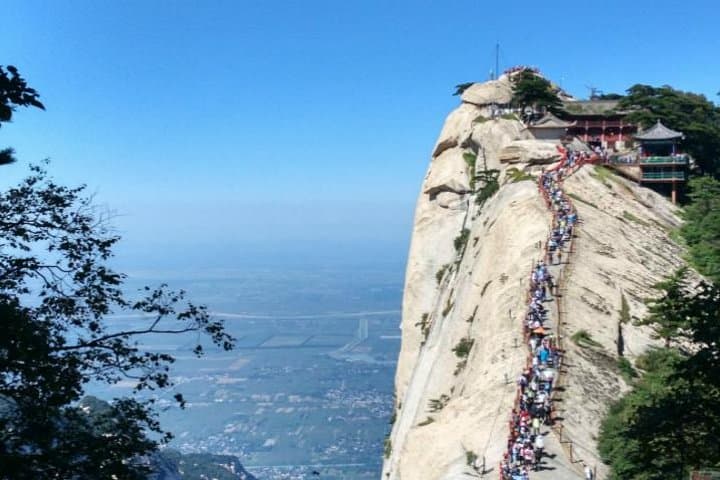
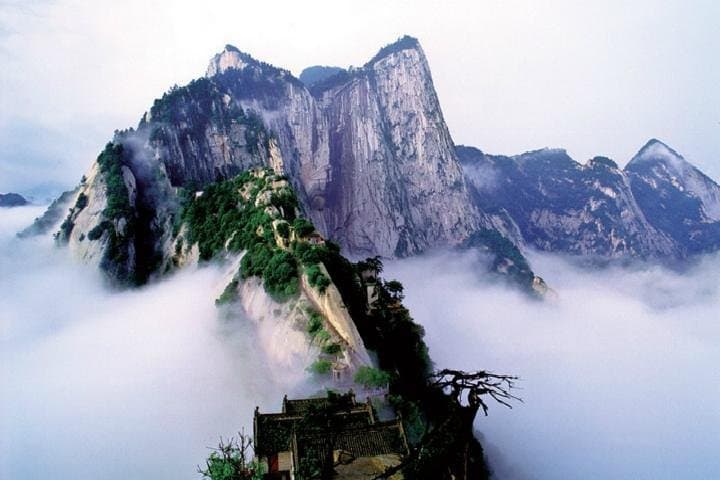
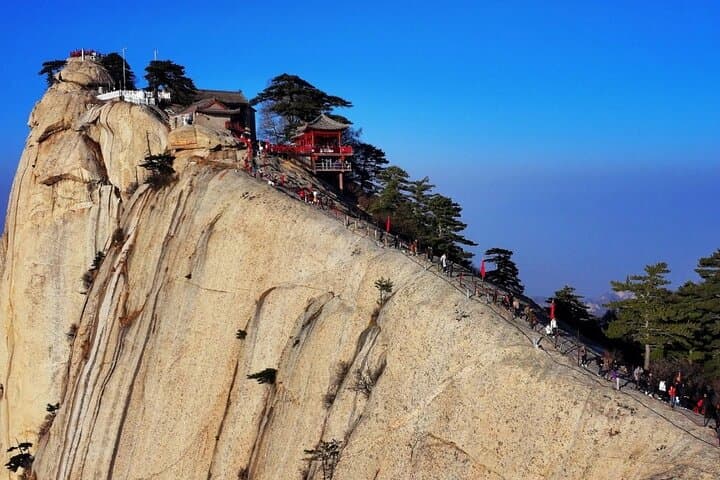
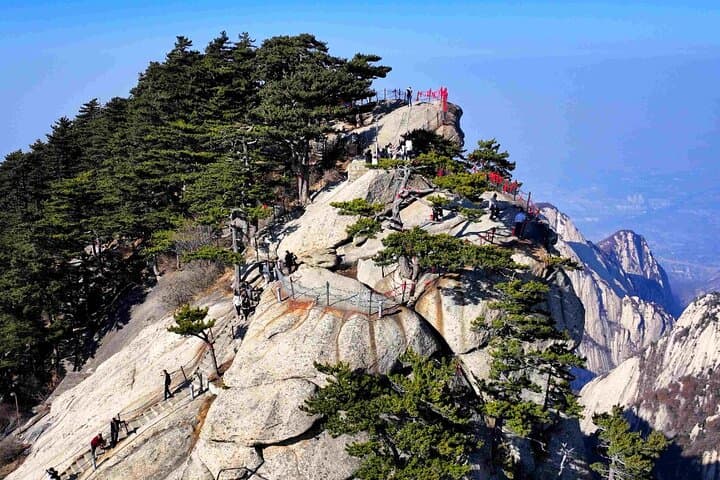
You step out of your Xi'an hotel before sunrise and the driver eases the van onto the highway; low terraces and hazy foothills slide by as the city loosens its grip. Two hours and roughly 120 km later you arrive at the base of Mount Hua — a steep, rocky spine rising to 2,180 m, its five jagged peaks carving the skyline. The path immediately tightens: stone steps hewn into near-vertical faces, narrow ridgelines that demand concentration, and sudden viewpoints that make you pause and breathe.
You step out of your Xi'an hotel before sunrise and the driver eases the van onto the highway; low terraces and hazy foothills slide by as the city loosens its grip. Two hours and roughly 120 km later you arrive at the base of Mount Hua — a steep, rocky spine rising to 2,180 m, its five jagged peaks carving the skyline. The path immediately tightens: stone steps hewn into near-vertical faces, narrow ridgelines that demand concentration, and sudden viewpoints that make you pause and breathe.
Mount Hua is one of China’s five sacred mountains with a history of Daoist pilgrimage and hermit caves dating back over a millennium. The mountain’s geology is predominantly hard granite; glacial and fluvial erosion left sheer cliffs and knife-edge ridges that travelers now follow. Local culture still marks the peaks with small shrines and prayer ribbons, and nearby Huayin city has long served as the gateway town.
Practically, this is a full day: your private driver collects you from the hotel (commonly at 8:00), waits while you hike for several hours, then returns you to Xi'an. Routes vary — you can climb steep steps or use cable cars on some approaches — but expect significant elevation gain, exposed sections, and narrow footing. Bring a passport for park entry, layered clothing for cooler summit winds, sturdy hiking shoes, at least 1–2 liters of water, and cash for food at mountain stalls, which tends to be pricey. If you have heart or spinal issues, or are pregnant, choose an alternative — the mountain rewards careful preparation with dramatic ridgeline panoramas and an unforgettable, physically demanding day.