THE ADVENTURE COLLECTIVE® · Independent discovery and booking for outdoor travel

Explore two contrasting sections of the Great Wall on a private day tour—one a rugged lakeside ruin, the other a restored panoramic ridge with chairlift access. This guided route balances quiet, original masonry with accessible viewpoints and local lunch.
Explore two contrasting sections of the Great Wall on a private day tour—one a rugged lakeside ruin, the other a restored panoramic ridge with chairlift access. This guided route balances quiet, original masonry with accessible viewpoints and local lunch.
You step from the private car into thin northern air; the wall rises ahead—stone work half-swallowed by grasses at Huanghuacheng, intact watchtowers stacked along the ridgeline at Mutianyu. The day moves between two very different faces of the Great Wall: a quiet lakeside stretch where moss and water claim the stones, and a restored, panoramic section with connected towers and cable-access options.
Verified experiences and guided adventures in the surrounding area.
Operated by Wild Huanghuacheng Great Wall · Beijing, Beijing
You step from the private car into thin northern air; the wall rises ahead—stone work half-swallowed by grasses at Huanghuacheng, intact watchtowers stacked along the ridgeline at Mutianyu. The day moves between two very different faces of the Great Wall: a quiet lakeside stretch where moss and water claim the stones, and a restored, panoramic section with connected towers and cable-access options.
Huanghuacheng preserves Ming-era masonry in a semi-wild state where the wall threads around reservoirs carved by later engineering. Mutianyu, rebuilt in the 20th century for preservation and visitors, gives clear sightlines across valleys and terraced farmland. Together they illustrate the Wall’s military logic—lines of sight, fortified nodes—and the geology beneath: granite ridges, steep schist slopes and human-built terraces that made construction possible.
Culturally, this tour weaves guide stories about local village life in Huairou, regional food at a village restaurant, and the seasonal rhythms that still shape access. Expect roughly 2–3 hours hiking at each site, joined by drives between them, a chairlift up and an optional toboggan down at Mutianyu when dry. Terrain varies from uneven, original steps and loose gravel at Huanghuacheng to well-maintained staircases at Mutianyu; both require steady footing.
Practical guidance: wear grippy footwear, carry 1–2 liters of water, sun protection and a light rain layer. Start early to avoid midafternoon heat and tour buses. The private format gives flexibility—pace the hikes, take photos at quieter towers, and plan for an active 8–10 hour outing with moderate fitness demands.
moderate.
8–10 hours.
Moderately fit: able to walk several hours, handle stair climbs and uneven terrain.
The private tour runs about 8–10 hours with roughly 2 hours of walking at each Great Wall section; expect stairs and uneven terrain.
The toboggan operates in dry conditions; it will be closed in rain and replaced by the ski lift descent when wet.
Entrance fees and chairlift/toboggan tickets at Mutianyu are included according to the tour listing; confirm at booking for any updates.
Yes — the private format allows pacing for families, but travelers should be comfortable with stairs and moderate hikes; infants can use specialized seats in the vehicle.
These sections reflect Ming dynasty fortifications; Mutianyu was strategically important for protecting Beijing approaches, while Huanghuacheng preserves less-restored stretches shaped by later reservoir flooding.
Visitor impact is managed at Mutianyu with restored pathways and controlled access; at Huanghuacheng stay on established routes to protect fragile masonry and shoreline vegetation.
Wild Huanghuacheng Great Wall operates guided outdoor trips and adventures with an emphasis on safety, stewardship, and memorable experiences.
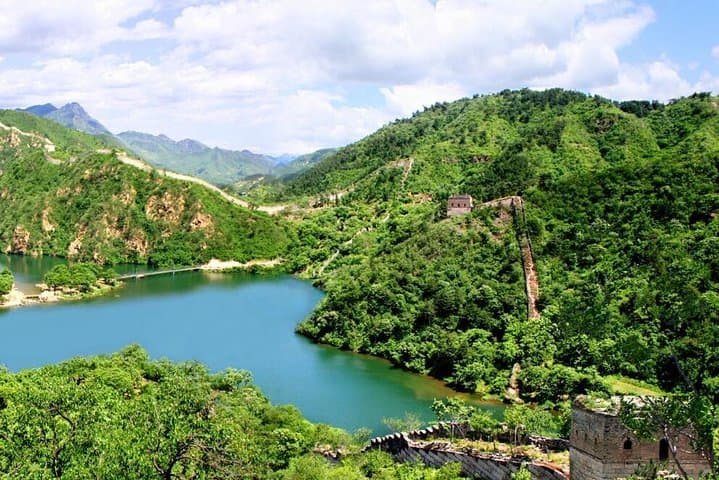
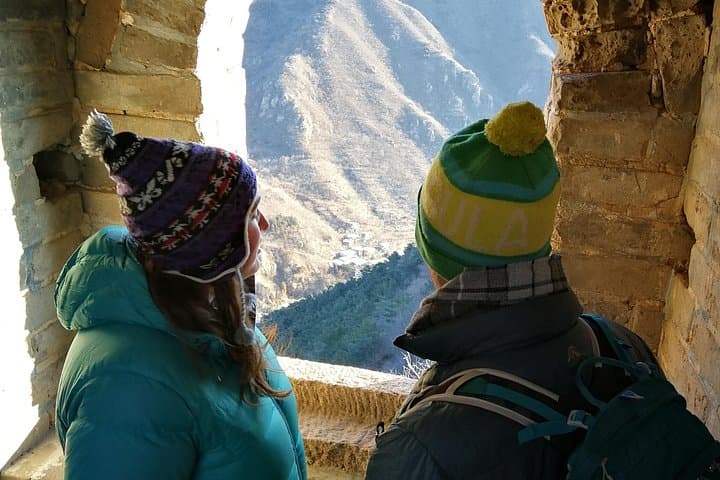
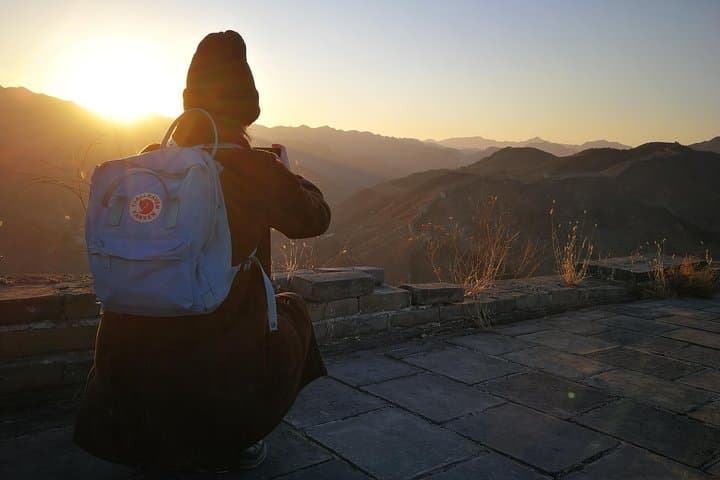
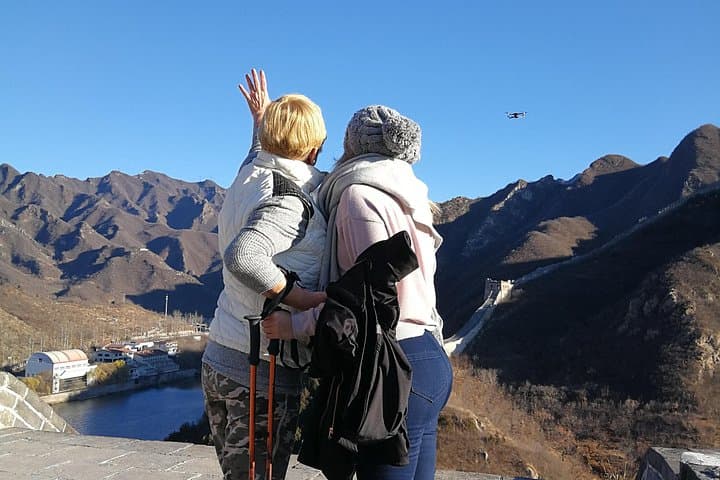
You step from the private car into thin northern air; the wall rises ahead—stone work half-swallowed by grasses at Huanghuacheng, intact watchtowers stacked along the ridgeline at Mutianyu. The day moves between two very different faces of the Great Wall: a quiet lakeside stretch where moss and water claim the stones, and a restored, panoramic section with connected towers and cable-access options.
You step from the private car into thin northern air; the wall rises ahead—stone work half-swallowed by grasses at Huanghuacheng, intact watchtowers stacked along the ridgeline at Mutianyu. The day moves between two very different faces of the Great Wall: a quiet lakeside stretch where moss and water claim the stones, and a restored, panoramic section with connected towers and cable-access options.
Huanghuacheng preserves Ming-era masonry in a semi-wild state where the wall threads around reservoirs carved by later engineering. Mutianyu, rebuilt in the 20th century for preservation and visitors, gives clear sightlines across valleys and terraced farmland. Together they illustrate the Wall’s military logic—lines of sight, fortified nodes—and the geology beneath: granite ridges, steep schist slopes and human-built terraces that made construction possible.
Culturally, this tour weaves guide stories about local village life in Huairou, regional food at a village restaurant, and the seasonal rhythms that still shape access. Expect roughly 2–3 hours hiking at each site, joined by drives between them, a chairlift up and an optional toboggan down at Mutianyu when dry. Terrain varies from uneven, original steps and loose gravel at Huanghuacheng to well-maintained staircases at Mutianyu; both require steady footing.
Practical guidance: wear grippy footwear, carry 1–2 liters of water, sun protection and a light rain layer. Start early to avoid midafternoon heat and tour buses. The private format gives flexibility—pace the hikes, take photos at quieter towers, and plan for an active 8–10 hour outing with moderate fitness demands.