THE ADVENTURE COLLECTIVE® · Independent discovery and booking for outdoor travel

Learn to wakeboard or try foiling in the sheltered waters of Howe Sound, a two-hour experience from Squamish that includes wetsuit, lifejacket and expert coaching. Calm mornings, clean wakes and dramatic mountain walls make it ideal for beginners and experienced riders alike.
Learn to wakeboard or try foiling in the sheltered waters of Howe Sound, a two-hour experience from Squamish that includes wetsuit, lifejacket and expert coaching. Calm mornings, clean wakes and dramatic mountain walls make it ideal for beginners and experienced riders alike.
You step off the dock into morning stillness and the boat slips out into Howe Sound—water like glass, granite ridges rising on either side, the smell of cold salt and cedar. The instructor fits your wetsuit and lifejacket, runs through a quick safety brief, and the rope hums as you lean back against the wake. Whether you’re clipping into a foil for the first time or chasing your next heel-side carve, the fjord’s sheltered arms give you clean water and room to push technique.
Verified experiences and guided adventures in the surrounding area.
Operated by Squamish Watersports · Squamish, British Columbia
You step off the dock into morning stillness and the boat slips out into Howe Sound—water like glass, granite ridges rising on either side, the smell of cold salt and cedar. The instructor fits your wetsuit and lifejacket, runs through a quick safety brief, and the rope hums as you lean back against the wake. Whether you’re clipping into a foil for the first time or chasing your next heel-side carve, the fjord’s sheltered arms give you clean water and room to push technique.
Howe Sound is a glacial fjord carved by ice, framed by the Coast Mountains and long used by the Indigenous Squamish Nation for travel and harvesting. The steep, hard rock shores (mostly granodiorite and schist) produce predictable wind and swell patterns that riders and boat operators read like a map. Marine life—harbour seals, porpoises and bald eagles—is common; the sound’s recent recovery from industrial pollution is part of the area’s ongoing conservation story.
Practically: tours run about two hours, meet in Squamish, and include wetsuit, lifejacket, board/foil and instruction. Expect moderate physical effort—basic swimming comfort, quick reflexes and lower-body strength help. Mornings are usually the calmest; book early for glassy conditions and bring a change of clothes and a towel. Operators often require a minimum of two participants or a paid spotter if you’re alone, and they do not recommend the activity for pregnant guests or those with spinal or serious heart conditions.
Plan for cool spray even on warm days, respect wildlife distances, and treat the fjord with the same care you’d show any alpine environment—pack out, minimize noise, and follow your instructor’s guidance for the safest, most productive session.
moderate.
2 hours.
Good basic fitness and comfort in open water; able to handle short, intense bursts and repeated recovery from falls.
No — lessons accommodate beginners through advanced riders; instructors progress you through stance, edge control and standing up on the board or foil.
Typical inclusions are wetsuit, lifejacket, board or foil, instructor and locker/change-room access; confirm exact items with the operator before booking.
Sessions are approximately two hours and generally meet at a Squamish watersports dock; drive time is about 45–60 minutes from Vancouver and 45 minutes from Whistler depending on traffic.
Operators usually require moderate fitness, no serious heart conditions, no pregnancy, and may set age limits; disclose medical conditions when booking.
Howe Sound is a glacial fjord on traditional Squamish Nation territory; the area’s marine and logging history shaped local communities and recent conservation efforts.
Operators often follow marine guidelines to avoid disturbing wildlife—keep distance from mammals, minimize noise and secure all gear and trash to protect the recovering fjord ecosystem.
Squamish Watersports operates guided outdoor trips and adventures with an emphasis on safety, stewardship, and memorable experiences.
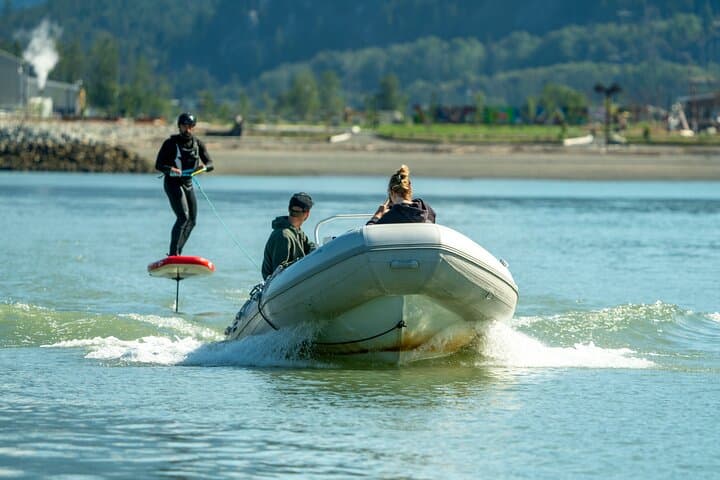
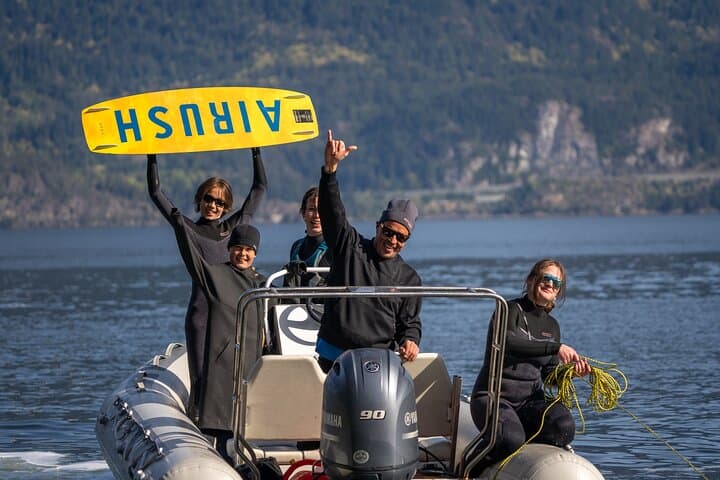
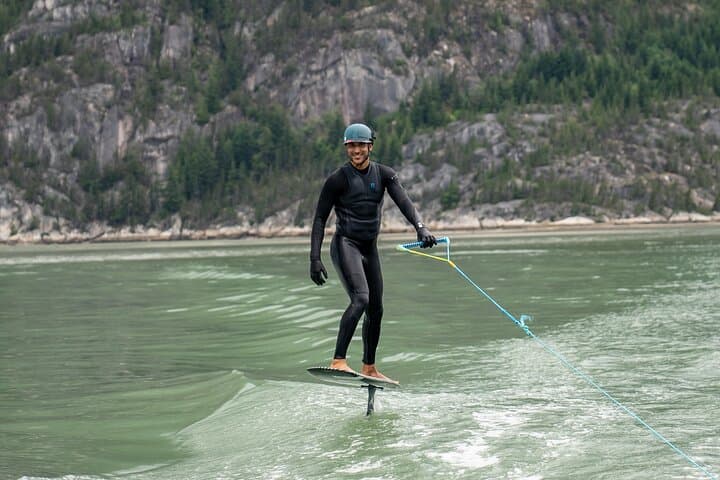
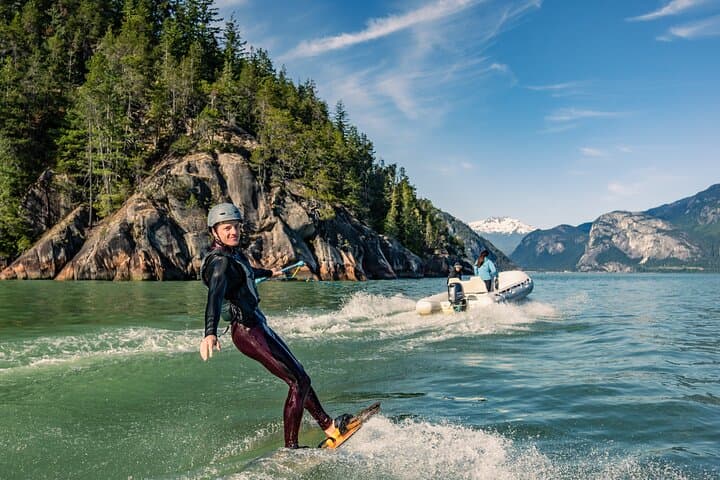
You step off the dock into morning stillness and the boat slips out into Howe Sound—water like glass, granite ridges rising on either side, the smell of cold salt and cedar. The instructor fits your wetsuit and lifejacket, runs through a quick safety brief, and the rope hums as you lean back against the wake. Whether you’re clipping into a foil for the first time or chasing your next heel-side carve, the fjord’s sheltered arms give you clean water and room to push technique.
You step off the dock into morning stillness and the boat slips out into Howe Sound—water like glass, granite ridges rising on either side, the smell of cold salt and cedar. The instructor fits your wetsuit and lifejacket, runs through a quick safety brief, and the rope hums as you lean back against the wake. Whether you’re clipping into a foil for the first time or chasing your next heel-side carve, the fjord’s sheltered arms give you clean water and room to push technique.
Howe Sound is a glacial fjord carved by ice, framed by the Coast Mountains and long used by the Indigenous Squamish Nation for travel and harvesting. The steep, hard rock shores (mostly granodiorite and schist) produce predictable wind and swell patterns that riders and boat operators read like a map. Marine life—harbour seals, porpoises and bald eagles—is common; the sound’s recent recovery from industrial pollution is part of the area’s ongoing conservation story.
Practically: tours run about two hours, meet in Squamish, and include wetsuit, lifejacket, board/foil and instruction. Expect moderate physical effort—basic swimming comfort, quick reflexes and lower-body strength help. Mornings are usually the calmest; book early for glassy conditions and bring a change of clothes and a towel. Operators often require a minimum of two participants or a paid spotter if you’re alone, and they do not recommend the activity for pregnant guests or those with spinal or serious heart conditions.
Plan for cool spray even on warm days, respect wildlife distances, and treat the fjord with the same care you’d show any alpine environment—pack out, minimize noise, and follow your instructor’s guidance for the safest, most productive session.