THE ADVENTURE COLLECTIVE® · Independent discovery and booking for outdoor travel

Rise before sunrise in Tulum and ride two hours to the nutrient-rich waters off Isla Mujeres, where whale sharks gather. This half-day trip balances practical logistics—transport, gear, and rules—with an intimate, guided snorkeling encounter that emphasizes conservation.
Rise before sunrise in Tulum and ride two hours to the nutrient-rich waters off Isla Mujeres, where whale sharks gather. This half-day trip balances practical logistics—transport, gear, and rules—with an intimate, guided snorkeling encounter that emphasizes conservation.
Before dawn the parking lot at Super Aki on Tulum's main avenue feels like an expedition staging area rather than a supermarket lot: flashlights, travel mugs, a quiet string of vans. You board while the stars fade and the road slides past cenotes and scrubby coastal limestone. Two hours later the shoreline at Punta Sam slides into view, a scatter of small boats and the ferry hum toward Isla Mujeres. The sea here is not simply blue; it is an engine of life, a broad shelf where currents meet and concentrate plankton — and where whale sharks come to feed.
Verified experiences and guided adventures in the surrounding area.
Operated by Contoy Excursions · Tulum, Quintana Roo
Before dawn the parking lot at Super Aki on Tulum's main avenue feels like an expedition staging area rather than a supermarket lot: flashlights, travel mugs, a quiet string of vans. You board while the stars fade and the road slides past cenotes and scrubby coastal limestone. Two hours later the shoreline at Punta Sam slides into view, a scatter of small boats and the ferry hum toward Isla Mujeres. The sea here is not simply blue; it is an engine of life, a broad shelf where currents meet and concentrate plankton — and where whale sharks come to feed.
The whale shark season on Mexico's eastern shelf runs mainly May through September, when warm currents sweep plankton-rich water along the Yucatán Peninsula. Isla Contoy and the waters off Isla Mujeres are a patchwork of reef, sandbars, and upwelling channels that attract manta rays, turtles, and the world's largest fish. The coastline is also shaped by human history: fishing villages adapted to the reef economy, and in recent decades conservation rules—protected areas, regulated approaches to marine megafauna—have changed how visitors interact with these animals.
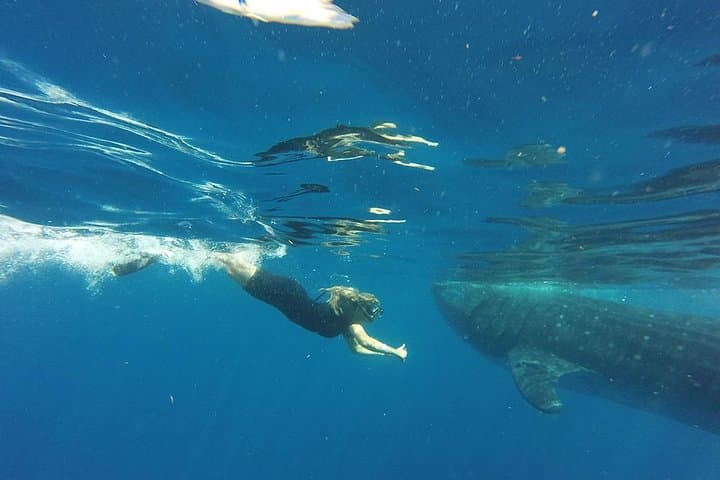
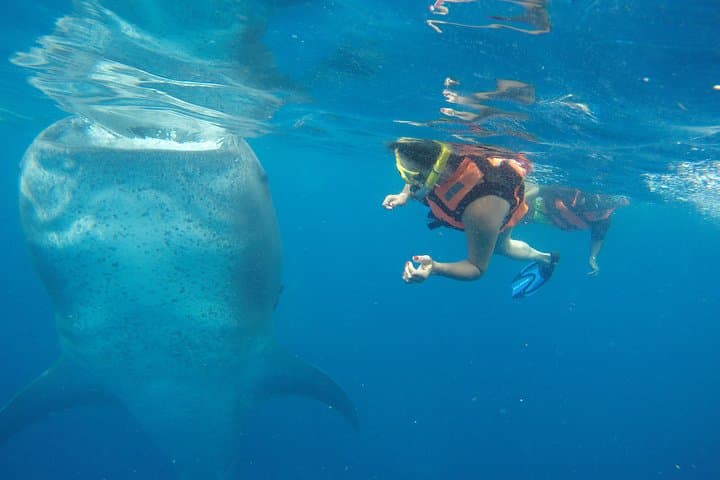
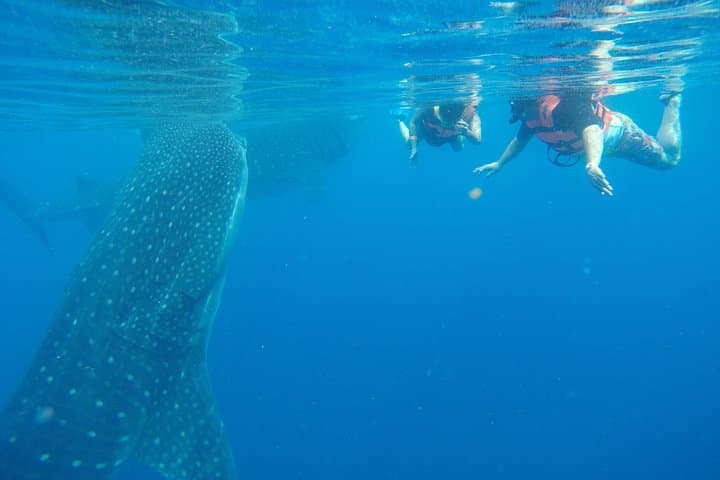
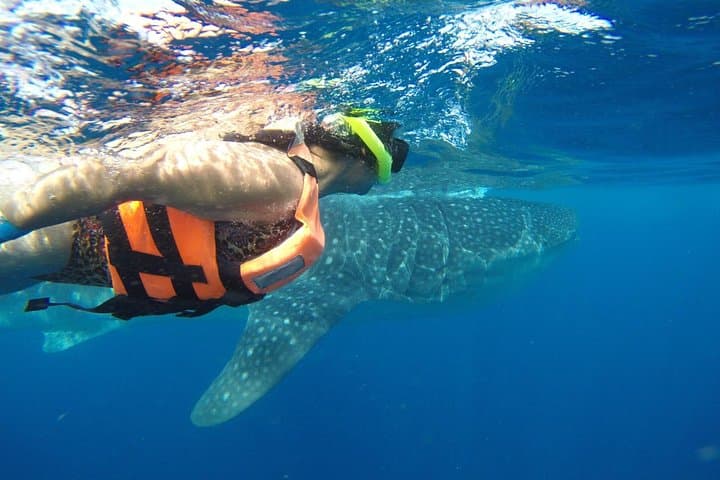
On the water the rhythm is practical and urgent. Guides scan the horizon for the unmistakable breathing ripples, and once a whale shark is located the small group slips into the ocean in staggered entries. You snorkel parallel to the animal at a respectful distance, buoyed by a life vest and guided by the boat crew. The encounter is quiet and ordered: no splashing, no touching, slow breaths. After a morning of searching and brief surface swims, the itinerary usually includes a late lunch on Isla Mujeres, where ceviche and dulce de leche cafés replace the salt on your skin.
Practicalities matter. This trip departs very early from Tulum and runs about eight hours total including transfers. The operator supplies snorkel gear, bottled water, snacks, coffee, and lunch. It is not recommended for people with serious spinal or cardiovascular issues or for pregnant travelers. Basic swimming comfort and the ability to follow guide instructions are required.
Packing and prep are simple but critical: reef-safe sunscreen applied before arrival, a light long-sleeve rash guard for sun and jellyfish protection, anti-nausea medication if you are prone to seasickness, and a waterproof camera or housing if you want to record the encounter. Respect local rules: keep a minimum distance, listen to the guides, and opt for reef-safe products to reduce your impact on fragile coral systems. Done right, a half-day out from Tulum is less about adrenaline and more about quiet proximity to an ancient, gentle giant — a marine encounter that leaves you with salt, pictures, and a clearer sense of why these animals need protection.
easy.
8 hours.
Suitable for most travelers who are comfortable floating and swimming briefly in open water; basic stamina for several short swims required.
The peak season is May through September when plankton concentrations attract whale sharks to the area.
Expect roughly a two-hour transfer to Punta Sam, then a variable amount of time on the water searching for whale sharks.
No formal certification is needed, but you should be comfortable snorkeling and able to swim short distances with a life vest.
No—local regulations and operator rules require guests not to touch or chase the animals to ensure minimal disturbance.
Yes, but children must be accompanied by an adult and meet the operator's safety requirements.
Tours may proceed or be rescheduled depending on marine conditions; cancellation policies typically allow refunds if cancelled at least 24 hours prior.
The waters off the Yucatán have supported fishing communities for centuries; Isla Contoy and surrounding islets are now protected reserves to conserve birds and marine habitats.
Operators follow distance rules and emphasize reef-safe practices; choose tours that limit group size and support local conservation programs.
Contoy Excursions operates guided outdoor trips and adventures with an emphasis on safety, stewardship, and memorable experiences.
Before dawn the parking lot at Super Aki on Tulum's main avenue feels like an expedition staging area rather than a supermarket lot: flashlights, travel mugs, a quiet string of vans. You board while the stars fade and the road slides past cenotes and scrubby coastal limestone. Two hours later the shoreline at Punta Sam slides into view, a scatter of small boats and the ferry hum toward Isla Mujeres. The sea here is not simply blue; it is an engine of life, a broad shelf where currents meet and concentrate plankton — and where whale sharks come to feed.
Before dawn the parking lot at Super Aki on Tulum's main avenue feels like an expedition staging area rather than a supermarket lot: flashlights, travel mugs, a quiet string of vans. You board while the stars fade and the road slides past cenotes and scrubby coastal limestone. Two hours later the shoreline at Punta Sam slides into view, a scatter of small boats and the ferry hum toward Isla Mujeres. The sea here is not simply blue; it is an engine of life, a broad shelf where currents meet and concentrate plankton — and where whale sharks come to feed.
The whale shark season on Mexico's eastern shelf runs mainly May through September, when warm currents sweep plankton-rich water along the Yucatán Peninsula. Isla Contoy and the waters off Isla Mujeres are a patchwork of reef, sandbars, and upwelling channels that attract manta rays, turtles, and the world's largest fish. The coastline is also shaped by human history: fishing villages adapted to the reef economy, and in recent decades conservation rules—protected areas, regulated approaches to marine megafauna—have changed how visitors interact with these animals.
On the water the rhythm is practical and urgent. Guides scan the horizon for the unmistakable breathing ripples, and once a whale shark is located the small group slips into the ocean in staggered entries. You snorkel parallel to the animal at a respectful distance, buoyed by a life vest and guided by the boat crew. The encounter is quiet and ordered: no splashing, no touching, slow breaths. After a morning of searching and brief surface swims, the itinerary usually includes a late lunch on Isla Mujeres, where ceviche and dulce de leche cafés replace the salt on your skin.
Practicalities matter. This trip departs very early from Tulum and runs about eight hours total including transfers. The operator supplies snorkel gear, bottled water, snacks, coffee, and lunch. It is not recommended for people with serious spinal or cardiovascular issues or for pregnant travelers. Basic swimming comfort and the ability to follow guide instructions are required.
Packing and prep are simple but critical: reef-safe sunscreen applied before arrival, a light long-sleeve rash guard for sun and jellyfish protection, anti-nausea medication if you are prone to seasickness, and a waterproof camera or housing if you want to record the encounter. Respect local rules: keep a minimum distance, listen to the guides, and opt for reef-safe products to reduce your impact on fragile coral systems. Done right, a half-day out from Tulum is less about adrenaline and more about quiet proximity to an ancient, gentle giant — a marine encounter that leaves you with salt, pictures, and a clearer sense of why these animals need protection.