THE ADVENTURE COLLECTIVE® · Independent discovery and booking for outdoor travel

Walk Gloucester’s layered streets with a self-guided audio tour that traces Roman origins to medieval power and industrial reinvention. Download and explore at your own pace—perfect for history lovers and urban walkers.
Walk Gloucester’s layered streets with a self-guided audio tour that traces Roman origins to medieval power and industrial reinvention. Download and explore at your own pace—perfect for history lovers and urban walkers.
You step into Gloucester where cobbles meet the curve of the River Severn and the air carries the faint echo of markets and ships. Start at the Cross — four ancient streets converge here — and the city opens like a map of eras: Roman foundations underfoot, medieval stones rising into cathedral spires, and industrial warehouses converted to cafes and galleries.
Verified experiences and guided adventures in the surrounding area.
Operated by VoiceMap Audio Tours · Gloucester, Gloucestershire
You step into Gloucester where cobbles meet the curve of the River Severn and the air carries the faint echo of markets and ships. Start at the Cross — four ancient streets converge here — and the city opens like a map of eras: Roman foundations underfoot, medieval stones rising into cathedral spires, and industrial warehouses converted to cafes and galleries.
Gloucester’s story spans Roman colonia status in AD 97, Saxon resistance under Aethelflaed, and later medieval and Civil War chapters visible in the city’s street plan and surviving architecture. The city sits on Triassic and Jurassic bedrock with the Severn valley shaping trade and floodplain ecology that once supported the docks. Cultural threads run from medieval guilds to literary mentions — the cathedral’s cloisters famously doubled for film sets and the docks echo industrial reinvention.
This self-guided audio tour (about 120–140 minutes) walks you past the Crypt School, Blackfriars ruins, galleried inns, and Gloucester Docks, with offline maps so you can linger where you wish. Expect mostly paved streets, short stair sections in historic buildings, and close-up views of stonework that rewards a slower pace.
Practical guidance: download audio and maps before you go, carry waterproof layers for changeable weather, wear supportive shoes for cobbles, and allow extra time for the cathedral or dock museums if you want to enter. Public transport is nearby and the route is suitable for most fitness levels. Take a moment at the docks to watch river traffic and imagine the city’s long role as a place of arrival and departure.
easy.
2–2.5 hours.
Suitable for most fitness levels; involves steady walking on paved and cobbled surfaces
The audio tour runs about 120–140 minutes, but you can pause and explore side streets; allow extra time if you plan to enter attractions.
The tour begins at the Cross in Gloucester city centre, where four main streets meet—directions are provided in the guide.
Most of the route is on paved streets; however cobbles and some narrow historic sections may be uneven—check specific points in the offline map for accessible alternatives.
Yes—the tour includes lifetime access and offline playback so you can re-listen or follow the route whenever you like.
Gloucester began as a Roman colonia and later became a strategic Saxon and medieval center; its cathedral and docks reflect those long layers of civic importance.
Stick to paved routes and support local heritage sites by buying entry tickets or donating—preserving stonework and river habitats depends on respectful, low-impact visitation.
VoiceMap Audio Tours operates guided outdoor trips and adventures with an emphasis on safety, stewardship, and memorable experiences.
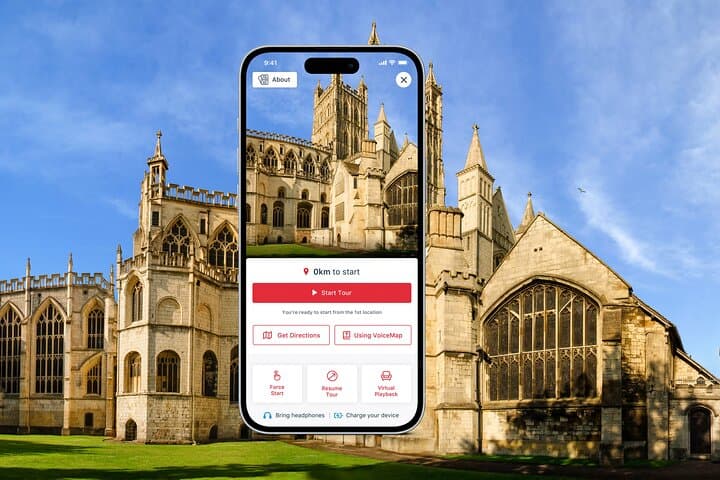
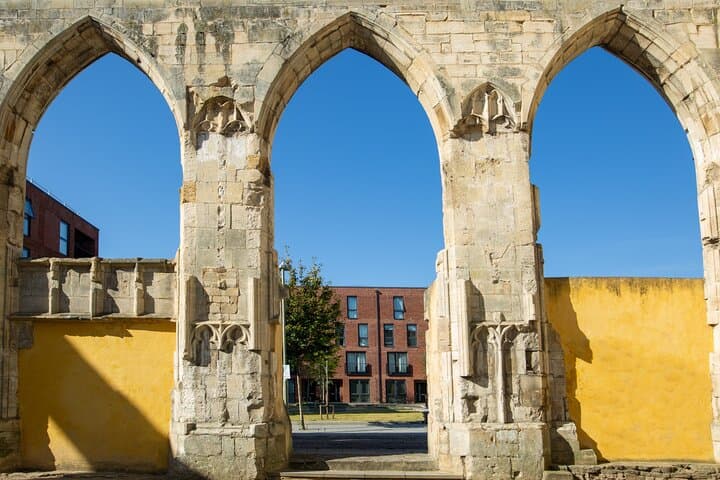
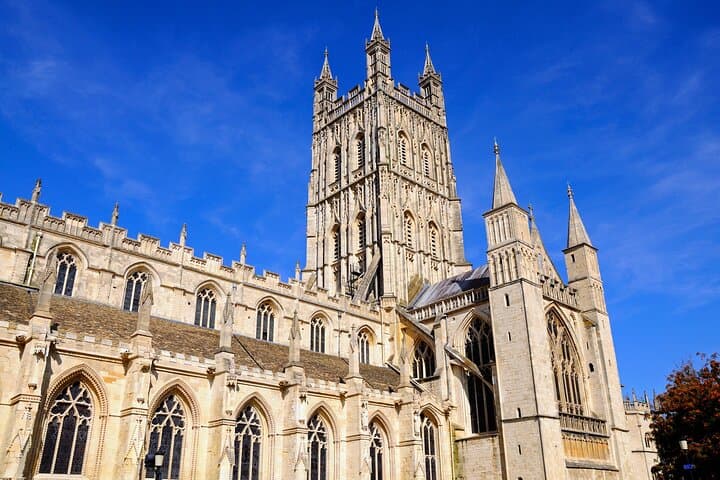
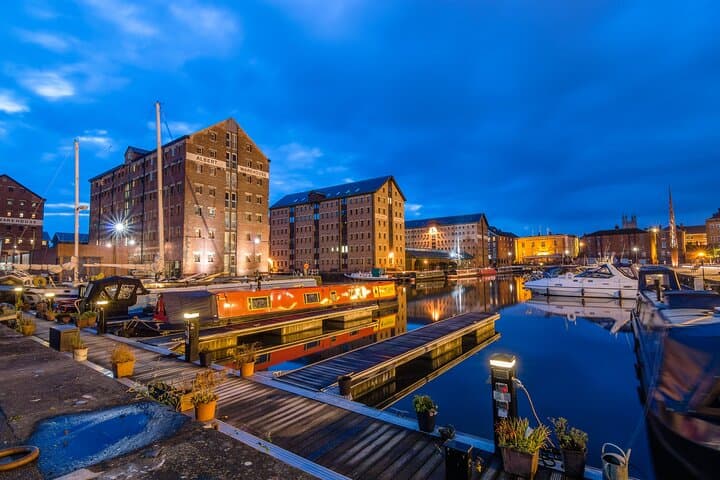
You step into Gloucester where cobbles meet the curve of the River Severn and the air carries the faint echo of markets and ships. Start at the Cross — four ancient streets converge here — and the city opens like a map of eras: Roman foundations underfoot, medieval stones rising into cathedral spires, and industrial warehouses converted to cafes and galleries.
You step into Gloucester where cobbles meet the curve of the River Severn and the air carries the faint echo of markets and ships. Start at the Cross — four ancient streets converge here — and the city opens like a map of eras: Roman foundations underfoot, medieval stones rising into cathedral spires, and industrial warehouses converted to cafes and galleries.
Gloucester’s story spans Roman colonia status in AD 97, Saxon resistance under Aethelflaed, and later medieval and Civil War chapters visible in the city’s street plan and surviving architecture. The city sits on Triassic and Jurassic bedrock with the Severn valley shaping trade and floodplain ecology that once supported the docks. Cultural threads run from medieval guilds to literary mentions — the cathedral’s cloisters famously doubled for film sets and the docks echo industrial reinvention.
This self-guided audio tour (about 120–140 minutes) walks you past the Crypt School, Blackfriars ruins, galleried inns, and Gloucester Docks, with offline maps so you can linger where you wish. Expect mostly paved streets, short stair sections in historic buildings, and close-up views of stonework that rewards a slower pace.
Practical guidance: download audio and maps before you go, carry waterproof layers for changeable weather, wear supportive shoes for cobbles, and allow extra time for the cathedral or dock museums if you want to enter. Public transport is nearby and the route is suitable for most fitness levels. Take a moment at the docks to watch river traffic and imagine the city’s long role as a place of arrival and departure.