THE ADVENTURE COLLECTIVE® · Independent discovery and booking for outdoor travel

This five-hour shore excursion from Kuşadası links pilgrimage, legend, and ancient oracle sites—House of the Virgin Mary, the Seven Sleepers cave, and Claros—plus a Turkish lunch and optional bath. Expect light walking, archaeological silence, and coastal plain vistas.
This five-hour shore excursion from Kuşadası links pilgrimage, legend, and ancient oracle sites—House of the Virgin Mary, the Seven Sleepers cave, and Claros—plus a Turkish lunch and optional bath. Expect light walking, archaeological silence, and coastal plain vistas.
A morning light slides across the scrub-covered slopes above Ephesus as a Mercedes pulls away from the cruise terminal and heads inland. The air sharpens; pine and thyme lean toward the road like witnesses. First stop: a modest stone house on a quiet hill where pilgrims still leave notes in a small slot — a place where Christian tradition, local memory, and the scrubby geology of the Aladağ meet.
Verified experiences and guided adventures in the surrounding area.
Operated by SeaDrop Travel · Kuşadası, Aydın Province
A morning light slides across the scrub-covered slopes above Ephesus as a Mercedes pulls away from the cruise terminal and heads inland. The air sharpens; pine and thyme lean toward the road like witnesses. First stop: a modest stone house on a quiet hill where pilgrims still leave notes in a small slot — a place where Christian tradition, local memory, and the scrubby geology of the Aladağ meet.
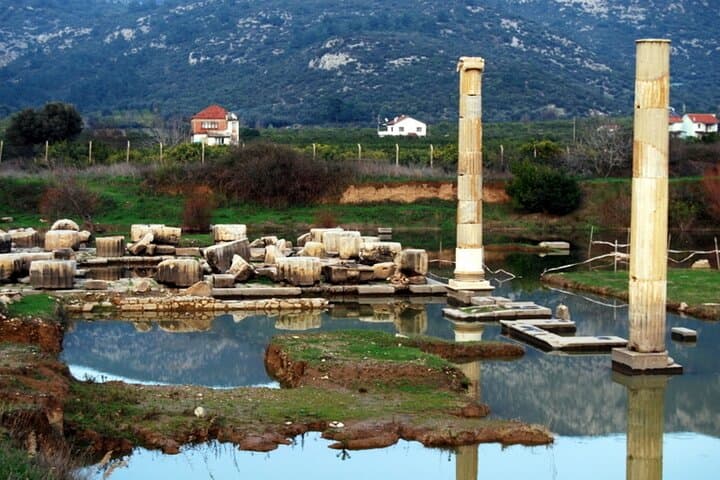
This route strings together layers of Anatolian history. The House of the Virgin Mary became a pilgrimage site in the 19th century after a local discovery and later received recognition from the Vatican. The nearby cave called the Seven Sleepers echoes an early-Christian legend about refuge and time. Claros, farther north, was an oracle site of Apollo whose ruins sit beside a sacred spring; you can still feel the geometry of columns and foundations that once framed petitioners.
Geologically, the region is limestone and marl, cut by springs that sustained oracles and settlements. Culturally, this is a crossroads: Greek sanctuaries, Roman roads, and early Christian memory coexist in compact archaeological footprints.
Practical guidance: expect light walking on packed earth and some uneven steps; the full itinerary is roughly five hours with guided stops and a included Turkish lunch. Bring sun protection, a filled water bottle, and modest clothing for religious sites. An optional Turkish bath at the end offers a tactile contrast to archaeological quiet — a way to close the morning with warm steam before returning to ship life.
easy.
5 hours.
Light fitness—suitable for travelers who can walk short distances on uneven ground and climb a few steps.
The tour includes a complimentary Turkish lunch and covers taxes and parking; entrance fees for scheduled sites listed on the itinerary are included as noted by the operator.
Total tour length is approximately five hours with pickup and drop-off at Kuşadası cruise port; guides meet guests at the exit gate with a name board.
The traditional Turkish bath is optional and offered as an add-on—check availability and pricing with the guide during the tour.
Yes—this itinerary is rated easy and is stroller accessible in parts; infants must sit on laps and some walking areas are uneven.
The House of the Virgin Mary site was identified in the 19th century and later visited by Pope Paul VI in 1967, while Claros served as a major Apollo oracle in the classical Greek world.
Sites are sensitive archaeological areas—stay on marked paths, avoid touching carved stone, and support local cooperatives rather than buying mass-produced souvenirs.
SeaDrop Travel operates guided outdoor trips and adventures with an emphasis on safety, stewardship, and memorable experiences.
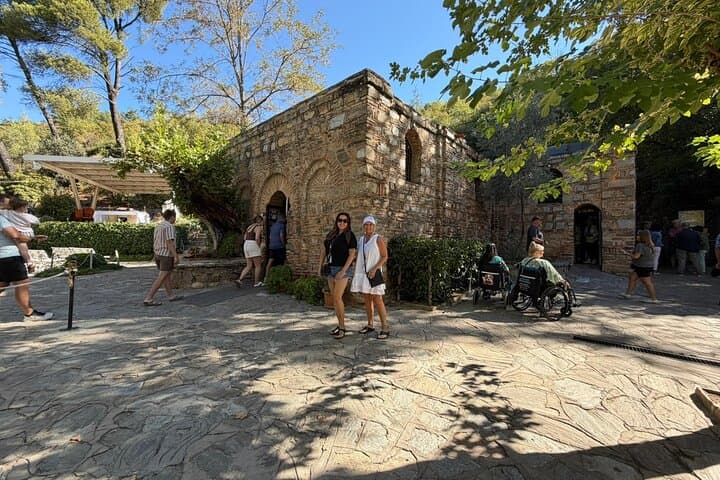


A morning light slides across the scrub-covered slopes above Ephesus as a Mercedes pulls away from the cruise terminal and heads inland. The air sharpens; pine and thyme lean toward the road like witnesses. First stop: a modest stone house on a quiet hill where pilgrims still leave notes in a small slot — a place where Christian tradition, local memory, and the scrubby geology of the Aladağ meet.
A morning light slides across the scrub-covered slopes above Ephesus as a Mercedes pulls away from the cruise terminal and heads inland. The air sharpens; pine and thyme lean toward the road like witnesses. First stop: a modest stone house on a quiet hill where pilgrims still leave notes in a small slot — a place where Christian tradition, local memory, and the scrubby geology of the Aladağ meet.
This route strings together layers of Anatolian history. The House of the Virgin Mary became a pilgrimage site in the 19th century after a local discovery and later received recognition from the Vatican. The nearby cave called the Seven Sleepers echoes an early-Christian legend about refuge and time. Claros, farther north, was an oracle site of Apollo whose ruins sit beside a sacred spring; you can still feel the geometry of columns and foundations that once framed petitioners.
Geologically, the region is limestone and marl, cut by springs that sustained oracles and settlements. Culturally, this is a crossroads: Greek sanctuaries, Roman roads, and early Christian memory coexist in compact archaeological footprints.
Practical guidance: expect light walking on packed earth and some uneven steps; the full itinerary is roughly five hours with guided stops and a included Turkish lunch. Bring sun protection, a filled water bottle, and modest clothing for religious sites. An optional Turkish bath at the end offers a tactile contrast to archaeological quiet — a way to close the morning with warm steam before returning to ship life.