
Hot Air Balloon Over Valley of the Kings: Sunrise Flight from Luxor
Float over the Theban plain at dawn and watch temples and tombs shrink into a living map. This sunrise balloon flight gives a geological and historical vantage on the Valley of the Kings with hotel transfers included.
An Adventure In Luxor.
Float over the Theban plain at dawn and watch temples and tombs shrink into a living map. This sunrise balloon flight gives a geological and historical vantage on the Valley of the Kings with hotel transfers included.
Read the full experience
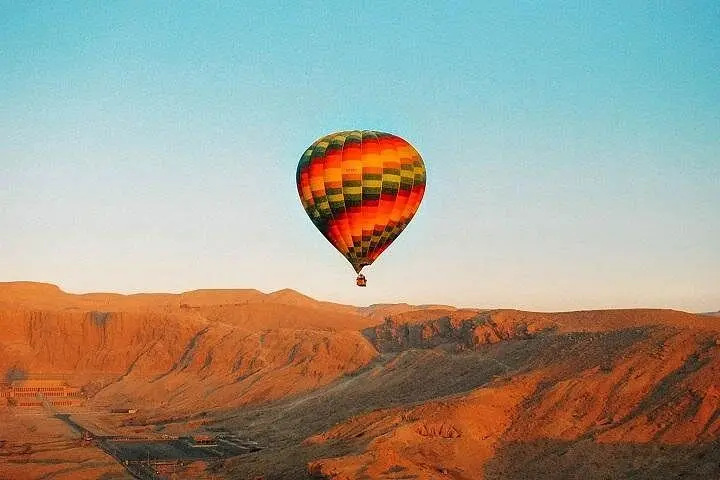
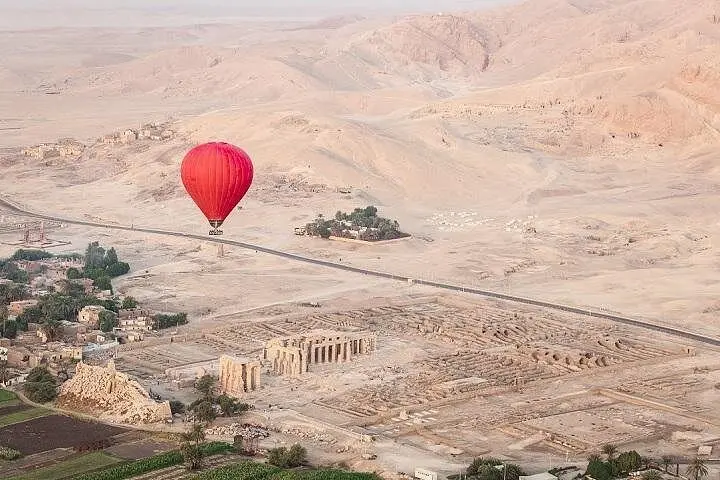
You lift off before dawn as the desert exhales cool air and the Nile still holds the night's hush. The basket rises and the plains unfold: the west bank's ochre cliffs, the compact roofs of modern Luxor, and the clustered monuments — Karnak's pylons and Luxor Temple — reduced to architectural models beneath the balloon.
You lift off before dawn as the desert exhales cool air and the Nile still holds the night's hush. The basket rises and the plains unfold: the west bank's ochre cliffs, the compact roofs of modern Luxor, and the clustered monuments — Karnak's pylons and Luxor Temple — reduced to architectural models beneath the balloon.
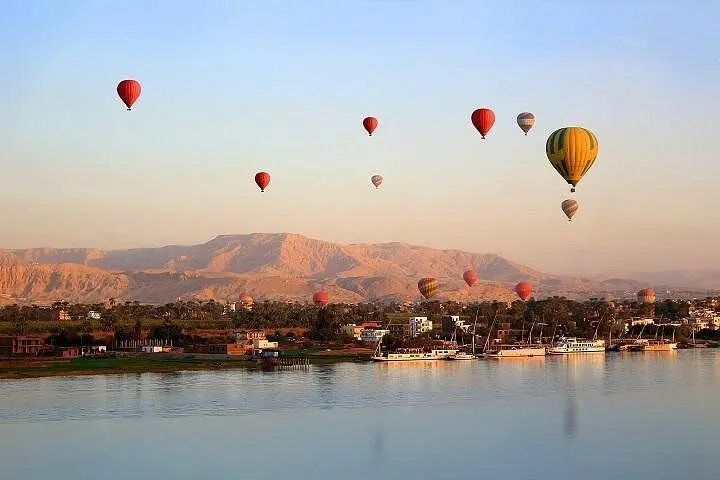
The Valley of the Kings sits in a fold of the Theban Hills, a corridor of limestone and soft marl that ancient workers cut into to make tombs for New Kingdom pharaohs. From a balloon you see erosion lines, burial ridges, and the tight relationship between river, cultivation, and desert — the Nile daring the fields forward while the cliffs keep the necropolis contained. Local life threads the scene: feluccas drifting on the Nile, early-market activity in town, and the occasional village silhouette on the horizon.
Practically, expect a 2–3 hour window from pickup to return; the airborne portion is usually 40–60 minutes. Operators time flights to catch sunrise for optimal light and wind conditions; if weather is unsettled flights are canceled for safety. You’ll stand in the basket and step down into soft sand on landing, so wear closed shoes and layers — dawn is cool, then the sun turns sharp. Bring a camera with a fast shutter, sunscreen, and a small daypack; motion-sick travelers should prepare. Transfers and entrance fees vary by operator, but many include hotel pickup on the east bank of Luxor. The view is both archaeological panorama and geological cross-section — an efficient, airborne way to read the landscape of ancient Thebes.
Frequently asked questions
Typical airborne time is 40–60 minutes; the full excursion including transfers runs about 2–3 hours.
Operators fly at dawn to avoid daytime thermals; flights will be canceled in unsafe wind or weather conditions and refunded if canceled 24+ hours before departure.
Many operators include hotel pickup and drop-off in Luxor; confirm pickup point and time at booking as it varies by hotel location.
Most companies discourage pregnant travelers, people with serious heart conditions, or those with spinal injuries; check operator policies and indicate special requirements at booking.
About This Experience
Oman Day Tours operates guided outdoor trips and adventures with an emphasis on safety, stewardship, and memorable experiences.
Adventure tips
Recommended gear
- Closed-toe shoes: Protects feet during launch, landing and walking on rocky or sandy ground.
- Light insulated jacket: Keeps you warm for pre-dawn boarding and the first minutes aloft.
- Sunscreen and sunglasses: Sun is strong immediately after sunrise, especially over reflective sand and stone.
- Compact camera with wrist strap: Captures high-contrast scenes; a strap prevents accidental drops from the basket.
Photos of the experience
Related adventures & guides
Read the full experience
You lift off before dawn as the desert exhales cool air and the Nile still holds the night's hush. The basket rises and the plains unfold: the west bank's ochre cliffs, the compact roofs of modern Luxor, and the clustered monuments — Karnak's pylons and Luxor Temple — reduced to architectural models beneath the balloon.
You lift off before dawn as the desert exhales cool air and the Nile still holds the night's hush. The basket rises and the plains unfold: the west bank's ochre cliffs, the compact roofs of modern Luxor, and the clustered monuments — Karnak's pylons and Luxor Temple — reduced to architectural models beneath the balloon.
The Valley of the Kings sits in a fold of the Theban Hills, a corridor of limestone and soft marl that ancient workers cut into to make tombs for New Kingdom pharaohs. From a balloon you see erosion lines, burial ridges, and the tight relationship between river, cultivation, and desert — the Nile daring the fields forward while the cliffs keep the necropolis contained. Local life threads the scene: feluccas drifting on the Nile, early-market activity in town, and the occasional village silhouette on the horizon.
Practically, expect a 2–3 hour window from pickup to return; the airborne portion is usually 40–60 minutes. Operators time flights to catch sunrise for optimal light and wind conditions; if weather is unsettled flights are canceled for safety. You’ll stand in the basket and step down into soft sand on landing, so wear closed shoes and layers — dawn is cool, then the sun turns sharp. Bring a camera with a fast shutter, sunscreen, and a small daypack; motion-sick travelers should prepare. Transfers and entrance fees vary by operator, but many include hotel pickup on the east bank of Luxor. The view is both archaeological panorama and geological cross-section — an efficient, airborne way to read the landscape of ancient Thebes.
Make a day of it nearby.
Verified experiences and guided adventures in the surrounding area.