THE ADVENTURE COLLECTIVE® · Independent discovery and booking for outdoor travel

Float above Teotihuacan at sunrise, land for a cave or terrace breakfast, sample pulque and browse artisans, then explore the pyramids on foot. This combined flight-and-site visit pairs aerial perspective with close-up history and practical local knowledge.
Float above Teotihuacan at sunrise, land for a cave or terrace breakfast, sample pulque and browse artisans, then explore the pyramids on foot. This combined flight-and-site visit pairs aerial perspective with close-up history and practical local knowledge.
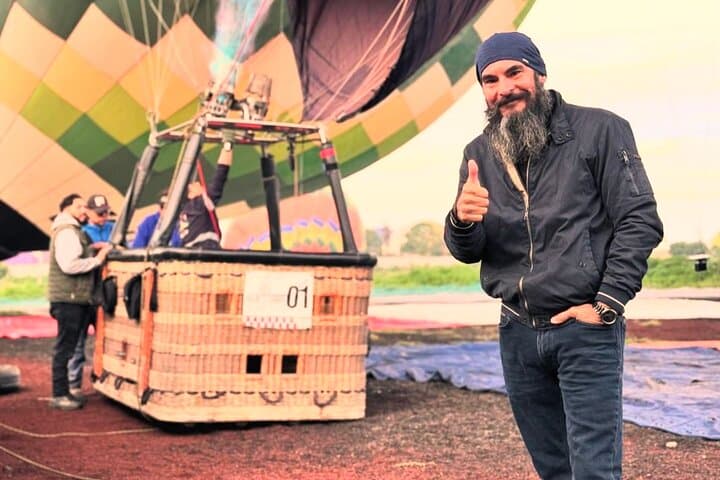
Pre-dawn light draws a cool line across the Valley of Teotihuacan as the balloon inflates—canvas swelling like a slow-breathed lung ready to lift you above one of Mesoamerica’s greatest cities.
Verified experiences and guided adventures in the surrounding area.
Operated by Sky & Clouds MX · Teotihuacan, Estado de México
Pre-dawn light draws a cool line across the Valley of Teotihuacan as the balloon inflates—canvas swelling like a slow-breathed lung ready to lift you above one of Mesoamerica’s greatest cities.
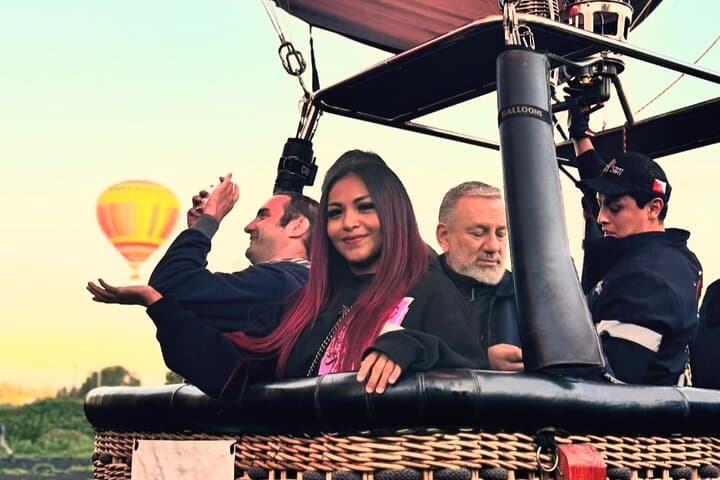
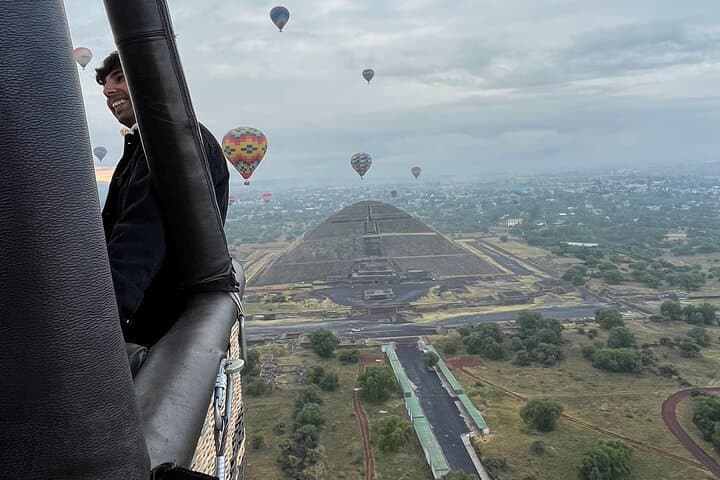
You rise quietly over the Avenue of the Dead; the Pyramid of the Sun and Pyramid of the Moon slide into view, their stones catching gold. Wind guides the basket, as if the valley itself is curating your route, and below the plazas and causeways reveal how human ambition once reshaped the landscape.
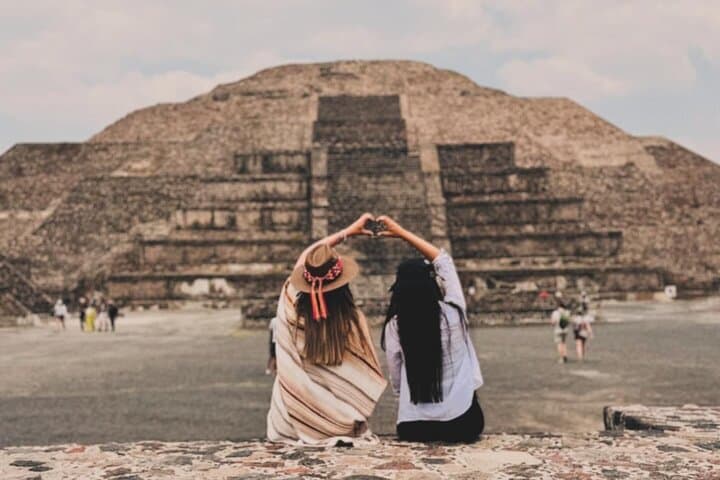
Teotihuacan began growing around 100 BCE and reached its peak between 1–700 CE; the site’s geometry and volcanic stone speak to a civic planning that astonished later peoples, including the Aztecs who named the place “where the gods were created.” The surrounding basin is volcanic—pahoehoe and basalt outcrops give the terrain its hard-edged character. Local culture remains vivid: pulque tastings and artisan cooperatives link modern craft to agave and mineral traditions.
Practically, the tour combines a 30–50 minute sunrise balloon flight, a celebratory toast on landing, a cave or terrace breakfast, a tasting and artisan visit, then free time inside the archaeological zone. Expect 5–7 hours including transport from Mexico City. Wear sturdy shoes for uneven stone, layers for chilly mornings, and bring sun protection for later exploration.
Timing matters—sunrise flights give the softest light and calmest winds. Respect fenced areas in the archaeological zone and consider a short guided walk afterward to understand scale and alignment: the site’s geometry is easier to read from ground level than from a single aerial pass.
easy.
5–7 hours.
Light — suitable for people able to stand during the flight and walk over uneven ground for up to a couple of hours.
Flight time is typically 30–50 minutes, depending on wind and conditions; the full experience including transfers lasts about 5–7 hours.
This tour includes entrance to the Teotihuacan archaeological zone as part of the itinerary.
Children can participate but operators have age/weight policies; infants may use strollers for some transfers but check with the operator for flight eligibility.
This activity is not recommended for pregnant travelers or people with significant cardiovascular or spinal problems—consult your physician and the operator before booking.
Teotihuacan grew from the early centuries BCE into a major urban center by the 1st–7th centuries CE; its planned avenues and massive pyramids influenced later cultures across central Mexico.
Heavy visitor traffic accelerates erosion on stone surfaces; stick to designated paths, avoid climbing closed structures, and minimize single-use plastics to reduce impact.
Sky & Clouds MX operates guided outdoor trips and adventures with an emphasis on safety, stewardship, and memorable experiences.
Pre-dawn light draws a cool line across the Valley of Teotihuacan as the balloon inflates—canvas swelling like a slow-breathed lung ready to lift you above one of Mesoamerica’s greatest cities.
Pre-dawn light draws a cool line across the Valley of Teotihuacan as the balloon inflates—canvas swelling like a slow-breathed lung ready to lift you above one of Mesoamerica’s greatest cities.
You rise quietly over the Avenue of the Dead; the Pyramid of the Sun and Pyramid of the Moon slide into view, their stones catching gold. Wind guides the basket, as if the valley itself is curating your route, and below the plazas and causeways reveal how human ambition once reshaped the landscape.
Teotihuacan began growing around 100 BCE and reached its peak between 1–700 CE; the site’s geometry and volcanic stone speak to a civic planning that astonished later peoples, including the Aztecs who named the place “where the gods were created.” The surrounding basin is volcanic—pahoehoe and basalt outcrops give the terrain its hard-edged character. Local culture remains vivid: pulque tastings and artisan cooperatives link modern craft to agave and mineral traditions.
Practically, the tour combines a 30–50 minute sunrise balloon flight, a celebratory toast on landing, a cave or terrace breakfast, a tasting and artisan visit, then free time inside the archaeological zone. Expect 5–7 hours including transport from Mexico City. Wear sturdy shoes for uneven stone, layers for chilly mornings, and bring sun protection for later exploration.
Timing matters—sunrise flights give the softest light and calmest winds. Respect fenced areas in the archaeological zone and consider a short guided walk afterward to understand scale and alignment: the site’s geometry is easier to read from ground level than from a single aerial pass.