THE ADVENTURE COLLECTIVE® · Independent discovery and booking for outdoor travel

Board in Page and let the Colorado River reshape your perspective: a three-hour motor-and-float trip to Petroglyph Beach and the Horseshoe Bend curve with interpretive guides. Expect dramatic cliffs, ancient rock art, and a scenic return by bus past Vermillion Cliffs and Navajo Bridge.
Board in Page and let the Colorado River reshape your perspective: a three-hour motor-and-float trip to Petroglyph Beach and the Horseshoe Bend curve with interpretive guides. Expect dramatic cliffs, ancient rock art, and a scenic return by bus past Vermillion Cliffs and Navajo Bridge.
The motor coughs, the raft rocks, and the canyon closes in—red walls folding like pages of a very old book. You push off at Lee’s Ferry and the Colorado River takes charge, carrying a scatter of passengers under cliffs that climb 1,000 feet. For three hours the hull hums and the landscape alternates between raw geology and human traces: petroglyphs cut into stone, the careful lines of a Navajo bridge in the distance, and the horseshoe curve that gives this trip its name, daring you to see familiar land from a river’s eye.
Verified experiences and guided adventures in the surrounding area.
Operated by Wilderness River Adventures · Page, AZ
The motor coughs, the raft rocks, and the canyon closes in—red walls folding like pages of a very old book. You push off at Lee’s Ferry and the Colorado River takes charge, carrying a scatter of passengers under cliffs that climb 1,000 feet. For three hours the hull hums and the landscape alternates between raw geology and human traces: petroglyphs cut into stone, the careful lines of a Navajo bridge in the distance, and the horseshoe curve that gives this trip its name, daring you to see familiar land from a river’s eye.
This is Glen Canyon country, where the Colorado River has been carving downward for millions of years, exposing layers of Navajo Sandstone and Kayenta shale that hold stories in their strata. The petroglyphs at Petroglyph Beach are part of that story—markings left by ancestral people who used the river as a travel corridor and resource. In the 20th century the area shifted with the construction of Glen Canyon Dam; today the river still feels like an older force, pushing boats along rim-to-rim views that read like geology lessons with a soundtrack of water and wind.
Culturally the trip threads modern tourism, Indigenous history, and National Park stewardship. Guides point out glyph panels accessible only from the river, translating symbols and practical marks of daily life. On the return bus ride to Page, the Vermillion Cliffs, Marble Canyon, and Navajo Bridge provide a visual recap—a slow-motion postcard of the Colorado Plateau.
Practicalities are straightforward: meet at the WRA headquarters in Page 45 minutes before departure, check your National Park Pass, and be ready for a mix of motored transit and low-effort floating. The operator provides interpretive guiding and restroom stops—one scheduled break at Petroglyph Beach. The trip is suitable for anyone comfortable boarding a raft and sitting for a few hours; it’s more scenic than technical, but sun, reflected heat, and occasional spray demand attention to gear.
Timing matters. Early-season flows and cooler weather change what you’ll feel on the river; summer brings intense sun and hotter canyon walls. Accessibility is reasonable at put-in and take-out but buses to Lees Ferry are not ADA compliant—check logistics if mobility is a concern. Bring layered sun protection, a stabilized camera, and a small dry bag for essentials.
This rafting outing is a compact, interpretive slice of the Colorado River: a chance to watch cliffs read like maps, to stand on a shoreline that bears the marks of people centuries old, and to return to Page with a new angle on an iconic bend in the river.
easy.
5 hours.
Low to moderate—suitable for most fitness levels; involves boarding a raft and sitting for up to three hours on the water
About three hours on the water, within a total 5-hour tour including transfers and orientation.
Yes—bring a valid National Park Pass to check-in or purchase one locally before departure.
Restrooms are available at WRA headquarters and there is a scheduled restroom break at Petroglyph Beach during the float.
Yes—this trip is rated easy and suitable for most ages, though guests must be able to board the raft and remain seated for stretches of time.
Yes—the guide provides a stop at Petroglyph Beach where you can view river-accessible panels up close under supervision.
Some aspects are wheelchair accessible, but buses to Lees Ferry are NOT ADA compliant—contact the operator ahead of booking if you require mobility accommodations.
Lees Ferry served as a crucial crossing and trading point before modern roads; the petroglyphs reflect centuries of Indigenous presence along the river corridor.
Glen Canyon National Recreation Area manages high visitor use with permits and education; stay on designated routes, pack out trash, and avoid touching rock art to preserve fragile surfaces.
Wilderness River Adventures operates guided outdoor trips and adventures with an emphasis on safety, stewardship, and memorable experiences.
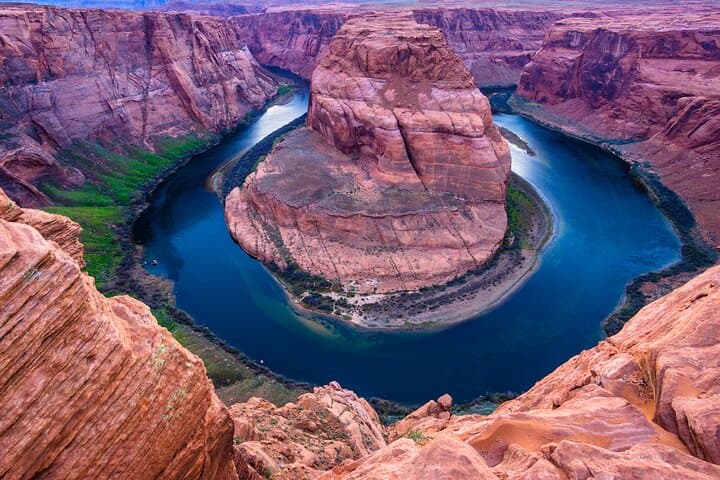
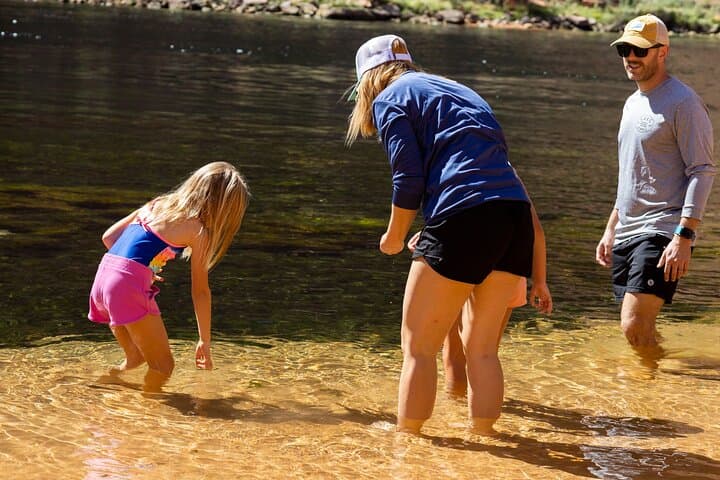
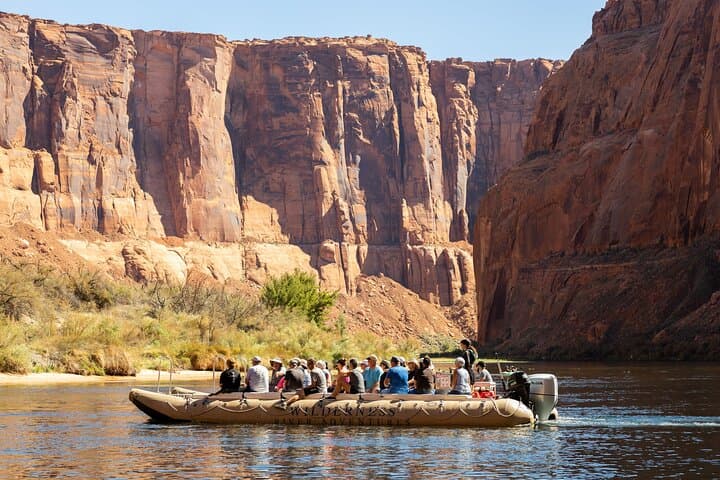
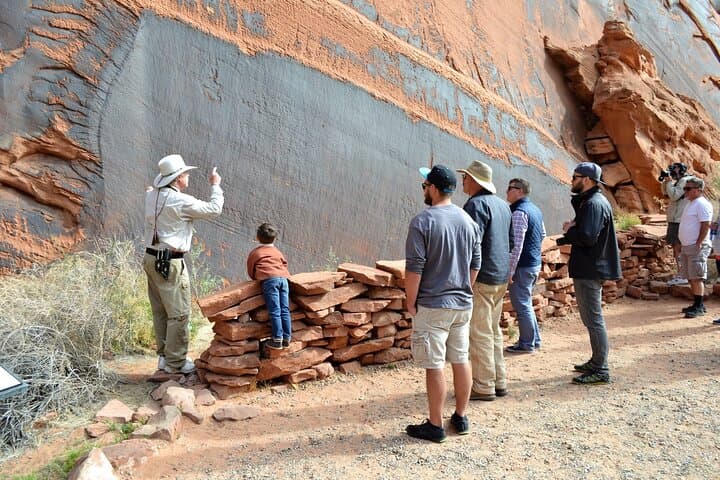
The motor coughs, the raft rocks, and the canyon closes in—red walls folding like pages of a very old book. You push off at Lee’s Ferry and the Colorado River takes charge, carrying a scatter of passengers under cliffs that climb 1,000 feet. For three hours the hull hums and the landscape alternates between raw geology and human traces: petroglyphs cut into stone, the careful lines of a Navajo bridge in the distance, and the horseshoe curve that gives this trip its name, daring you to see familiar land from a river’s eye.
The motor coughs, the raft rocks, and the canyon closes in—red walls folding like pages of a very old book. You push off at Lee’s Ferry and the Colorado River takes charge, carrying a scatter of passengers under cliffs that climb 1,000 feet. For three hours the hull hums and the landscape alternates between raw geology and human traces: petroglyphs cut into stone, the careful lines of a Navajo bridge in the distance, and the horseshoe curve that gives this trip its name, daring you to see familiar land from a river’s eye.
This is Glen Canyon country, where the Colorado River has been carving downward for millions of years, exposing layers of Navajo Sandstone and Kayenta shale that hold stories in their strata. The petroglyphs at Petroglyph Beach are part of that story—markings left by ancestral people who used the river as a travel corridor and resource. In the 20th century the area shifted with the construction of Glen Canyon Dam; today the river still feels like an older force, pushing boats along rim-to-rim views that read like geology lessons with a soundtrack of water and wind.
Culturally the trip threads modern tourism, Indigenous history, and National Park stewardship. Guides point out glyph panels accessible only from the river, translating symbols and practical marks of daily life. On the return bus ride to Page, the Vermillion Cliffs, Marble Canyon, and Navajo Bridge provide a visual recap—a slow-motion postcard of the Colorado Plateau.
Practicalities are straightforward: meet at the WRA headquarters in Page 45 minutes before departure, check your National Park Pass, and be ready for a mix of motored transit and low-effort floating. The operator provides interpretive guiding and restroom stops—one scheduled break at Petroglyph Beach. The trip is suitable for anyone comfortable boarding a raft and sitting for a few hours; it’s more scenic than technical, but sun, reflected heat, and occasional spray demand attention to gear.
Timing matters. Early-season flows and cooler weather change what you’ll feel on the river; summer brings intense sun and hotter canyon walls. Accessibility is reasonable at put-in and take-out but buses to Lees Ferry are not ADA compliant—check logistics if mobility is a concern. Bring layered sun protection, a stabilized camera, and a small dry bag for essentials.
This rafting outing is a compact, interpretive slice of the Colorado River: a chance to watch cliffs read like maps, to stand on a shoreline that bears the marks of people centuries old, and to return to Page with a new angle on an iconic bend in the river.