THE ADVENTURE COLLECTIVE® · Independent discovery and booking for outdoor travel

Step to the rim with an audio guide and watch the Colorado River curl beneath you. This self-guided Horseshoe Bend walking tour pairs panoramic overlooks with geology, local history and practical tips for timing and safety.
Step to the rim with an audio guide and watch the Colorado River curl beneath you. This self-guided Horseshoe Bend walking tour pairs panoramic overlooks with geology, local history and practical tips for timing and safety.
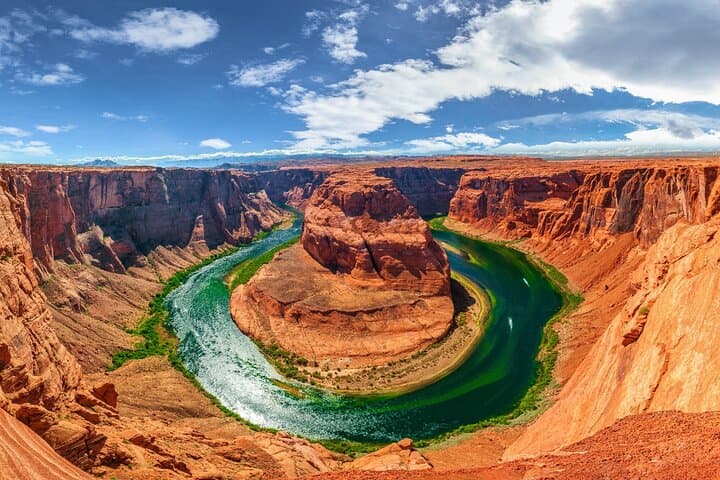
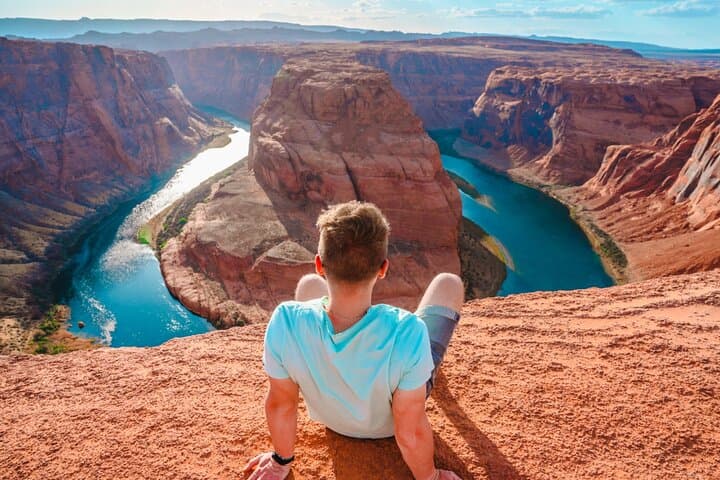
You arrive at the rim with the desert wind in your face and a voice in your ear. The audio guide murmurs a brief welcome as the Colorado River makes its dramatic hairpin below — a green ribbon cutting through rust-colored Navajo sandstone. Visitors spread out along the cliff, some kneeling for a photo, others simply standing still, letting the canyon do the talking; your audio app fills the gaps, pointing out geological folds, human stories and the quieter corners most people rush past.
Verified experiences and guided adventures in the surrounding area.
Operated by Adventures with Action · Page, Arizona
You arrive at the rim with the desert wind in your face and a voice in your ear. The audio guide murmurs a brief welcome as the Colorado River makes its dramatic hairpin below — a green ribbon cutting through rust-colored Navajo sandstone. Visitors spread out along the cliff, some kneeling for a photo, others simply standing still, letting the canyon do the talking; your audio app fills the gaps, pointing out geological folds, human stories and the quieter corners most people rush past.
Geology here is literal theater. The Colorado Plateau rose and the river, patient as a sculptor, carved Horseshoe Bend through layers of sand deposited when this region was a shallow sea. The audio tour explains those epochs in plain language and ties them to modern changes: Glen Canyon Dam reshaped flows downstream, and Page itself exists because the dam’s construction turned a remote stretch of desert into a small, busy town in 1957.
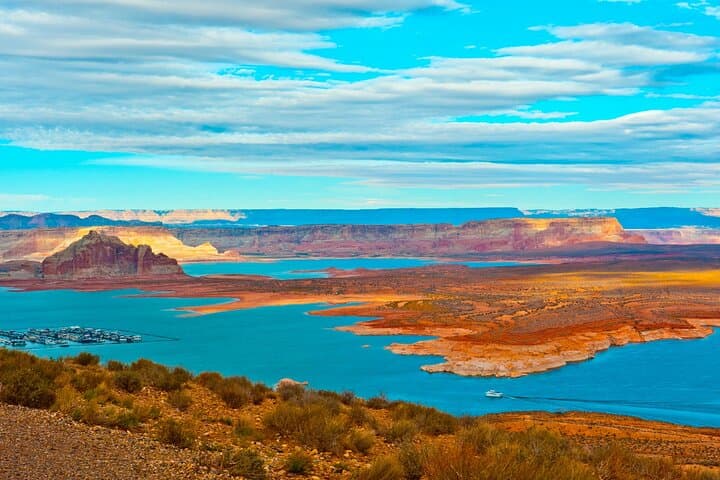
Culture and land use are part of the story. Page sits at the edge of Navajo Nation and Paiute homelands; the tour nods to the people whose practices shaped the landscape long before tourism arrived. Bonus stops in the driving tour—Glen Canyon Dam overlook, Carl Hayden Visitor Center, and Wahweap Marina—add context about water management, recreation, and the trade-offs that built this place.
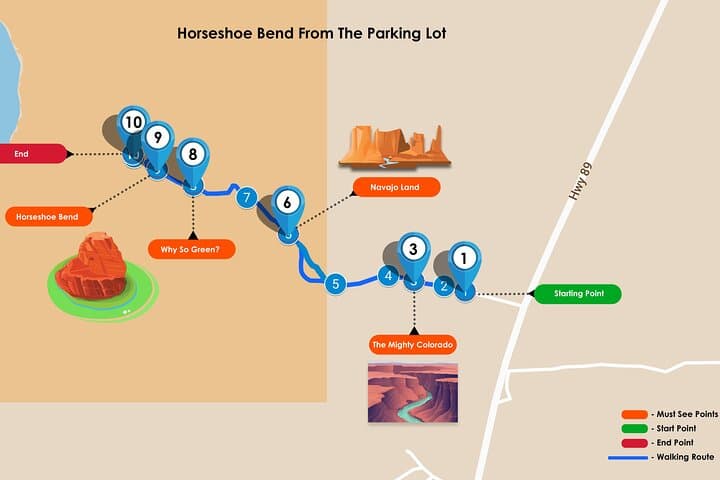
Practicalities are built into the product. The walk is roughly 1.5 miles round-trip with minimal elevation gain and uneven, sandy trail surfaces—plan 60–120 minutes depending on stops. The audio guide contains more than 10 stories and works offline once downloaded, but you must download the tour and enter the password while you have cell or Wi‑Fi; don’t wait until you reach the parking lot. Bring headphones, full battery, sunscreen and two liters of water in summer. Stay back from cliff edges—the sandstone is slick and crumbly in places.
Timing is everything. Sunrise and late afternoon offer dramatic light and thinner crowds; midday brings heat and Instagram traffic. Combine the walking tour with the driving stops to see Antelope and Waterhole Canyons from different angles and to learn the behind-the-scenes history the overlook can’t show.
This is a hands-free way to turn a busy viewpoint into an informed experience. The app paces your visit, explains what you’re looking at and sends you to lesser-noticed features—the Hanging Gardens alcove, a dam viewpoint, the quiet sweep of lake shoreline—so you return from an iconic overlook with the kind of understanding that lasts longer than a photo.
easy.
1–2 hours.
Suitable for most fitness levels; requires walking on uneven sandy trail and short climbs.
No. This is an audio-only guide. Entrance and parking fees (if any) are paid separately at the Horseshoe Bend site.
No—download the tour ahead of time while you have Wi‑Fi or cell service; it plays offline once installed.
The tour begins at the Horseshoe Bend Overlook Parking Lot in Page, AZ; follow the audio cues to start walking.
The main overlook trail is sandy and uneven and includes a gradual slope; it is not fully ADA accessible. Check local resources for specific accessibility accommodations.
The password can be entered on the number of devices equal to the number of travelers booked; follow the email instructions to register each device.
Pets are generally allowed but must be leashed and under control; bring water for them and avoid leaving them in vehicles during hot weather.
Page was created in 1957 to house workers building Glen Canyon Dam; the dam and Lake Powell reshaped both the landscape and the town’s purpose.
The area’s cryptobiotic soils and fragile sandstone recover slowly—stay on established trails, pack out trash, and avoid climbing on unstable ledges.
Adventures with Action operates guided outdoor trips and adventures with an emphasis on safety, stewardship, and memorable experiences.
You arrive at the rim with the desert wind in your face and a voice in your ear. The audio guide murmurs a brief welcome as the Colorado River makes its dramatic hairpin below — a green ribbon cutting through rust-colored Navajo sandstone. Visitors spread out along the cliff, some kneeling for a photo, others simply standing still, letting the canyon do the talking; your audio app fills the gaps, pointing out geological folds, human stories and the quieter corners most people rush past.
You arrive at the rim with the desert wind in your face and a voice in your ear. The audio guide murmurs a brief welcome as the Colorado River makes its dramatic hairpin below — a green ribbon cutting through rust-colored Navajo sandstone. Visitors spread out along the cliff, some kneeling for a photo, others simply standing still, letting the canyon do the talking; your audio app fills the gaps, pointing out geological folds, human stories and the quieter corners most people rush past.
Geology here is literal theater. The Colorado Plateau rose and the river, patient as a sculptor, carved Horseshoe Bend through layers of sand deposited when this region was a shallow sea. The audio tour explains those epochs in plain language and ties them to modern changes: Glen Canyon Dam reshaped flows downstream, and Page itself exists because the dam’s construction turned a remote stretch of desert into a small, busy town in 1957.
Culture and land use are part of the story. Page sits at the edge of Navajo Nation and Paiute homelands; the tour nods to the people whose practices shaped the landscape long before tourism arrived. Bonus stops in the driving tour—Glen Canyon Dam overlook, Carl Hayden Visitor Center, and Wahweap Marina—add context about water management, recreation, and the trade-offs that built this place.
Practicalities are built into the product. The walk is roughly 1.5 miles round-trip with minimal elevation gain and uneven, sandy trail surfaces—plan 60–120 minutes depending on stops. The audio guide contains more than 10 stories and works offline once downloaded, but you must download the tour and enter the password while you have cell or Wi‑Fi; don’t wait until you reach the parking lot. Bring headphones, full battery, sunscreen and two liters of water in summer. Stay back from cliff edges—the sandstone is slick and crumbly in places.
Timing is everything. Sunrise and late afternoon offer dramatic light and thinner crowds; midday brings heat and Instagram traffic. Combine the walking tour with the driving stops to see Antelope and Waterhole Canyons from different angles and to learn the behind-the-scenes history the overlook can’t show.
This is a hands-free way to turn a busy viewpoint into an informed experience. The app paces your visit, explains what you’re looking at and sends you to lesser-noticed features—the Hanging Gardens alcove, a dam viewpoint, the quiet sweep of lake shoreline—so you return from an iconic overlook with the kind of understanding that lasts longer than a photo.