THE ADVENTURE COLLECTIVE® · Independent discovery and booking for outdoor travel

Trade Cusco’s plaza for highland trails and explore little-visited Inca temples on a full-day horseback ride. This guide covers what you’ll see, the terrain and elevation, and practical tips to prepare for a high-Andean day in the field.
Trade Cusco’s plaza for highland trails and explore little-visited Inca temples on a full-day horseback ride. This guide covers what you’ll see, the terrain and elevation, and practical tips to prepare for a high-Andean day in the field.
You leave Cusco’s stone streets and climb into open highland pastures, the city shrinking behind a band of eucalyptus and terraced fields. The horses pick their way along dirt tracks around Wayllarcocha wetland; wind pushes at your jacket and the air tastes thin and bright at roughly 3,400–3,800 meters.
Verified experiences and guided adventures in the surrounding area.
Operated by Horseback Riding Cusco · Cusco, Cusco
You leave Cusco’s stone streets and climb into open highland pastures, the city shrinking behind a band of eucalyptus and terraced fields. The horses pick their way along dirt tracks around Wayllarcocha wetland; wind pushes at your jacket and the air tastes thin and bright at roughly 3,400–3,800 meters.
This full-day ride moves through little-known Inca sites—Kallachaka’s polygonal platforms, the restored checkpoint of Inkilltambo with its carved stones and narrow passageways, the Temple of the Moon (Laqo) with its somber archaeological finds, and the compact stone house Rumiwasi. Geologically you’ll notice andesite outcrops, terraced soils shaped for agriculture, and marshy low spots that fed canal systems the Incas engineered to manage water.
Culturally the route threads modern Andean villages—Yuncaypata among them—where shepherds and farmers still move livestock and tend small plots. Guides translate local customs and the Inca-era functions of each huaca; many of these sites were control points for travelers and offerings tied to celestial cycles.
Practical guide: expect 5–7 hours total including transfers and stops, about 12–18 km on horseback over uneven dirt trails with brief rocky stretches and wetland approaches. Elevation rarely exceeds 3,800 m but altitude can make even easy sections feel harder. Providers supply helmets, box lunch, water and private transfers; weight limit ~90 kg (200 lb). Wear sturdy riding or hiking boots, layered clothing, sun protection, and allow time to acclimatize. Ride with a guide, respect archaeological features, and bring extra water—this is high-country riding where the landscape quietly insists you pay attention.
moderate.
6 hours (including transfers and stops).
Suitable for people comfortable sitting and balancing on a horse for several hours and able to handle short uphill walking at altitude.
No advanced skills are required; basic horseback comfort and the ability to follow guide instructions are sufficient—brief instruction is provided.
Sites sit around 3,400–3,800 m; altitude can cause breathlessness or headache—take time in Cusco to acclimatize and hydrate.
The standard weight limit is about 90 kg (200 lb); helmets are provided and horses are described as well cared for by the operator.
Tours may be canceled for heavy rain; the operator’s policy allows refunds if canceled at least 24 hours prior or if bad weather forces cancellation.
Many small sites around Cusco were checkpoints and ceremonial huacas used to manage travelers, water and ritual life during late Inca times.
These fragile archaeological sites and wetland zones are vulnerable to trampling and erosion—stay on established tracks and follow your guide to minimize impact.
Horseback Riding Cusco operates guided outdoor trips and adventures with an emphasis on safety, stewardship, and memorable experiences.
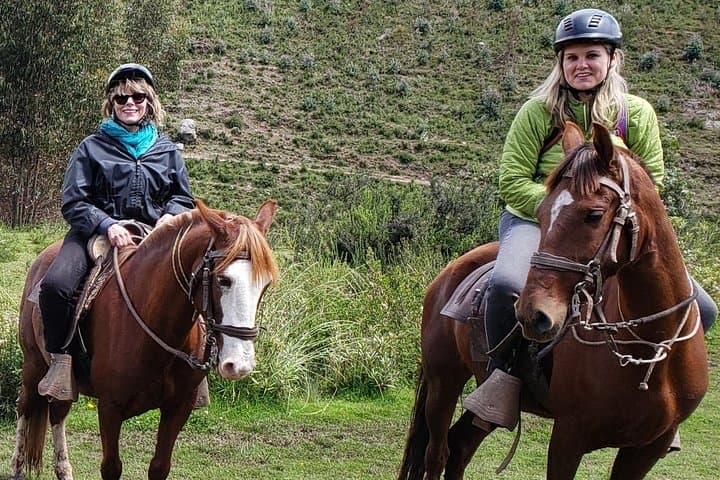
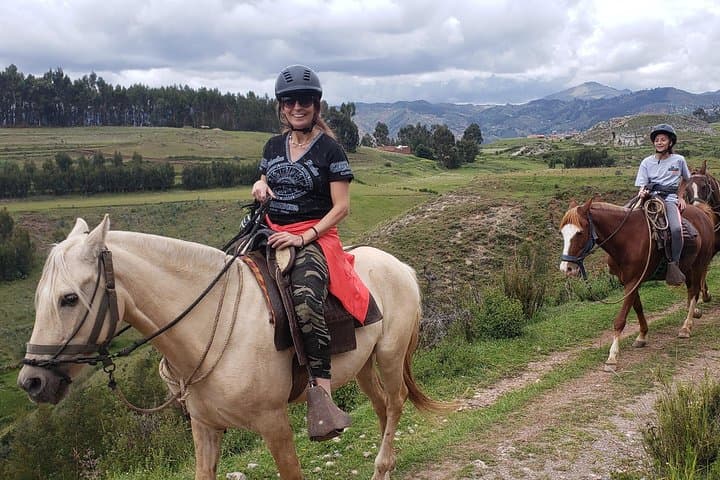
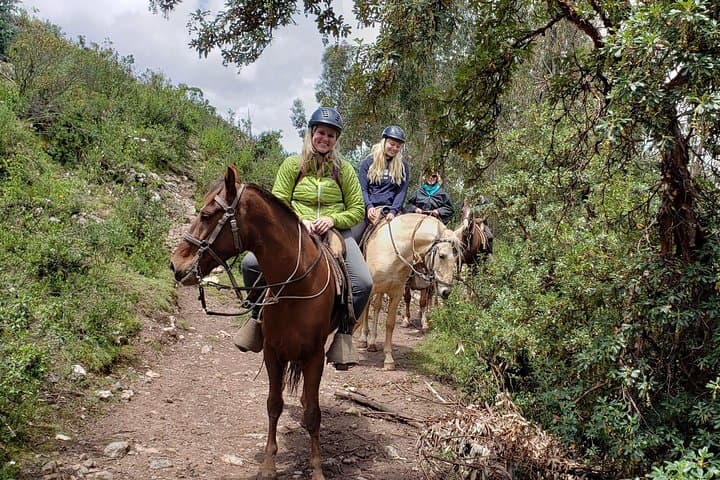
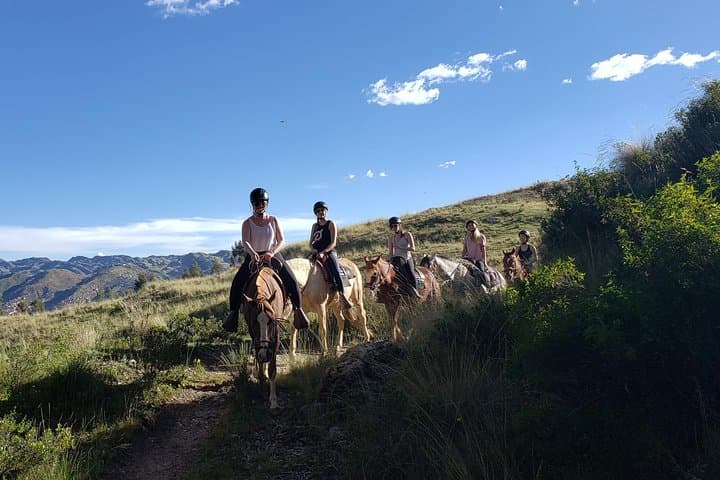
You leave Cusco’s stone streets and climb into open highland pastures, the city shrinking behind a band of eucalyptus and terraced fields. The horses pick their way along dirt tracks around Wayllarcocha wetland; wind pushes at your jacket and the air tastes thin and bright at roughly 3,400–3,800 meters.
You leave Cusco’s stone streets and climb into open highland pastures, the city shrinking behind a band of eucalyptus and terraced fields. The horses pick their way along dirt tracks around Wayllarcocha wetland; wind pushes at your jacket and the air tastes thin and bright at roughly 3,400–3,800 meters.
This full-day ride moves through little-known Inca sites—Kallachaka’s polygonal platforms, the restored checkpoint of Inkilltambo with its carved stones and narrow passageways, the Temple of the Moon (Laqo) with its somber archaeological finds, and the compact stone house Rumiwasi. Geologically you’ll notice andesite outcrops, terraced soils shaped for agriculture, and marshy low spots that fed canal systems the Incas engineered to manage water.
Culturally the route threads modern Andean villages—Yuncaypata among them—where shepherds and farmers still move livestock and tend small plots. Guides translate local customs and the Inca-era functions of each huaca; many of these sites were control points for travelers and offerings tied to celestial cycles.
Practical guide: expect 5–7 hours total including transfers and stops, about 12–18 km on horseback over uneven dirt trails with brief rocky stretches and wetland approaches. Elevation rarely exceeds 3,800 m but altitude can make even easy sections feel harder. Providers supply helmets, box lunch, water and private transfers; weight limit ~90 kg (200 lb). Wear sturdy riding or hiking boots, layered clothing, sun protection, and allow time to acclimatize. Ride with a guide, respect archaeological features, and bring extra water—this is high-country riding where the landscape quietly insists you pay attention.