THE ADVENTURE COLLECTIVE® · Independent discovery and booking for outdoor travel

Ride the Appian Way on horseback and pass tombs, pine-lined tracks, and the Villa dei Quintili for a tactile walk through Roman history. This practical one- to three-hour equestrian tour suits beginners and experienced riders alike.
Ride the Appian Way on horseback and pass tombs, pine-lined tracks, and the Villa dei Quintili for a tactile walk through Roman history. This practical one- to three-hour equestrian tour suits beginners and experienced riders alike.
Dust lifts under hooves as riders step off the narrow street and into the slow heartbeat of the Appian Way. The road stretches ahead—broad basalt slabs, grassy verges, and pines whose needles whisper—while the city’s marble and traffic fall away. On a one-hour loop (about 5 km round trip) travelers move through the Parco Regionale dell’Appia Antica toward the Villa dei Quintili, where ruins sit above the route like patient observers.
Verified experiences and guided adventures in the surrounding area.
Operated by Memento Experiences · Rome, Lazio
Dust lifts under hooves as riders step off the narrow street and into the slow heartbeat of the Appian Way. The road stretches ahead—broad basalt slabs, grassy verges, and pines whose needles whisper—while the city’s marble and traffic fall away. On a one-hour loop (about 5 km round trip) travelers move through the Parco Regionale dell’Appia Antica toward the Villa dei Quintili, where ruins sit above the route like patient observers.
This is Roman history in motion: the Via Appia Antica, begun in 312 BCE by Appius Claudius, once linked Rome to southern Italy. The route’s paving stones and roadside tombs tell of empire, while the surrounding geology—ancient volcanic deposits capped by travertine terraces—gives the landscape a compact, sun-baked feel. Local culture remains tangible: field-grown olives, working stables, and shepherded plots press up against archaeological sites.
Expect mixed terrain—packed dirt, grass, and the occasional cobbled stretch—on mostly flat ground with minimal elevation gain. Guides provide mounts for beginners and options for more confident riders; helmets and basic instruction are typically included. Rides run as private or small-group bookings and can be extended (up to 3 hours) for deeper exploration.
Practicalities matter: go early to avoid heat, wear closed-toe shoes and layered clothing, and carry water and ID. Public transport reaches nearby points, but many operators offer pickup in air-conditioned vehicles. The experience balances quiet country riding with a slow, tactile connection to Rome’s long history—an active way to see the city without riding its streets.
moderate.
1–3 hours.
Suitable for people with basic mobility and a modest level of fitness; brief instruction is provided for beginners.
No—operators provide brief instruction and suitable mounts for beginners, though riders should feel comfortable following basic commands.
Standard rides start at about one hour (~5 km round trip); there are options up to three hours for longer routes and private experiences.
Yes; most providers supply helmets and safety briefing. If you have a personal helmet, you may bring it but confirm fit requirements first.
Many tours offer pickup in air-conditioned vehicles from central points; public transport also serves nearby sections of the Appian Way.
The Via Appia Antica was begun in 312 BCE by Appius Claudius and became a primary military and trade artery; funerary monuments and villas line its course.
The Parco Regionale dell’Appia Antica balances archaeological preservation with active agriculture; visitors should stick to trails and avoid disturbing flora and ruins.
Memento Experiences operates guided outdoor trips and adventures with an emphasis on safety, stewardship, and memorable experiences.
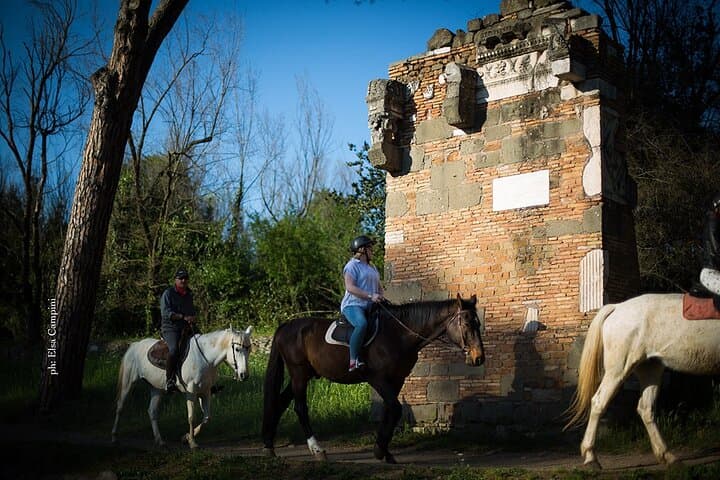
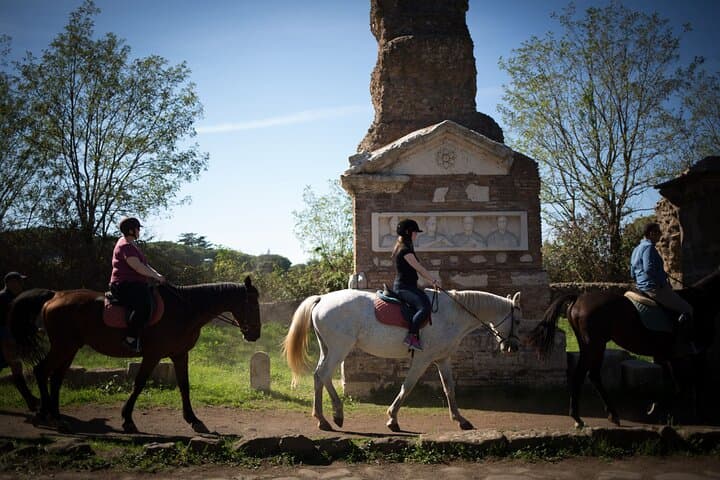
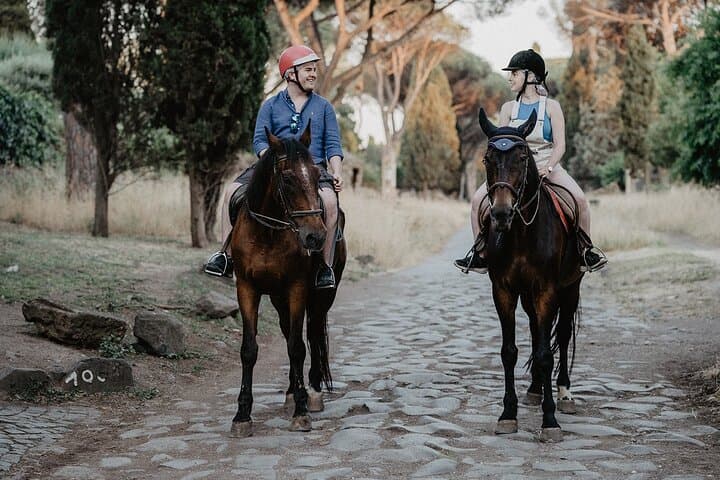
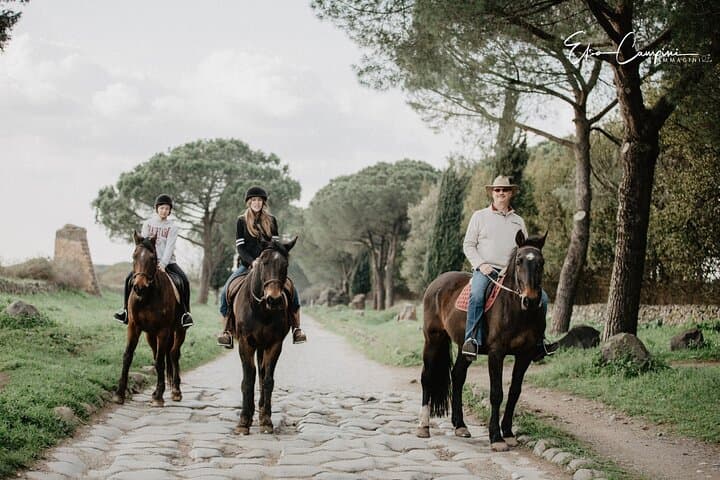
Dust lifts under hooves as riders step off the narrow street and into the slow heartbeat of the Appian Way. The road stretches ahead—broad basalt slabs, grassy verges, and pines whose needles whisper—while the city’s marble and traffic fall away. On a one-hour loop (about 5 km round trip) travelers move through the Parco Regionale dell’Appia Antica toward the Villa dei Quintili, where ruins sit above the route like patient observers.
Dust lifts under hooves as riders step off the narrow street and into the slow heartbeat of the Appian Way. The road stretches ahead—broad basalt slabs, grassy verges, and pines whose needles whisper—while the city’s marble and traffic fall away. On a one-hour loop (about 5 km round trip) travelers move through the Parco Regionale dell’Appia Antica toward the Villa dei Quintili, where ruins sit above the route like patient observers.
This is Roman history in motion: the Via Appia Antica, begun in 312 BCE by Appius Claudius, once linked Rome to southern Italy. The route’s paving stones and roadside tombs tell of empire, while the surrounding geology—ancient volcanic deposits capped by travertine terraces—gives the landscape a compact, sun-baked feel. Local culture remains tangible: field-grown olives, working stables, and shepherded plots press up against archaeological sites.
Expect mixed terrain—packed dirt, grass, and the occasional cobbled stretch—on mostly flat ground with minimal elevation gain. Guides provide mounts for beginners and options for more confident riders; helmets and basic instruction are typically included. Rides run as private or small-group bookings and can be extended (up to 3 hours) for deeper exploration.
Practicalities matter: go early to avoid heat, wear closed-toe shoes and layered clothing, and carry water and ID. Public transport reaches nearby points, but many operators offer pickup in air-conditioned vehicles. The experience balances quiet country riding with a slow, tactile connection to Rome’s long history—an active way to see the city without riding its streets.