THE ADVENTURE COLLECTIVE® · Independent discovery and booking for outdoor travel

Ride between Nile fields and desert dunes on a private horseback tour of Luxor’s West Bank. Tailored for all abilities, these guided rides combine village visits, riverbank routes and desert sunsets near ancient temples.
Ride between Nile fields and desert dunes on a private horseback tour of Luxor’s West Bank. Tailored for all abilities, these guided rides combine village visits, riverbank routes and desert sunsets near ancient temples.
The saddle rocks gently as the Nile’s edge slides by—reeds whisper, mud-brick houses blink into view, and a heron lifts off, annoyed at your passing.
Verified experiences and guided adventures in the surrounding area.
Operated by Etro tours · Luxor, Luxor Governorate
The saddle rocks gently as the Nile’s edge slides by—reeds whisper, mud-brick houses blink into view, and a heron lifts off, annoyed at your passing.
This private horseback ride on Luxor’s West Bank threads between sugarcane paddies, banana groves and the pale sweep of desert beyond. Riders pass farmers shaping the season’s yields and women turning flatbread in village courtyards, while the guide points out birds, irrigation channels and the hulking profiles of ancient mortuary temples across the plain.
Geology here is simple: alluvial Nile deposits below, wind-sanded dunes above. Historically the West Bank is the necropolis — Medinet Habu, the Ramesseum and scattered tombs mark a landscape shaped by pharaonic mortuary needs and modern agriculture.
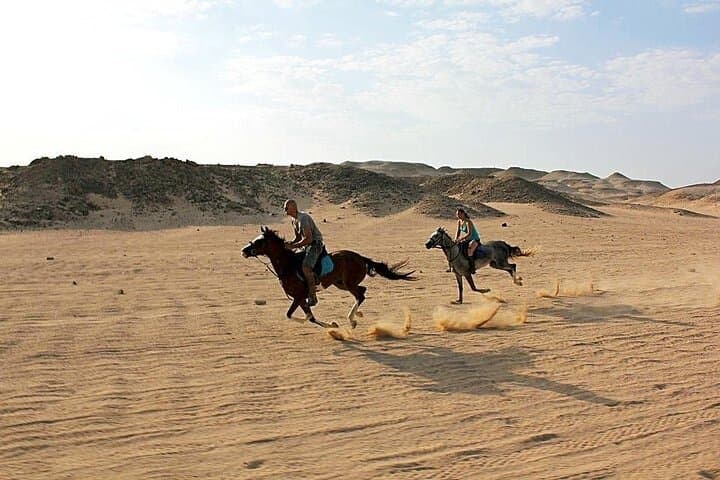
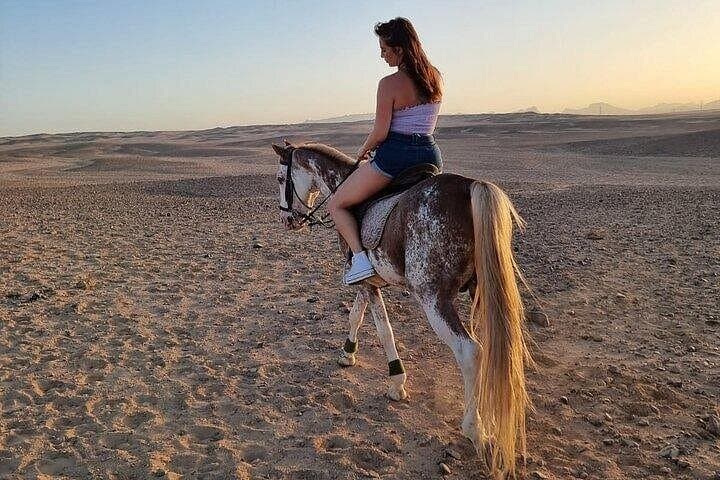
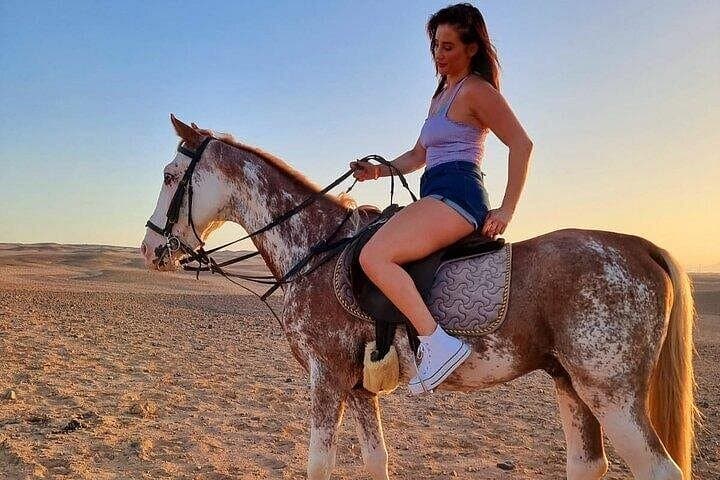
Expect a paced, tailored outing: 1–3 hour loops through fields and riverbank tracks, or longer rides that climb into dunes for a western sunset behind the ruins. Horses are government-licensed and guides provide helmets and basic instruction, so beginners ride with confidence while experienced equestrians can pick a brisker trot.
Practical guidance: wear closed-toe shoes and long pants to avoid chafing; sunscreen and a light long-sleeve layer keep sun and dust off; bring a small water bottle and any meds. Aim to ride late afternoon for cooler temps and the desert light at golden hour. Pickup and drop-off are usually included; confirm meeting point and whether chaps are recommended.
Respect fields and livestock, follow the guide’s route, and leave no trace — the ride is as much about local life as it is about views from the saddle.
moderate.
3 hours.
Moderate fitness; must be able to mount/dismount, sit in the saddle for up to three hours and handle uneven terrain.
Yes—hard hats are provided; you can also bring your own certified helmet if you prefer.
Yes—rides are suitable for riders of varying ability and guides offer instruction and a calm horse selection for novices.
Children can ride but infants must sit on an adult’s lap and operators set age/weight limits—confirm at booking.
Pickup and drop-off are listed as included; confirm exact pickup location and time when you book.
The West Bank served as Luxor’s necropolis for millennia; monuments like Medinet Habu and the Ramesseum reflect Ramesside-era mortuary architecture.
Stay on established tracks to protect irrigated fields and riverbank habitat; support licensed operators who maintain animal welfare and avoid feeding wildlife.
Etro tours operates guided outdoor trips and adventures with an emphasis on safety, stewardship, and memorable experiences.

The saddle rocks gently as the Nile’s edge slides by—reeds whisper, mud-brick houses blink into view, and a heron lifts off, annoyed at your passing.
The saddle rocks gently as the Nile’s edge slides by—reeds whisper, mud-brick houses blink into view, and a heron lifts off, annoyed at your passing.
This private horseback ride on Luxor’s West Bank threads between sugarcane paddies, banana groves and the pale sweep of desert beyond. Riders pass farmers shaping the season’s yields and women turning flatbread in village courtyards, while the guide points out birds, irrigation channels and the hulking profiles of ancient mortuary temples across the plain.
Geology here is simple: alluvial Nile deposits below, wind-sanded dunes above. Historically the West Bank is the necropolis — Medinet Habu, the Ramesseum and scattered tombs mark a landscape shaped by pharaonic mortuary needs and modern agriculture.
Expect a paced, tailored outing: 1–3 hour loops through fields and riverbank tracks, or longer rides that climb into dunes for a western sunset behind the ruins. Horses are government-licensed and guides provide helmets and basic instruction, so beginners ride with confidence while experienced equestrians can pick a brisker trot.
Practical guidance: wear closed-toe shoes and long pants to avoid chafing; sunscreen and a light long-sleeve layer keep sun and dust off; bring a small water bottle and any meds. Aim to ride late afternoon for cooler temps and the desert light at golden hour. Pickup and drop-off are usually included; confirm meeting point and whether chaps are recommended.
Respect fields and livestock, follow the guide’s route, and leave no trace — the ride is as much about local life as it is about views from the saddle.