THE ADVENTURE COLLECTIVE® · Independent discovery and booking for outdoor travel

Ride across wind-swept volcanic ridges of Rapa Nui and explore three lava-tube caves—Ana Kakenga, Ana Te Pora, and Ana Te Pahu—on a guided, moderate-level excursion. Expect a combination of steady horseback miles and short, crouched cave entries with archaeological touches.
Ride across wind-swept volcanic ridges of Rapa Nui and explore three lava-tube caves—Ana Kakenga, Ana Te Pora, and Ana Te Pahu—on a guided, moderate-level excursion. Expect a combination of steady horseback miles and short, crouched cave entries with archaeological touches.
The ride begins on a ridge that looks out over infinite ocean; horses shift their weight as the wind pushes salt-scented air across volcanic stone. Riders move in single file, leather and hooves marking a slow rhythm while the guide points toward three low mouths in the lava—Ana Kakenga, Ana Te Pora, and Ana Te Pahu—each an entrance to the island’s underground history.
Verified experiences and guided adventures in the surrounding area.
Operated by Tangol · Hanga Roa, Valparaíso Region
The ride begins on a ridge that looks out over infinite ocean; horses shift their weight as the wind pushes salt-scented air across volcanic stone. Riders move in single file, leather and hooves marking a slow rhythm while the guide points toward three low mouths in the lava—Ana Kakenga, Ana Te Pora, and Ana Te Pahu—each an entrance to the island’s underground history.
Geologically, Rapa Nui is a set of extinct volcanoes; the caves visited on this route are lava tubes formed when molten rock ran and the outer shell cooled, leaving hollow conduits. Culturally, these shelters were practical refuges and food-storage spaces for the Rapa Nui people, and you can still see traces of gardening terraces and petroglyphs near some openings.
Expect a mix of open pasture, compact volcanic sand, and short, uneven approaches to cave mouths. Inside the tubes the air cools and light narrows; you’ll crouch through some sections and step across low rock shelves. The guide interprets archaeological clues and points out how the sea shaped the island’s eastern cliffs.
Practical guidance: rides run about three to four hours including transfers and require a moderate level of fitness; prior riding experience helps but beginners are welcome. Wear closed-toe boots, layered clothing for coastal sun and wind, and bring a headlamp for dim cave sections. The group size is kept small; hotel pickup from central Hanga Roa is usually included. This excursion balances steady riding with short walks into rugged caves—an active, sensory way to read the island’s volcanic past beneath your feet.
moderate.
3–4 hours.
Suitable for people with a moderate fitness level; able to mount/dismount and handle uneven ground for short periods.
A moderate level of fitness is recommended; you should be comfortable mounting/dismounting and walking over uneven ground for short periods.
Children can join if supervised and physically able to negotiate low passages; guides will advise when sections are narrow or require crouching.
No—beginners are welcome, but basic horsemanship helps with mounting, balance, and following the guide’s cues.
Wear long pants, closed-toe shoes, and layers; a headlamp and gloves can make cave sections more comfortable and safe.
Rapa Nui’s lava tubes were used for refuge, food storage, and cultivation by the island’s inhabitants; archaeological traces like kitchen middens and petroglyphs can be found near cave entrances.
This island’s ecosystems are fragile—stay on established trails, avoid touching rock art, and pack out all trash to protect archaeological sites and native plants.
Tangol operates guided outdoor trips and adventures with an emphasis on safety, stewardship, and memorable experiences.
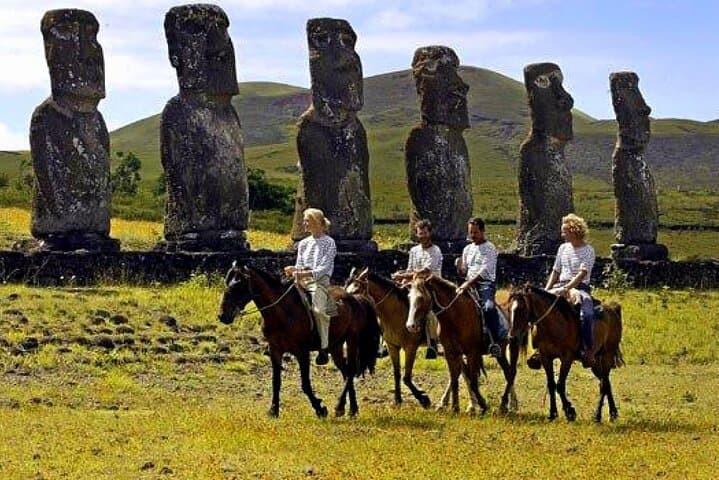
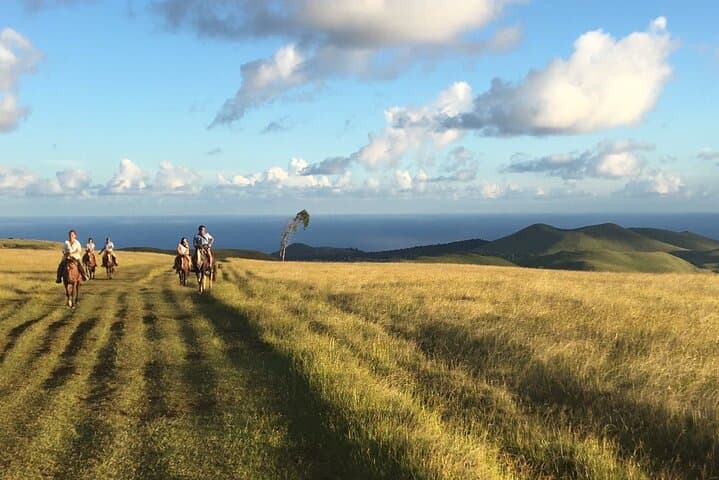
The ride begins on a ridge that looks out over infinite ocean; horses shift their weight as the wind pushes salt-scented air across volcanic stone. Riders move in single file, leather and hooves marking a slow rhythm while the guide points toward three low mouths in the lava—Ana Kakenga, Ana Te Pora, and Ana Te Pahu—each an entrance to the island’s underground history.
The ride begins on a ridge that looks out over infinite ocean; horses shift their weight as the wind pushes salt-scented air across volcanic stone. Riders move in single file, leather and hooves marking a slow rhythm while the guide points toward three low mouths in the lava—Ana Kakenga, Ana Te Pora, and Ana Te Pahu—each an entrance to the island’s underground history.
Geologically, Rapa Nui is a set of extinct volcanoes; the caves visited on this route are lava tubes formed when molten rock ran and the outer shell cooled, leaving hollow conduits. Culturally, these shelters were practical refuges and food-storage spaces for the Rapa Nui people, and you can still see traces of gardening terraces and petroglyphs near some openings.
Expect a mix of open pasture, compact volcanic sand, and short, uneven approaches to cave mouths. Inside the tubes the air cools and light narrows; you’ll crouch through some sections and step across low rock shelves. The guide interprets archaeological clues and points out how the sea shaped the island’s eastern cliffs.
Practical guidance: rides run about three to four hours including transfers and require a moderate level of fitness; prior riding experience helps but beginners are welcome. Wear closed-toe boots, layered clothing for coastal sun and wind, and bring a headlamp for dim cave sections. The group size is kept small; hotel pickup from central Hanga Roa is usually included. This excursion balances steady riding with short walks into rugged caves—an active, sensory way to read the island’s volcanic past beneath your feet.