THE ADVENTURE COLLECTIVE® · Independent discovery and booking for outdoor travel

A guided, one-hour horseback ride led by Navajo wranglers delivers you to the rim of Horseshoe Bend for big-sky views and cultural storytelling. Short, scenic, and accessible—this is a hands-on way to experience the Colorado River’s most famous meander with local insight.
A guided, one-hour horseback ride led by Navajo wranglers delivers you to the rim of Horseshoe Bend for big-sky views and cultural storytelling. Short, scenic, and accessible—this is a hands-on way to experience the Colorado River’s most famous meander with local insight.
The sound arrives first: soft hoofbeats on compacted Navajo sand, the scrape of leather, a guide’s steady voice folding into the wide desert. You move as the land moves—slow, sure, measured—until the rim opens and the Colorado River reveals itself, a green ribbon cut deep into rust-colored stone. On a clear day the bend grabs light like a magnet; on a wind-churned afternoon the cliffs seem to challenge you to stand still and watch.
Verified experiences and guided adventures in the surrounding area.
Operated by JoyFun Tour, LLC · Page, Arizona
The sound arrives first: soft hoofbeats on compacted Navajo sand, the scrape of leather, a guide’s steady voice folding into the wide desert. You move as the land moves—slow, sure, measured—until the rim opens and the Colorado River reveals itself, a green ribbon cut deep into rust-colored stone. On a clear day the bend grabs light like a magnet; on a wind-churned afternoon the cliffs seem to challenge you to stand still and watch.
This is a short, intimate way to meet one of the Southwest’s most photographed turns. The ride is led by Navajo wranglers whose families have grazed this ground for generations. The local history is tangible: the Navajo Nation is a sovereign people with a living cultural landscape here, and riders often pass lands once tended by Manson Yazzie and his descendants, who still keep horses and practice Dine traditions in the area.
Geologically the Horseshoe Bend overlook sits above a meander cut by the Colorado River over millions of years; the rim drops roughly 1,000 feet to the river’s channel at the bottom, while the trail itself traverses slickrock and packed sand with brief, gentle rises. The ride covers about 1–2 miles round-trip and gains roughly 150–200 feet overall—enough to feel like travel without testing endurance. Vegetation is sparse: clumps of pinyon, juniper, and resilient desert grasses that bend into the wind and scatter light across the sandstone.
Culturally, horseback riding here is more than tourism. Horses play roles in ceremonies and family life, and your guide can share stories about local customs, language, and land stewardship if you ask. The operator includes the Navajo Nation parks fee and a trained wrangler to manage horses and safety gear.
Practicalities are simple but important. Meet at the tour office in Page 15 minutes before departure—Google coordinates 36.868461, -111.504272—and plan for roughly one hour total. Wear closed-toe shoes and sun protection; bring a refillable water bottle and a small tip for the wrangler. The ride is suitable for most fitness levels but is not recommended for pregnant guests or those with serious back or heart conditions. Weather can change fast: summer temperatures climb and winter winds slice cold, so dress in layers.
Photographers will want to time the trip for softer light—early morning or late afternoon reduces glare on the river and adds depth to the sandstone. Above all, approach the ride with respect: this is Navajo land with living families and practices; staying on the route, listening to your guide, and leaving no trace keeps both the scenery and the culture intact.
easy.
1 hour.
Suitable for most people who can mount a horse and sit for 60 minutes; minimal hiking required.
The guided experience is one hour from the meeting point; allow extra time for arrival and briefing.
No—this tour accommodates beginners, though basic comfort mounted on a horse is necessary.
Closed-toe shoes, comfortable pants, layered clothing for wind and sun protection, and a hat are recommended.
Policies vary; confirm with the operator at booking—participants must be able to safely mount and control a horse.
Yes, the ride takes place on Navajo Nation land; the operator includes Navajo Nation park fees in the price.
Yes—rides are canceled in unsafe weather; the operator’s policy indicates cancellation for bad weather with all sales final.
The Navajo Nation is a sovereign people with long connections to this land; families like that of Manson Yazzie have grazed livestock here for generations.
Riders are asked to stay on established routes and pack out all waste; fees paid help support Navajo Nation park management and local communities.
JoyFun Tour, LLC operates guided outdoor trips and adventures with an emphasis on safety, stewardship, and memorable experiences.
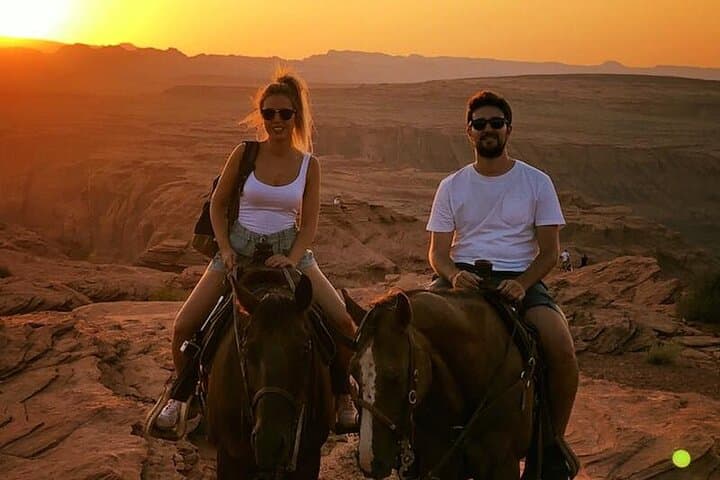
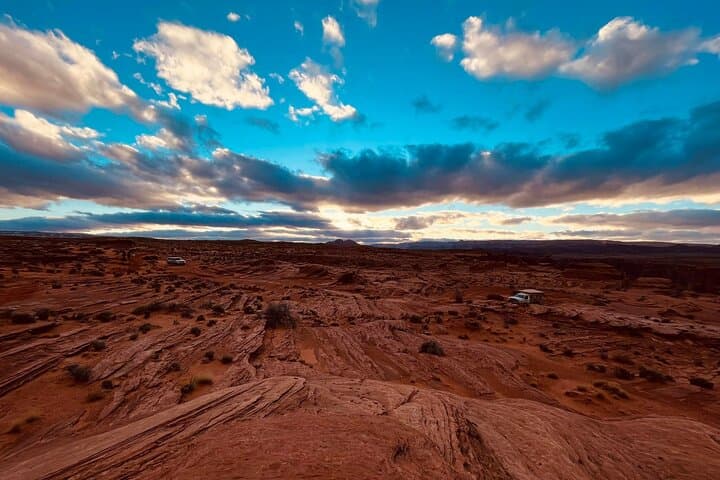
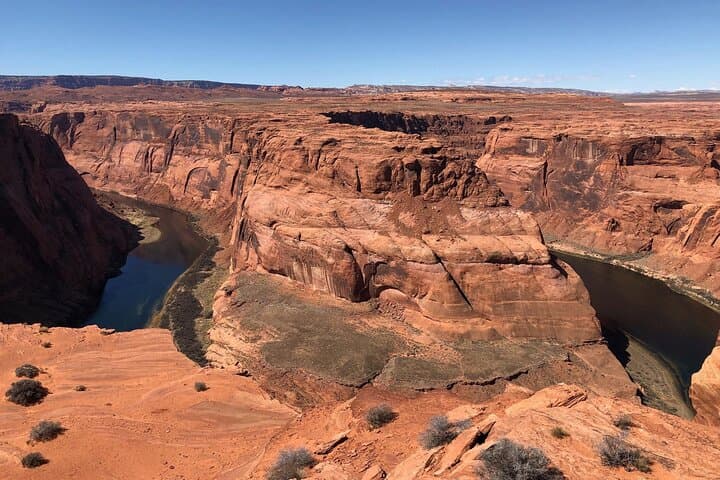
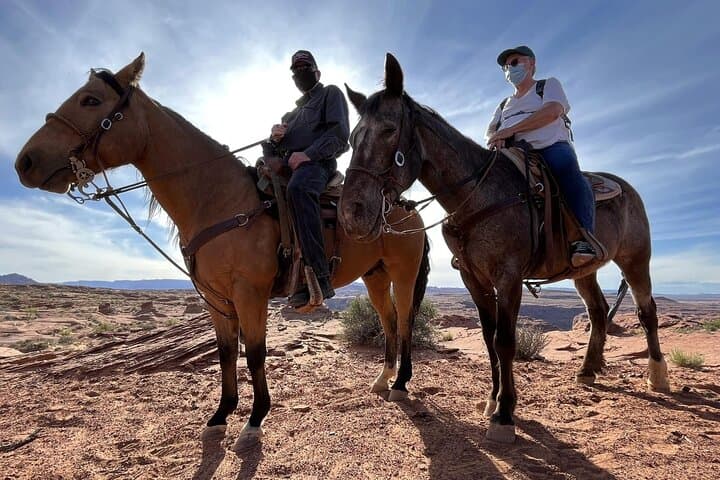
The sound arrives first: soft hoofbeats on compacted Navajo sand, the scrape of leather, a guide’s steady voice folding into the wide desert. You move as the land moves—slow, sure, measured—until the rim opens and the Colorado River reveals itself, a green ribbon cut deep into rust-colored stone. On a clear day the bend grabs light like a magnet; on a wind-churned afternoon the cliffs seem to challenge you to stand still and watch.
The sound arrives first: soft hoofbeats on compacted Navajo sand, the scrape of leather, a guide’s steady voice folding into the wide desert. You move as the land moves—slow, sure, measured—until the rim opens and the Colorado River reveals itself, a green ribbon cut deep into rust-colored stone. On a clear day the bend grabs light like a magnet; on a wind-churned afternoon the cliffs seem to challenge you to stand still and watch.
This is a short, intimate way to meet one of the Southwest’s most photographed turns. The ride is led by Navajo wranglers whose families have grazed this ground for generations. The local history is tangible: the Navajo Nation is a sovereign people with a living cultural landscape here, and riders often pass lands once tended by Manson Yazzie and his descendants, who still keep horses and practice Dine traditions in the area.
Geologically the Horseshoe Bend overlook sits above a meander cut by the Colorado River over millions of years; the rim drops roughly 1,000 feet to the river’s channel at the bottom, while the trail itself traverses slickrock and packed sand with brief, gentle rises. The ride covers about 1–2 miles round-trip and gains roughly 150–200 feet overall—enough to feel like travel without testing endurance. Vegetation is sparse: clumps of pinyon, juniper, and resilient desert grasses that bend into the wind and scatter light across the sandstone.
Culturally, horseback riding here is more than tourism. Horses play roles in ceremonies and family life, and your guide can share stories about local customs, language, and land stewardship if you ask. The operator includes the Navajo Nation parks fee and a trained wrangler to manage horses and safety gear.
Practicalities are simple but important. Meet at the tour office in Page 15 minutes before departure—Google coordinates 36.868461, -111.504272—and plan for roughly one hour total. Wear closed-toe shoes and sun protection; bring a refillable water bottle and a small tip for the wrangler. The ride is suitable for most fitness levels but is not recommended for pregnant guests or those with serious back or heart conditions. Weather can change fast: summer temperatures climb and winter winds slice cold, so dress in layers.
Photographers will want to time the trip for softer light—early morning or late afternoon reduces glare on the river and adds depth to the sandstone. Above all, approach the ride with respect: this is Navajo land with living families and practices; staying on the route, listening to your guide, and leaving no trace keeps both the scenery and the culture intact.