THE ADVENTURE COLLECTIVE® · Independent discovery and booking for outdoor travel

Ride from the cultural heart of the Orkhon Valley to the remote Huisiin Naiman Nuur on a multi-day horse trek that combines UNESCO history, volcanic highland scenery, ger hospitality, and wild camping under vast skies. Practical support and local guides make this a doable backcountry immersion.
Ride from the cultural heart of the Orkhon Valley to the remote Huisiin Naiman Nuur on a multi-day horse trek that combines UNESCO history, volcanic highland scenery, ger hospitality, and wild camping under vast skies. Practical support and local guides make this a doable backcountry immersion.
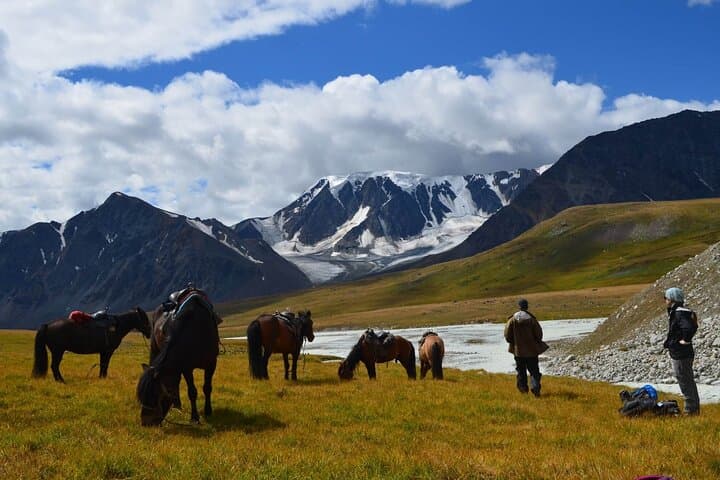
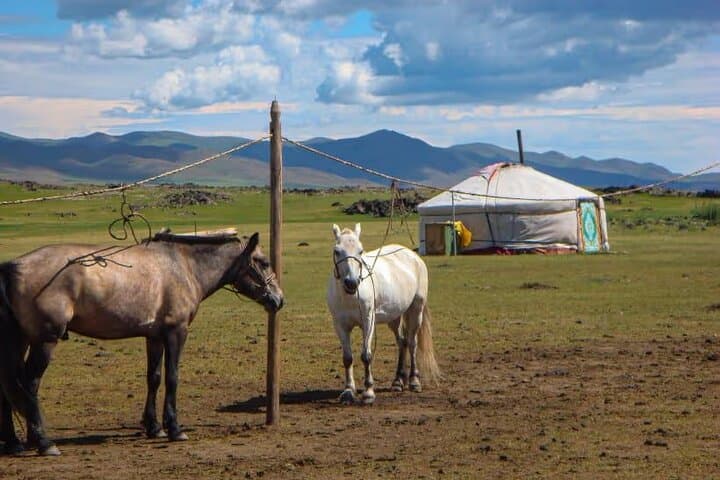
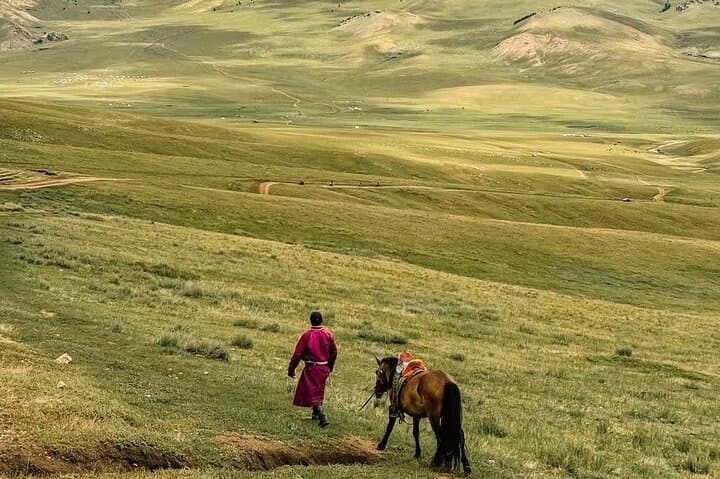
Morning light sharpens the ridgelines as horses step onto the high steppe and the world reduces to hoofbeats, wind, and a long horizon. Riders move away from the paved ribbon of the city and into a vast landscape where gers punctuate the grass and lakes mirror an open sky.
Verified experiences and guided adventures in the surrounding area.
Operated by Nomad Trail Mongolia · Kharkhorin, Övörkhangai
Morning light sharpens the ridgelines as horses step onto the high steppe and the world reduces to hoofbeats, wind, and a long horizon. Riders move away from the paved ribbon of the city and into a vast landscape where gers punctuate the grass and lakes mirror an open sky.
The route threads through the UNESCO-protected Orkhon Valley—once a corridor of empires—past Erdene Zuu’s 108 stupas and up to the solitary Tuvkhun Monastery clinging to Shiveet Mountain. Geology shifts along the way: river-cut valleys, volcanic remnants framing the Huisiin Naiman Nuur (Eight Lakes) at roughly 2,500 m, and sand seas at Elsen Tasarkhai where dunes meet outcrop. Local culture is the constant: families with livestock, stories shared over tea in a ger, and traditional horse and camel skills still practiced for daily life.
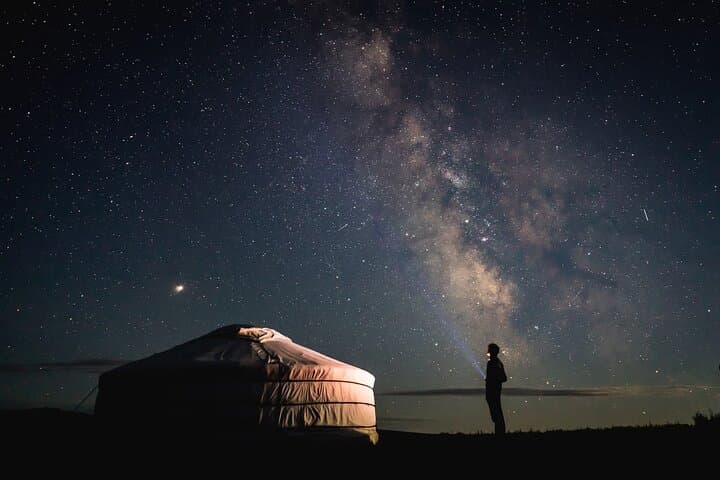
Practically, expect a mix of vehicle-supported transfers and three days of true horse trekking with pack horses carrying gear. Accommodations alternate between ger camps and wild tent camping beneath clear stars. Weather swings—sunny afternoons, sharp mornings—so layered clothing and wind protection matter more than fashion. Riders should be comfortable sitting in the saddle for multiple hours, follow the guide’s direction for mounting, pace, and emergency pickup options, and come with basic gear: sun protection, sturdy boots, and a small dry bag for electronics.
This is a trip of steady rhythms: wake, ride, share food with nomads, and let the landscape set the clock. Respect local customs, manage waste, and you leave with a clearer sense of scale—and, often, a quieter mind.
moderate.
10 days.
Moderate—able to ride 3–6 hours a day and handle short hikes; comfortable with basic camping conditions.
Moderate fitness is sufficient—being able to sit in a saddle for several hours and walk short distances with light gear is helpful; guides provide pace and rest.
Yes—horses are selected for trekking and guidance is continuous, but prior riding experience improves control and comfort.
The itinerary alternates between traditional ger camps with local families and wild tent camping; basic toilets and camp cooking are typical in remote sections.
A private vehicle and driver accompany the route and can extract riders if necessary; guides assess ability daily and can adjust distance or provide a transfer.
Kharkhorin (Kharakhorum) and the surrounding Orkhon Valley were central to Mongol imperial routes; Erdene Zuu monastery (late 16th century) stands on the ruins of the ancient capital.
The Orkhon Valley’s UNESCO status reflects fragile steppe ecosystems and archaeological sites—travelers are urged to follow leave-no-trace practices and minimize grazing impacts by using established camps.
Nomad Trail Mongolia operates guided outdoor trips and adventures with an emphasis on safety, stewardship, and memorable experiences.
Morning light sharpens the ridgelines as horses step onto the high steppe and the world reduces to hoofbeats, wind, and a long horizon. Riders move away from the paved ribbon of the city and into a vast landscape where gers punctuate the grass and lakes mirror an open sky.
Morning light sharpens the ridgelines as horses step onto the high steppe and the world reduces to hoofbeats, wind, and a long horizon. Riders move away from the paved ribbon of the city and into a vast landscape where gers punctuate the grass and lakes mirror an open sky.
The route threads through the UNESCO-protected Orkhon Valley—once a corridor of empires—past Erdene Zuu’s 108 stupas and up to the solitary Tuvkhun Monastery clinging to Shiveet Mountain. Geology shifts along the way: river-cut valleys, volcanic remnants framing the Huisiin Naiman Nuur (Eight Lakes) at roughly 2,500 m, and sand seas at Elsen Tasarkhai where dunes meet outcrop. Local culture is the constant: families with livestock, stories shared over tea in a ger, and traditional horse and camel skills still practiced for daily life.
Practically, expect a mix of vehicle-supported transfers and three days of true horse trekking with pack horses carrying gear. Accommodations alternate between ger camps and wild tent camping beneath clear stars. Weather swings—sunny afternoons, sharp mornings—so layered clothing and wind protection matter more than fashion. Riders should be comfortable sitting in the saddle for multiple hours, follow the guide’s direction for mounting, pace, and emergency pickup options, and come with basic gear: sun protection, sturdy boots, and a small dry bag for electronics.
This is a trip of steady rhythms: wake, ride, share food with nomads, and let the landscape set the clock. Respect local customs, manage waste, and you leave with a clearer sense of scale—and, often, a quieter mind.