THE ADVENTURE COLLECTIVE® · Independent discovery and booking for outdoor travel

Move at the pace of a horse through l'Empordà’s vineyards, olive groves and pinewoods, then finish with a biodynamic tasting at Clos de Basella. This gentle horseback loop pairs rural geology and Catalan wine culture in a single, sensory half-day.
Move at the pace of a horse through l'Empordà’s vineyards, olive groves and pinewoods, then finish with a biodynamic tasting at Clos de Basella. This gentle horseback loop pairs rural geology and Catalan wine culture in a single, sensory half-day.
The morning air in l'Empordà tastes of pine resin and pressed grapes as riders gather at Cal Robusto’s stables. Horses stamp, nostrils flaring, while guides fit tack and share the route: a gentle loop through olive groves, vine rows and pine-scented tracks that skirt the glassy Siurana pond.
Verified experiences and guided adventures in the surrounding area.
Operated by Clos de Basella · La Bisbal d'Empordà, Catalonia
The morning air in l'Empordà tastes of pine resin and pressed grapes as riders gather at Cal Robusto’s stables. Horses stamp, nostrils flaring, while guides fit tack and share the route: a gentle loop through olive groves, vine rows and pine-scented tracks that skirt the glassy Siurana pond.
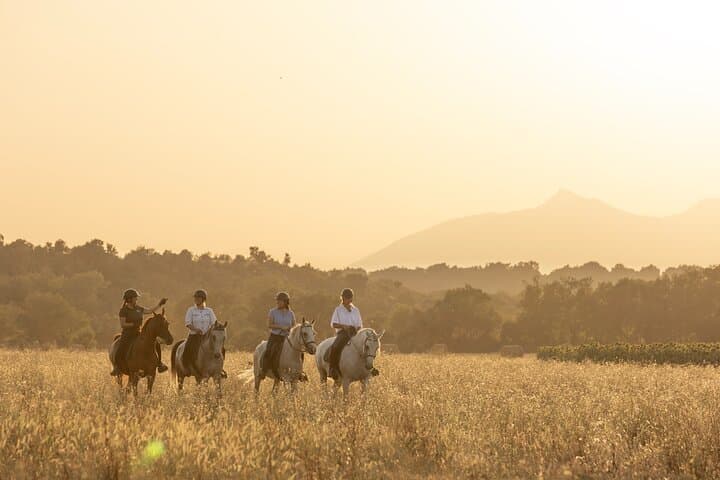
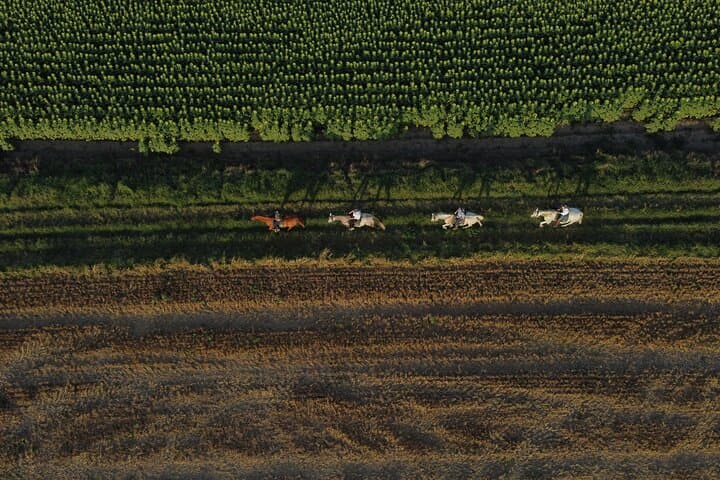
This part of Catalonia has a long agricultural history—Roman-era terraces and medieval farmsteads still shape the fields—and the coastline’s limestone soils and Mediterranean microclimate create the dry, stony terroir that local winemakers prize. Riding here means moving at the rhythm of the land: quiet stretches across dirt farm roads, brief singletrack under umbrella pines, and open views over low karst ridges where the geology reveals layers of ancient seabed.
Culturally the ride is small-scale and sensory; equine handlers explain horse care while vineyard hosts describe biodynamic practices at Clos de Basella, a young estate focused on organic methods. The conclusion is a guided tour of the vineyard and a tasting of estate wines — an earthy, tactile way to connect field to glass.
Practically, expect about 60–90 minutes in the saddle covering 6–10 km with modest elevation changes (roughly 100–250 m cumulative). Trails are compact dirt and farm tracks; closed-toe shoes and weather layers are advisable. The experience suits novices and those comfortable with basic riding; the pace is calm and conversational. Morning light is best for photos and cooler temperatures; carry water, sunscreen and a sense of patience to move with the horse and the landscape.
easy.
2–2.5 hours.
Light fitness required—able to sit and balance on a horse for up to 90 minutes and walk short distances.
No—this ride is designed for beginners and intermediate riders; guides will brief basic commands and match you with an appropriate horse.
Expect about 60–90 minutes on horseback and a 30–60 minute vineyard tour and tasting at Clos de Basella, totaling around 2–2.5 hours.
Infants may be accommodated in a pram for ground visits, but the ride is not recommended for pregnant travelers and small children may have age/weight restrictions—check with the operator.
Public transport options exist but are limited; most travelers reach the stables by car or arranged transfer from Girona (about 30–45 minutes depending on exact location).
L'Empordà’s landscape bears Roman and medieval agricultural imprints; modern vineyards have revived old plots using traditional and biodynamic methods.
Clos de Basella emphasizes organic and biodynamic viticulture to support biodiversity; riders should stick to marked tracks to protect soils and forage areas.
Clos de Basella operates guided outdoor trips and adventures with an emphasis on safety, stewardship, and memorable experiences.
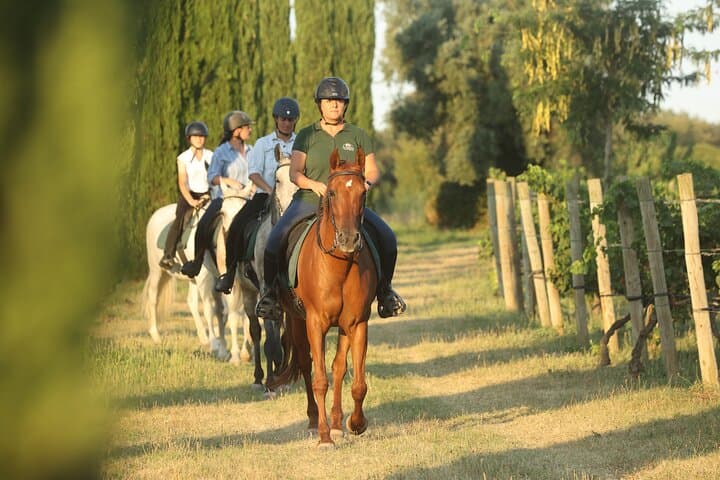
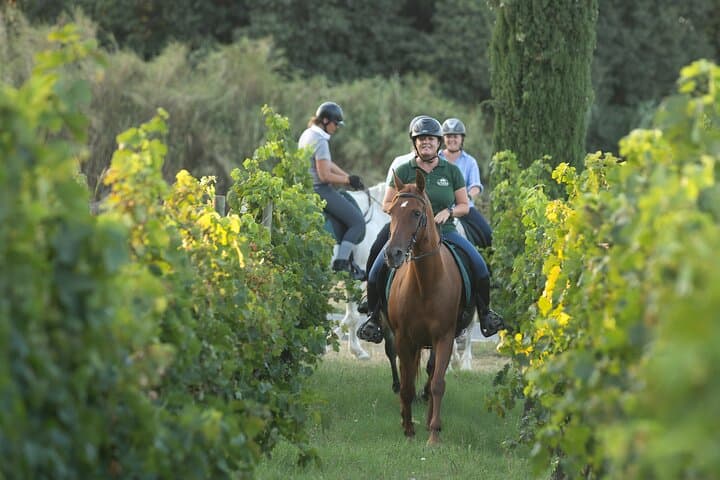
The morning air in l'Empordà tastes of pine resin and pressed grapes as riders gather at Cal Robusto’s stables. Horses stamp, nostrils flaring, while guides fit tack and share the route: a gentle loop through olive groves, vine rows and pine-scented tracks that skirt the glassy Siurana pond.
The morning air in l'Empordà tastes of pine resin and pressed grapes as riders gather at Cal Robusto’s stables. Horses stamp, nostrils flaring, while guides fit tack and share the route: a gentle loop through olive groves, vine rows and pine-scented tracks that skirt the glassy Siurana pond.
This part of Catalonia has a long agricultural history—Roman-era terraces and medieval farmsteads still shape the fields—and the coastline’s limestone soils and Mediterranean microclimate create the dry, stony terroir that local winemakers prize. Riding here means moving at the rhythm of the land: quiet stretches across dirt farm roads, brief singletrack under umbrella pines, and open views over low karst ridges where the geology reveals layers of ancient seabed.
Culturally the ride is small-scale and sensory; equine handlers explain horse care while vineyard hosts describe biodynamic practices at Clos de Basella, a young estate focused on organic methods. The conclusion is a guided tour of the vineyard and a tasting of estate wines — an earthy, tactile way to connect field to glass.
Practically, expect about 60–90 minutes in the saddle covering 6–10 km with modest elevation changes (roughly 100–250 m cumulative). Trails are compact dirt and farm tracks; closed-toe shoes and weather layers are advisable. The experience suits novices and those comfortable with basic riding; the pace is calm and conversational. Morning light is best for photos and cooler temperatures; carry water, sunscreen and a sense of patience to move with the horse and the landscape.