THE ADVENTURE COLLECTIVE® · Independent discovery and booking for outdoor travel

Float through Marrakech in a horse-drawn carriage and let narrow lanes, towering minarets, and hidden courtyards pass by at an unhurried pace. This 2-hour private route covers the Medina perimeter and major sights with hotel pickup and accessible options.
Float through Marrakech in a horse-drawn carriage and let narrow lanes, towering minarets, and hidden courtyards pass by at an unhurried pace. This 2-hour private route covers the Medina perimeter and major sights with hotel pickup and accessible options.
You roll away from a hotel doorway into the warm air of Marrakech, the carriage wheels tapping an old rhythm on cobbled streets. Palm shadows slide across riads and low clay walls as your driver steers a measured course past the Koutoubia minaret, its silhouette a steady guide over the city skyline.
Verified experiences and guided adventures in the surrounding area.
Operated by Molkotshi264 · Marrakech, Marrakesh-Safi
You roll away from a hotel doorway into the warm air of Marrakech, the carriage wheels tapping an old rhythm on cobbled streets. Palm shadows slide across riads and low clay walls as your driver steers a measured course past the Koutoubia minaret, its silhouette a steady guide over the city skyline.
The two-hour route threads the edge of the Medina—UNESCO-listed since 1985—passing the Koutoubia Mosque, the Saadian Tombs and the quiet olive plots of Menara Gardens. Carriage travel echoes a time when horses and donkeys were essential city transport; here the past moves at an easy pace, letting drivers point out architectural details of Almohad minarets, the late-19th-century ornament of Bahia Palace and the narrow alleys of the Mellah, Marrakech’s former Jewish quarter.
Geology is subtle: ochre city walls are built from local red clay and riverbed stone, their color shifting with the light. Culture is alive in open square scenes—vendors, call to prayer, and rooftop teahouses offering city views.
Practicalities: the tour is roughly 2 hours with hotel pickup and drop-off, wheelchair-accessible options, and is suitable for all ages. Expect low physical exertion but bring sun protection, comfortable footwear for short stops, and a camera. Travel mid-morning or late afternoon to avoid peak heat and heavy souk traffic. Respect the animals—ask about welfare practices—and keep small groups to reduce congestion in narrow lanes. A carriage offers a relaxed, accessible way to see Marrakech’s major sights while learning local stories from a driver who knows the city's lanes by heart.
easy.
2 hours.
Minimal fitness required; suitable for most ages and mobility levels with accessible options available
The experience lasts approximately 2 hours, including hotel pickup and drop-off.
Yes—children are welcome; infants must sit on a lap but infant seats can be arranged if requested in advance.
Yes—the tour lists wheelchair-accessible options; notify the operator at booking to arrange accessible pickup and seating.
Typical route passes the Koutoubia Mosque, Menara Gardens, Saadian Tombs, Bahia Palace and the Mellah; drivers often stop briefly for photos at agreed points.
Marrakech was founded in the 11th century by the Almoravids; its walled Medina, expanded under the Almohads, became a major trade and cultural center and was named a UNESCO World Heritage Site in 1985.
Tourism pressures and animal welfare are ongoing concerns—choose operators who limit carriage numbers, provide proper rest and water for horses, and respect fragile historic streets.
Molkotshi264 operates guided outdoor trips and adventures with an emphasis on safety, stewardship, and memorable experiences.
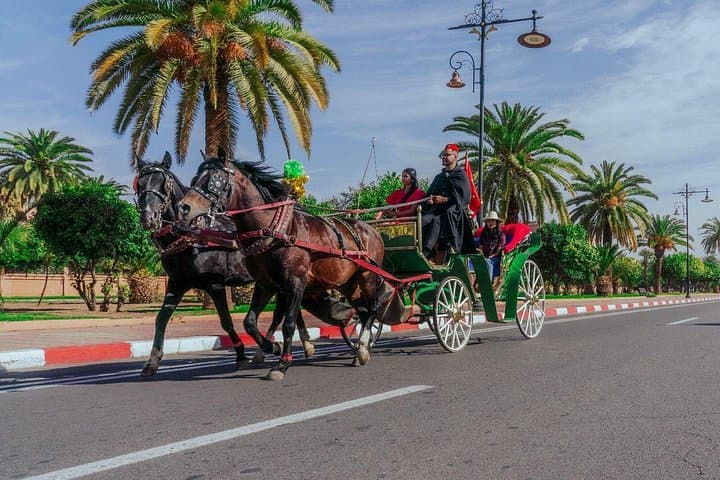
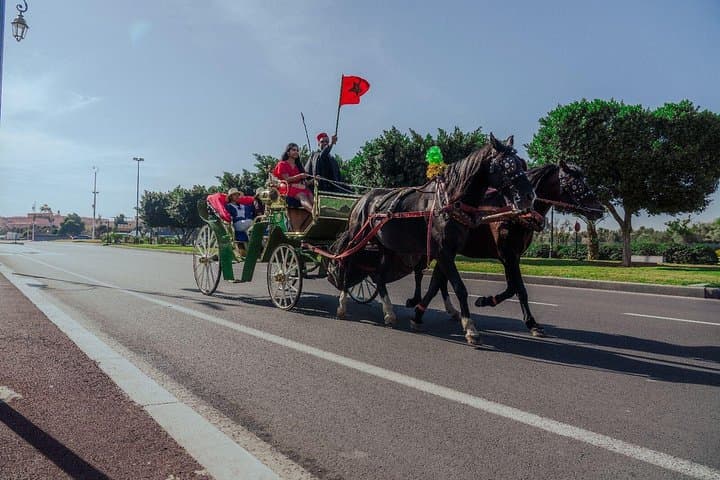
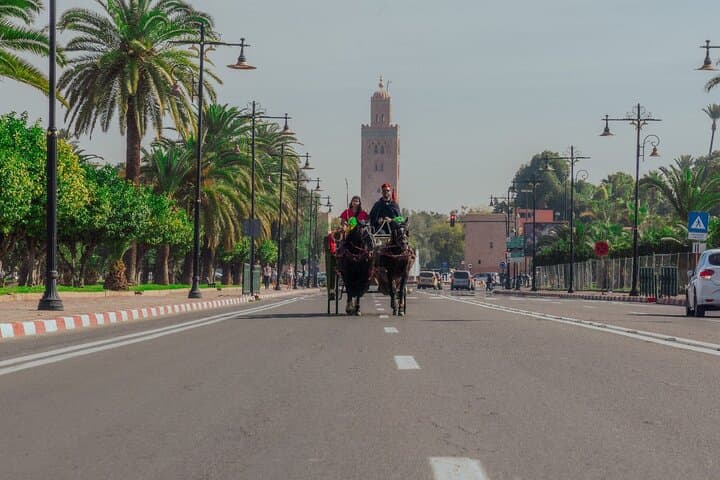
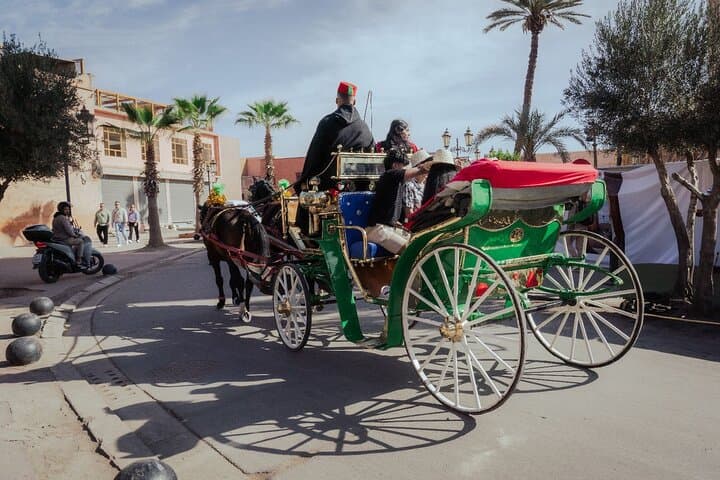
You roll away from a hotel doorway into the warm air of Marrakech, the carriage wheels tapping an old rhythm on cobbled streets. Palm shadows slide across riads and low clay walls as your driver steers a measured course past the Koutoubia minaret, its silhouette a steady guide over the city skyline.
You roll away from a hotel doorway into the warm air of Marrakech, the carriage wheels tapping an old rhythm on cobbled streets. Palm shadows slide across riads and low clay walls as your driver steers a measured course past the Koutoubia minaret, its silhouette a steady guide over the city skyline.
The two-hour route threads the edge of the Medina—UNESCO-listed since 1985—passing the Koutoubia Mosque, the Saadian Tombs and the quiet olive plots of Menara Gardens. Carriage travel echoes a time when horses and donkeys were essential city transport; here the past moves at an easy pace, letting drivers point out architectural details of Almohad minarets, the late-19th-century ornament of Bahia Palace and the narrow alleys of the Mellah, Marrakech’s former Jewish quarter.
Geology is subtle: ochre city walls are built from local red clay and riverbed stone, their color shifting with the light. Culture is alive in open square scenes—vendors, call to prayer, and rooftop teahouses offering city views.
Practicalities: the tour is roughly 2 hours with hotel pickup and drop-off, wheelchair-accessible options, and is suitable for all ages. Expect low physical exertion but bring sun protection, comfortable footwear for short stops, and a camera. Travel mid-morning or late afternoon to avoid peak heat and heavy souk traffic. Respect the animals—ask about welfare practices—and keep small groups to reduce congestion in narrow lanes. A carriage offers a relaxed, accessible way to see Marrakech’s major sights while learning local stories from a driver who knows the city's lanes by heart.