THE ADVENTURE COLLECTIVE® · Independent discovery and booking for outdoor travel

Experience Luxor at a relaxed pace from a horse-drawn carriage. This private tour moves along the Nile and key temple fronts, offering close-up views of Luxor’s ancient monuments with minimal walking.
Experience Luxor at a relaxed pace from a horse-drawn carriage. This private tour moves along the Nile and key temple fronts, offering close-up views of Luxor’s ancient monuments with minimal walking.
The clip-clop of hooves and the steady pull of a carriage wheel set the tempo as the river pulls the city along with it. On a horse-carriage tour of Luxor, the city’s limestone facades, date palms, and stretches of the Nile unfold at a deliberate pace: close enough to study the carvings, far enough to let the afternoon heat thin into light.
Verified experiences and guided adventures in the surrounding area.
Operated by Sure Egypt · Luxor, Luxor Governorate
The clip-clop of hooves and the steady pull of a carriage wheel set the tempo as the river pulls the city along with it. On a horse-carriage tour of Luxor, the city’s limestone facades, date palms, and stretches of the Nile unfold at a deliberate pace: close enough to study the carvings, far enough to let the afternoon heat thin into light.
Luxor occupies the footprint of ancient Thebes, where pharaohs raised Karnak and Luxor Temples and the Avenue of Sphinxes once led ritual processions to the Nile. The city’s geology—soft, layered sedimentary rock—made it easy to carve monumental stone and has guided modern streets along the river plain. Culturally, carriage rides echo local transport traditions; visitors may also encounter roadside performers and handlers whose practices reflect longer-standing street traditions.
On the ride expect gentle city streets, brief stops for photos near temple façades or the corniche, and the particular smell of river mud and simmering spices. Operators typically include bottled water and hotel pickup and return; the experience is accessible to most fitness levels.
Practical guidance: aim for early morning or late afternoon to avoid midday heat, carry sun protection and a refillable bottle, and agree the route and price up front for private tours. Respect archaeological sites—do not climb ruins or touch reliefs—and follow your guide’s directions around traffic. Tipping drivers is customary; a modest tip goes a long way. For travelers wanting slow cultural immersion without the walking, the carriage offers a scenic, low-effort way to read Luxor’s layers of history while the Nile keeps time alongside you.
easy.
Full day (6–8 hours).
Suitable for most travelers; able to sit for several hours and board a carriage
Private carriage tours vary; many are arranged as half-day (3–4 hours) to full-day experiences—confirm duration when booking.
Standards vary by operator; choose providers with positive reviews, confirm animal welfare practices, and avoid overcrowded or poorly maintained carriages.
Many carriage routes pass or stop near Luxor Temple and the corniche; full visits to Karnak usually require additional walking or a separate transfer.
Yes—tipping is customary. A modest cash tip is appreciated and often expected for private ground transport in Egypt.
Luxor sits on the site of ancient Thebes, the religious heart of New Kingdom Egypt where pharaohs built the Karnak and Luxor temple complexes.
Protect sites by not touching or climbing monuments, dispose of waste responsibly, and support operators who follow ethical animal-handling practices.
Sure Egypt operates guided outdoor trips and adventures with an emphasis on safety, stewardship, and memorable experiences.
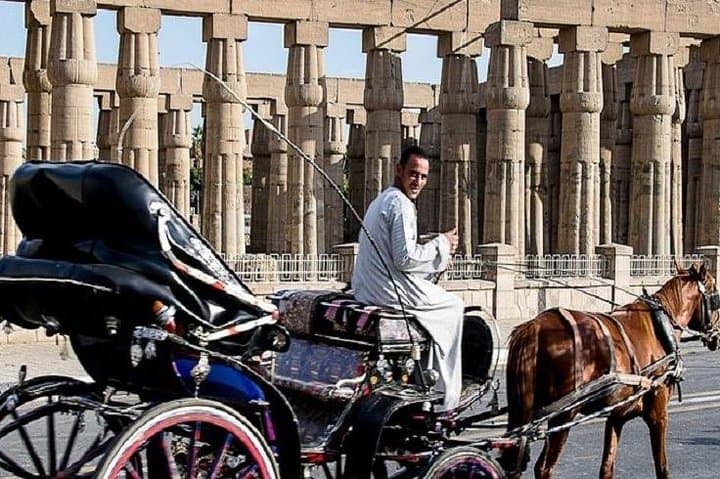
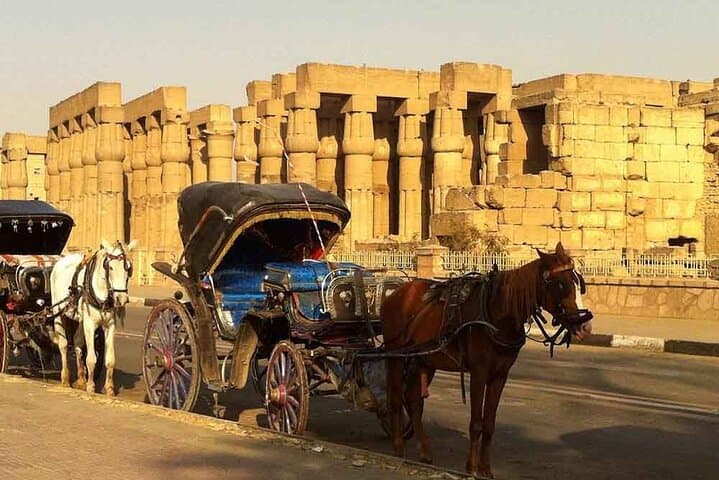
The clip-clop of hooves and the steady pull of a carriage wheel set the tempo as the river pulls the city along with it. On a horse-carriage tour of Luxor, the city’s limestone facades, date palms, and stretches of the Nile unfold at a deliberate pace: close enough to study the carvings, far enough to let the afternoon heat thin into light.
The clip-clop of hooves and the steady pull of a carriage wheel set the tempo as the river pulls the city along with it. On a horse-carriage tour of Luxor, the city’s limestone facades, date palms, and stretches of the Nile unfold at a deliberate pace: close enough to study the carvings, far enough to let the afternoon heat thin into light.
Luxor occupies the footprint of ancient Thebes, where pharaohs raised Karnak and Luxor Temples and the Avenue of Sphinxes once led ritual processions to the Nile. The city’s geology—soft, layered sedimentary rock—made it easy to carve monumental stone and has guided modern streets along the river plain. Culturally, carriage rides echo local transport traditions; visitors may also encounter roadside performers and handlers whose practices reflect longer-standing street traditions.
On the ride expect gentle city streets, brief stops for photos near temple façades or the corniche, and the particular smell of river mud and simmering spices. Operators typically include bottled water and hotel pickup and return; the experience is accessible to most fitness levels.
Practical guidance: aim for early morning or late afternoon to avoid midday heat, carry sun protection and a refillable bottle, and agree the route and price up front for private tours. Respect archaeological sites—do not climb ruins or touch reliefs—and follow your guide’s directions around traffic. Tipping drivers is customary; a modest tip goes a long way. For travelers wanting slow cultural immersion without the walking, the carriage offers a scenic, low-effort way to read Luxor’s layers of history while the Nile keeps time alongside you.