THE ADVENTURE COLLECTIVE® · Independent discovery and booking for outdoor travel

A private half-day horse carriage tour takes you across the Giza Plateau to the base of the Great Pyramid. Enjoy guided history, panoramic Sphinx views, and a local lunch with hotel pickup included.
A private half-day horse carriage tour takes you across the Giza Plateau to the base of the Great Pyramid. Enjoy guided history, panoramic Sphinx views, and a local lunch with hotel pickup included.
The desert air is cool in the morning as a low-slung carriage threads between dunes and the stone giants rise from the sands like ancient ships. You arrive at the Giza Plateau by carriage, the horses' hoofbeats marking a steady tempo against the vast outline of the Great Pyramid and the Sphinx.
Verified experiences and guided adventures in the surrounding area.
Operated by Magic Life Tours · Giza, Cairo Governorate
The desert air is cool in the morning as a low-slung carriage threads between dunes and the stone giants rise from the sands like ancient ships. You arrive at the Giza Plateau by carriage, the horses' hoofbeats marking a steady tempo against the vast outline of the Great Pyramid and the Sphinx.
These monuments date to Egypt’s Old Kingdom (c. 2600–2500 BCE), built as monumental tombs for pharaohs such as Khufu. Geologically the plateau is limestone bedrock scarred by millennia of wind and sand—an environment shaped as much by human hands as natural forces. Local Bedouin and Cairo vendors have shaped the site's modern culture: expect friendly bargaining and a strong focus on hospitality.
The tour typically runs about half a day: hotel pickup in Cairo, a guided briefing, a two-hour horse carriage circuit that circles the major monuments and offers panoramic Sphinx views, then lunch at a nearby restaurant before return.
Practical guidance: wear sun-protective clothing and closed-toe shoes for sand and uneven surfaces; bring bottled water and a camera with a low-angle lens for dramatic pyramid shots. Respect restricted areas—entry into some pyramid interiors requires a separate ticket and can be physically demanding.
This private, accessible ride is an efficient way to see the core of Giza with minimal walking while still feeling connected to the desert landscape. Time your visit for morning or late afternoon to avoid mid-day heat and the largest crowds.
easy.
3–4 hours.
Suitable for most fitness levels; minimal walking required but some standing on uneven ground
No—interior access to the Great Pyramid usually requires a separate ticket and can be limited; this package focuses on a carriage circuit and exterior viewpoints.
Operators vary; look for tours that limit carriage duration, provide shaded rest, and use well-kept animals—ask the operator about animal welfare policies before booking.
Many nationalities require a visa for Egypt—check current Egyptian visa rules and obtain one in advance or upon arrival if eligible.
Most central Cairo hotels and Giza-area properties are included; confirm your pickup point when booking and provide full names and flight details if arriving that day.
The Giza Pyramids were built during Egypt’s Old Kingdom as royal tombs; Khufu’s Great Pyramid dates to around 2560 BCE and was the tallest human-made structure for millennia.
High visitor numbers and environmental wear are ongoing concerns—stay on designated paths, avoid touching carved surfaces, and support local conservation initiatives or licensed guides.
Magic Life Tours operates guided outdoor trips and adventures with an emphasis on safety, stewardship, and memorable experiences.
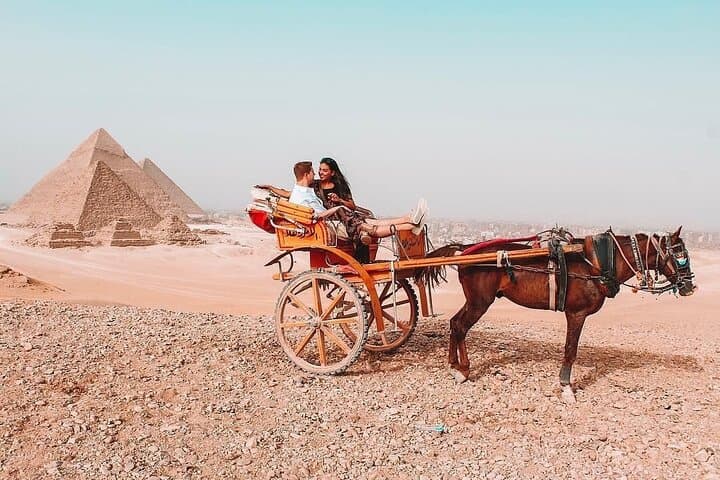
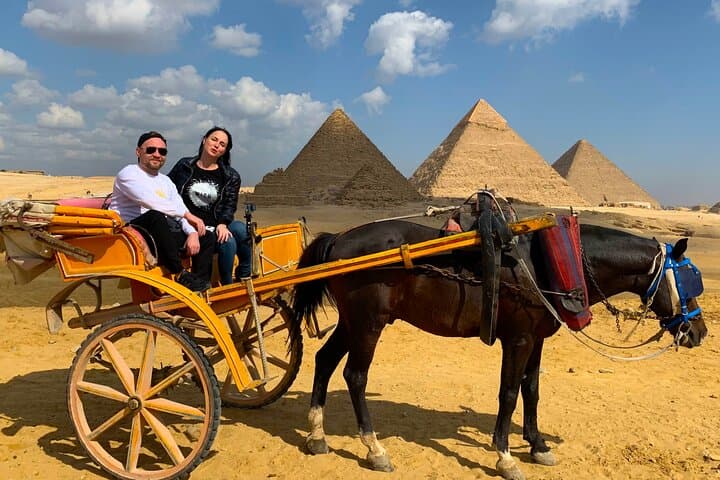
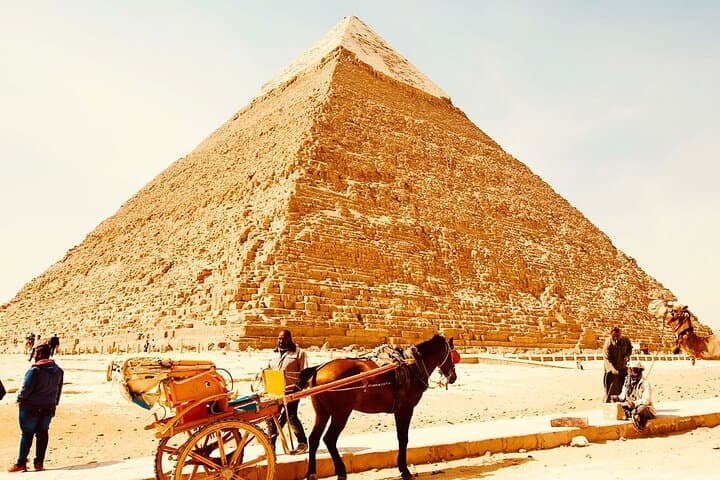
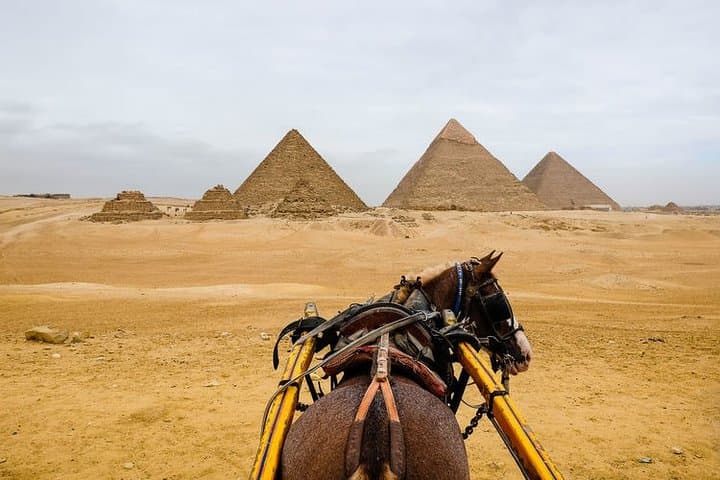
The desert air is cool in the morning as a low-slung carriage threads between dunes and the stone giants rise from the sands like ancient ships. You arrive at the Giza Plateau by carriage, the horses' hoofbeats marking a steady tempo against the vast outline of the Great Pyramid and the Sphinx.
The desert air is cool in the morning as a low-slung carriage threads between dunes and the stone giants rise from the sands like ancient ships. You arrive at the Giza Plateau by carriage, the horses' hoofbeats marking a steady tempo against the vast outline of the Great Pyramid and the Sphinx.
These monuments date to Egypt’s Old Kingdom (c. 2600–2500 BCE), built as monumental tombs for pharaohs such as Khufu. Geologically the plateau is limestone bedrock scarred by millennia of wind and sand—an environment shaped as much by human hands as natural forces. Local Bedouin and Cairo vendors have shaped the site's modern culture: expect friendly bargaining and a strong focus on hospitality.
The tour typically runs about half a day: hotel pickup in Cairo, a guided briefing, a two-hour horse carriage circuit that circles the major monuments and offers panoramic Sphinx views, then lunch at a nearby restaurant before return.
Practical guidance: wear sun-protective clothing and closed-toe shoes for sand and uneven surfaces; bring bottled water and a camera with a low-angle lens for dramatic pyramid shots. Respect restricted areas—entry into some pyramid interiors requires a separate ticket and can be physically demanding.
This private, accessible ride is an efficient way to see the core of Giza with minimal walking while still feeling connected to the desert landscape. Time your visit for morning or late afternoon to avoid mid-day heat and the largest crowds.