THE ADVENTURE COLLECTIVE® · Independent discovery and booking for outdoor travel

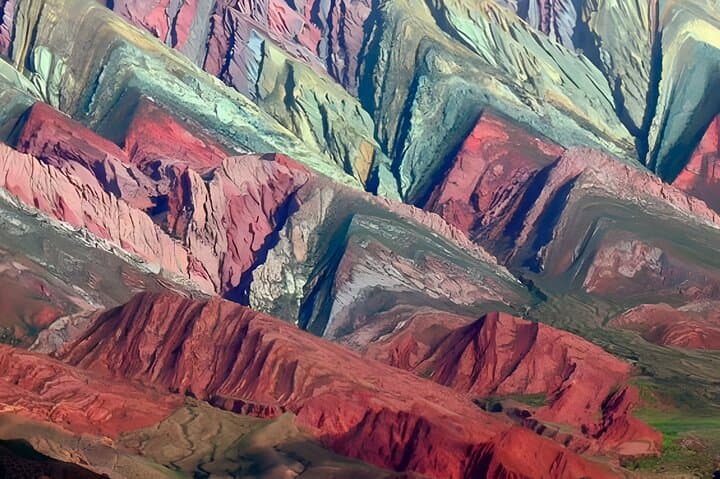
Two days of highland panoramas: color-striated ridges at Hornocal and the vast white plane of Salinas Grandes. This guided tour pairs geology, local culture and roadside vistas with practical logistics for traveling at altitude.
Two days of highland panoramas: color-striated ridges at Hornocal and the vast white plane of Salinas Grandes. This guided tour pairs geology, local culture and roadside vistas with practical logistics for traveling at altitude.
The day opens with high plains light and the road unspooling toward jagged color—passengers watch Cerro de los Siete Colores shift from ochre to rose as the bus climbs. By midmorning the tour threads small villages: cobbled streets in Purmamarca, the Painter’s Palettes at Maimará, and the living adobe of Tilcara. Atmosphere is spare and dry; wind shapes the land and seems to dare travelers to look closer.
Verified experiences and guided adventures in the surrounding area.
Operated by La Quebrada Turismo · Salta, Salta
The day opens with high plains light and the road unspooling toward jagged color—passengers watch Cerro de los Siete Colores shift from ochre to rose as the bus climbs. By midmorning the tour threads small villages: cobbled streets in Purmamarca, the Painter’s Palettes at Maimará, and the living adobe of Tilcara. Atmosphere is spare and dry; wind shapes the land and seems to dare travelers to look closer.
Geology here is legible: folded sedimentary layers tilted by Andean uplift, salt pans laid down by vanished lagoons, and Hornocal’s 14 bands formed by differential mineral deposits. Culturally the Quebrada de Humahuaca is a trade corridor for millennia—a place of pre-Columbian routes, colonial waystations and contemporary artisan markets where weaving and tile work continue.
On day one a 4x4 climbs to the Hornocal viewpoint at roughly 4,000 m, where thin air sharpens colors and panoramic ridges push the eye to the horizon. Day two moves to the Salinas Grandes—an expansive salt flat where reflections and scale overturn visual expectation; expect high sun, brilliant whites and a cold, dry wind.
Practical guidance: acclimatize in Salta before departure, carry snacks for the Hornocal stop, and pack layers for temperature swings between valleys and high passes. Footwear should be sturdy for short walks on uneven ground; sun protection is essential at altitude. Travel time is mostly by road—prepare for long scenic drives with frequent photo stops—and bring cash for small village purchases.
easy.
2 days.
Suitable for travelers in average fitness; long vehicle transfers with short walks at altitude require basic stamina
The Lipán Pass and Hornocal area reach around 4,000–4,170 meters above sea level, so light altitude effects are common.
No; the itinerary visits Tilcara but Pucará admission is not included and can be visited independently if time permits.
On the Hornocal day there isn’t a restaurant stop—bring a packed lunch; on the Salinas Grandes day there’s free time in Purmamarca for lunch.
Guides typically speak Spanish; many operators provide English-speaking guides on request—confirm at booking.
Quebrada de Humahuaca has been a trade corridor for thousands of years and is a UNESCO World Heritage Site for its cultural landscape and historical routes.
The puna and salt flats are fragile—avoid taking salt, stick to designated areas, and support local artisans rather than buying geological samples.
La Quebrada Turismo operates guided outdoor trips and adventures with an emphasis on safety, stewardship, and memorable experiences.


The day opens with high plains light and the road unspooling toward jagged color—passengers watch Cerro de los Siete Colores shift from ochre to rose as the bus climbs. By midmorning the tour threads small villages: cobbled streets in Purmamarca, the Painter’s Palettes at Maimará, and the living adobe of Tilcara. Atmosphere is spare and dry; wind shapes the land and seems to dare travelers to look closer.
The day opens with high plains light and the road unspooling toward jagged color—passengers watch Cerro de los Siete Colores shift from ochre to rose as the bus climbs. By midmorning the tour threads small villages: cobbled streets in Purmamarca, the Painter’s Palettes at Maimará, and the living adobe of Tilcara. Atmosphere is spare and dry; wind shapes the land and seems to dare travelers to look closer.
Geology here is legible: folded sedimentary layers tilted by Andean uplift, salt pans laid down by vanished lagoons, and Hornocal’s 14 bands formed by differential mineral deposits. Culturally the Quebrada de Humahuaca is a trade corridor for millennia—a place of pre-Columbian routes, colonial waystations and contemporary artisan markets where weaving and tile work continue.
On day one a 4x4 climbs to the Hornocal viewpoint at roughly 4,000 m, where thin air sharpens colors and panoramic ridges push the eye to the horizon. Day two moves to the Salinas Grandes—an expansive salt flat where reflections and scale overturn visual expectation; expect high sun, brilliant whites and a cold, dry wind.
Practical guidance: acclimatize in Salta before departure, carry snacks for the Hornocal stop, and pack layers for temperature swings between valleys and high passes. Footwear should be sturdy for short walks on uneven ground; sun protection is essential at altitude. Travel time is mostly by road—prepare for long scenic drives with frequent photo stops—and bring cash for small village purchases.