THE ADVENTURE COLLECTIVE® · Independent discovery and booking for outdoor travel

Glide from Hopkins into pitch-black mangroves and watch the boat wake bloom electric blue. This 2-hour sunset and night cruise to Anderson Lagoon highlights seasonal bioluminescence best seen in the dry months.
Glide from Hopkins into pitch-black mangroves and watch the boat wake bloom electric blue. This 2-hour sunset and night cruise to Anderson Lagoon highlights seasonal bioluminescence best seen in the dry months.
The boat slips away from the dock as the sun drops behind a mangrove rim and the Sittee River closes ranks around you. Stars ignite until they meet the dark tree line, and the guide pilots a five-minute cut into Anderson Lagoon where the world narrows to flashlight beams and the hush of night.
Verified experiences and guided adventures in the surrounding area.
Operated by Get to Know Belize Adventures · Hopkins, Stann Creek District
The boat slips away from the dock as the sun drops behind a mangrove rim and the Sittee River closes ranks around you. Stars ignite until they meet the dark tree line, and the guide pilots a five-minute cut into Anderson Lagoon where the world narrows to flashlight beams and the hush of night.
Anderson Lagoon sits inside a mangrove system carved from Pleistocene and Holocene sediments, a shallow, brackish basin where calm water and seasonal plankton blooms combine to produce bioluminescence. Local Belizean fishers have long known of this “burning wata,” and Hopkins’ Garifuna fishing culture still reads tides and moon phases with the same practical reverence as any modern guide.
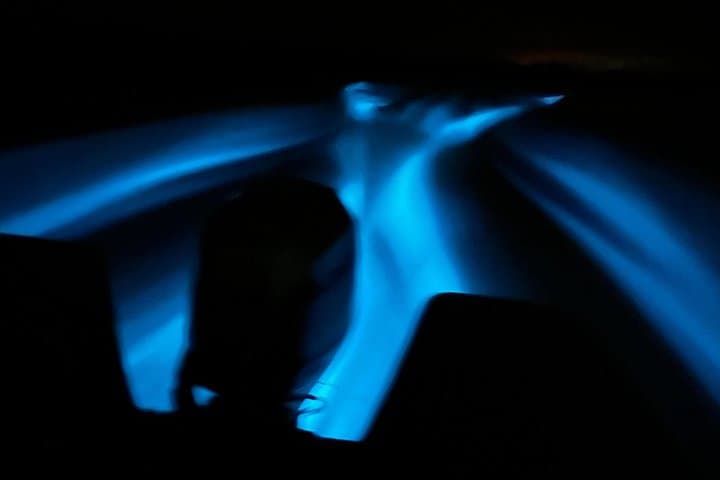
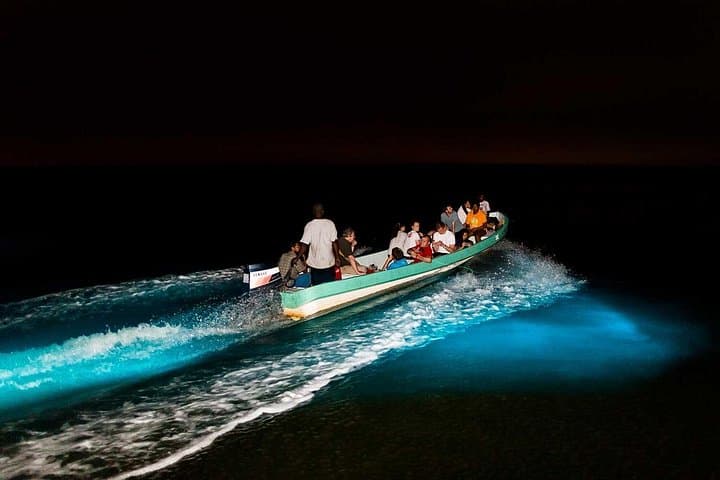
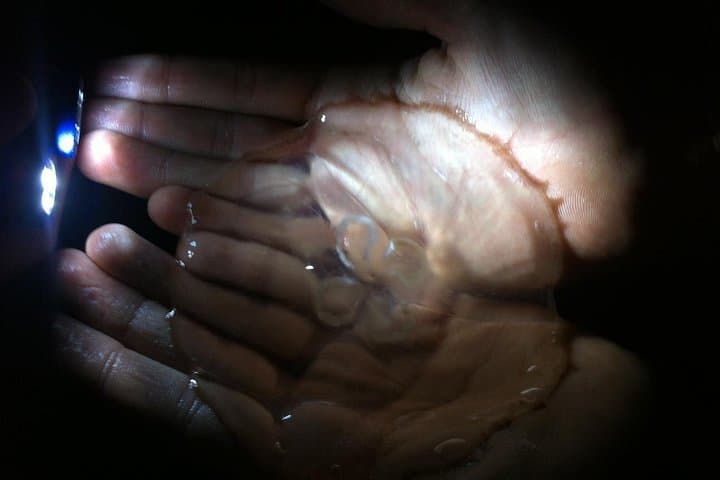
The experience is simple: the guide idles into the lagoon, turns off artificial light, and the boat wake blooms electric blue. Tiny dinoflagellates glow when agitated; fish, jellyfish, and the boat’s bow sketch ephemeral constellations beneath the surface. The guide will stop so you can extend a hand into the water or watch schools carve phosphorescent ribbons.
Plan for timing and conditions — the phenomenon is strongest in the drier months when plankton settle in the lagoon and nights are moon-lean. Bring a dry bag for electronics, dress in layers for coastal breezes, and use long-exposure camera modes if you want photos (flash destroys the effect). Respect the habitat: no soaps, no lighting, and keep noise low so nocturnal wildlife can move undisturbed. The tour is short, accessible to most fitness levels, and best booked in advance during peak season (February–April).
easy.
2 hours.
Suitable for most adults and children; minimal mobility required aside from stepping into a small boat
Peak visibility is usually in the dry season (roughly February–April) on moon-lean nights when water is calm and plankton concentrations are higher.
Most operators allow brief, guided hand-dips; full swimming is usually discouraged to protect wildlife and for safety in shallow, dark water—ask your guide before entering the water.
Yes — the tour is rated easy and the boat ride is short, but check accessibility options and boarding assistance with the operator if mobility is limited.
Yes, with a camera or phone capable of long exposures and a steady surface; avoid flash and bring a small tripod or rest your device on the boat to reduce blur.
Hopkins is a Garifuna village with deep ties to coastal fishing and storytelling; the community’s knowledge of local tides and mangrove ecology underpins many guided tours.
Tours carry a light footprint when operators follow rules—no lights, no detergents, and controlled access help protect fragile mangroves and sensitive plankton blooms.
Get to Know Belize Adventures operates guided outdoor trips and adventures with an emphasis on safety, stewardship, and memorable experiences.
The boat slips away from the dock as the sun drops behind a mangrove rim and the Sittee River closes ranks around you. Stars ignite until they meet the dark tree line, and the guide pilots a five-minute cut into Anderson Lagoon where the world narrows to flashlight beams and the hush of night.
The boat slips away from the dock as the sun drops behind a mangrove rim and the Sittee River closes ranks around you. Stars ignite until they meet the dark tree line, and the guide pilots a five-minute cut into Anderson Lagoon where the world narrows to flashlight beams and the hush of night.
Anderson Lagoon sits inside a mangrove system carved from Pleistocene and Holocene sediments, a shallow, brackish basin where calm water and seasonal plankton blooms combine to produce bioluminescence. Local Belizean fishers have long known of this “burning wata,” and Hopkins’ Garifuna fishing culture still reads tides and moon phases with the same practical reverence as any modern guide.
The experience is simple: the guide idles into the lagoon, turns off artificial light, and the boat wake blooms electric blue. Tiny dinoflagellates glow when agitated; fish, jellyfish, and the boat’s bow sketch ephemeral constellations beneath the surface. The guide will stop so you can extend a hand into the water or watch schools carve phosphorescent ribbons.
Plan for timing and conditions — the phenomenon is strongest in the drier months when plankton settle in the lagoon and nights are moon-lean. Bring a dry bag for electronics, dress in layers for coastal breezes, and use long-exposure camera modes if you want photos (flash destroys the effect). Respect the habitat: no soaps, no lighting, and keep noise low so nocturnal wildlife can move undisturbed. The tour is short, accessible to most fitness levels, and best booked in advance during peak season (February–April).