THE ADVENTURE COLLECTIVE® · Independent discovery and booking for outdoor travel

Trade Sedona’s red rock for the timeworn stone villages of the Hopi Mesas on this full-day cultural tour. Walk with a local guide in Walpi, learn the histories rooted in First Mesa, and experience a living culture shaped by wind, stone, and seasons.
Trade Sedona’s red rock for the timeworn stone villages of the Hopi Mesas on this full-day cultural tour. Walk with a local guide in Walpi, learn the histories rooted in First Mesa, and experience a living culture shaped by wind, stone, and seasons.
Dawn slips into Oak Creek Canyon and the road climbs with it, trading slickrock and ponderosa for big-sky horizons. By midmorning the Mogollon Rim has fallen away and the mesas begin to rise—flat-topped, self-assured, watching the highway thread toward First Mesa. The wind has a voice out here; it moves across stone villages and dry washes, nudging tumbleweeds and carrying stories that predate the asphalt by centuries.
Verified experiences and guided adventures in the surrounding area.
Operated by Great West Tours · Polacca, Arizona
Dawn slips into Oak Creek Canyon and the road climbs with it, trading slickrock and ponderosa for big-sky horizons. By midmorning the Mogollon Rim has fallen away and the mesas begin to rise—flat-topped, self-assured, watching the highway thread toward First Mesa. The wind has a voice out here; it moves across stone villages and dry washes, nudging tumbleweeds and carrying stories that predate the asphalt by centuries.
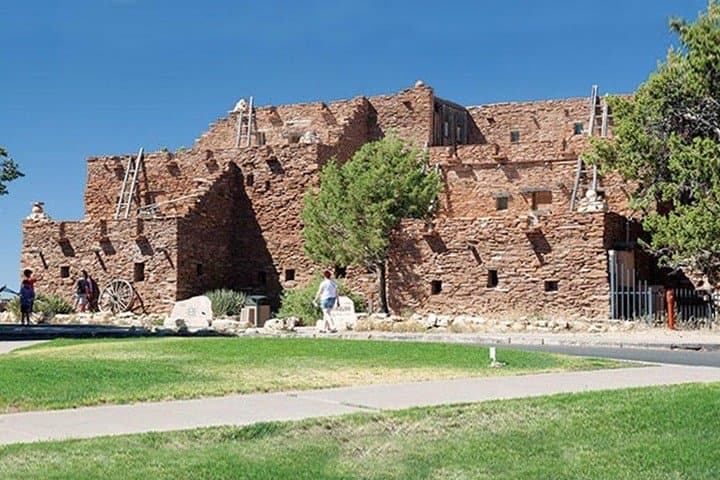
This full-day cultural tour departs Sedona and sweeps north through Flagstaff’s high country before easing onto Arizona 264, gateway to the Hopi Reservation. The payoff is not a summit or a slot canyon, but time—unhurried time—on the Hopi Mesas, among the oldest continuously inhabited villages in the United States. With a local Hopi guide, many groups walk the stone paths of Walpi on First Mesa, a village whose roots reach back to the 12th century. Thick sandstone walls hold fast against the plateau winds; cornfields below still map the Hopi relationship to land and seasons. Photography is often prohibited within villages to protect privacy and ceremonial life, and your guide will make the boundaries clear. That clarity becomes part of the experience: listening more, looking closer, letting the place set the pace.
Between stops, your guide frames the landscape with context—migration histories, clan stories, and the resilience that allowed Hopi people to maintain their lifeways on these mesas. Lunch typically unfolds at the Hopi Cultural Center on Second Mesa, where craft shops and rotating exhibits add another layer. The miles back toward Sedona retrace a different story: oak and sycamore return to the road’s shoulder, the canyon narrows, and red rock reappears like a familiar friend.
Logistically, it’s straightforward. Expect a small group in a comfortable vehicle, hotel pickup in Sedona, and a full 10–11 hours door-to-door. Elevations range from 4,300 feet in Sedona to over 6,000 feet on the mesas, so the air runs a little drier and the sun a little sharper—hydration and sun protection matter. Walking in villages is on uneven stone and compacted dirt; sturdy shoes make it easy. Most important is mindset: this is a visit to sovereign lands with living communities, not a museum. When the wind pushes across the houses of Walpi and the guide’s stories trace lines across centuries, the mesas feel less like an overlook and more like a conversation you’ve been invited to join.
easy.
10–11 hours.
Comfortable walking on uneven surfaces for 30–60 minutes total; frequent breaks.
Plan for 10–11 hours, including driving and cultural stops. Walking segments are moderate in length on uneven stone and dirt surfaces.
Often no. Many Hopi villages—including Walpi—prohibit photography to protect privacy and ceremonial life. Your guide will specify where, if anywhere, photos are allowed.
Dress modestly with sun protection: lightweight long sleeves, pants or knee-length shorts, a brimmed hat, and closed-toe shoes.
Yes, lunch is typically included, often at the Hopi Cultural Center on Second Mesa. Notify the operator of dietary needs in advance.
Coverage is spotty and can drop entirely in sections of AZ-264 and on the mesas. Download maps and expect limited service.
Most of Arizona and the Hopi Reservation do not observe DST. Phones may switch time near Navajo Nation boundaries, so confirm pickup times with your guide.
Hopi villages such as Walpi have been continuously inhabited since at least the 12th century; First Mesa communities resisted Spanish incursions and later pressures to relocate, preserving language and ceremony.
You are visiting sovereign tribal lands—stay on designated paths, respect photography restrictions, and support local artisans. Pack out trash and minimize noise to protect community life and fragile desert ecosystems.
Great West Tours operates guided outdoor trips and adventures with an emphasis on safety, stewardship, and memorable experiences.


Dawn slips into Oak Creek Canyon and the road climbs with it, trading slickrock and ponderosa for big-sky horizons. By midmorning the Mogollon Rim has fallen away and the mesas begin to rise—flat-topped, self-assured, watching the highway thread toward First Mesa. The wind has a voice out here; it moves across stone villages and dry washes, nudging tumbleweeds and carrying stories that predate the asphalt by centuries.
Dawn slips into Oak Creek Canyon and the road climbs with it, trading slickrock and ponderosa for big-sky horizons. By midmorning the Mogollon Rim has fallen away and the mesas begin to rise—flat-topped, self-assured, watching the highway thread toward First Mesa. The wind has a voice out here; it moves across stone villages and dry washes, nudging tumbleweeds and carrying stories that predate the asphalt by centuries.
This full-day cultural tour departs Sedona and sweeps north through Flagstaff’s high country before easing onto Arizona 264, gateway to the Hopi Reservation. The payoff is not a summit or a slot canyon, but time—unhurried time—on the Hopi Mesas, among the oldest continuously inhabited villages in the United States. With a local Hopi guide, many groups walk the stone paths of Walpi on First Mesa, a village whose roots reach back to the 12th century. Thick sandstone walls hold fast against the plateau winds; cornfields below still map the Hopi relationship to land and seasons. Photography is often prohibited within villages to protect privacy and ceremonial life, and your guide will make the boundaries clear. That clarity becomes part of the experience: listening more, looking closer, letting the place set the pace.
Between stops, your guide frames the landscape with context—migration histories, clan stories, and the resilience that allowed Hopi people to maintain their lifeways on these mesas. Lunch typically unfolds at the Hopi Cultural Center on Second Mesa, where craft shops and rotating exhibits add another layer. The miles back toward Sedona retrace a different story: oak and sycamore return to the road’s shoulder, the canyon narrows, and red rock reappears like a familiar friend.
Logistically, it’s straightforward. Expect a small group in a comfortable vehicle, hotel pickup in Sedona, and a full 10–11 hours door-to-door. Elevations range from 4,300 feet in Sedona to over 6,000 feet on the mesas, so the air runs a little drier and the sun a little sharper—hydration and sun protection matter. Walking in villages is on uneven stone and compacted dirt; sturdy shoes make it easy. Most important is mindset: this is a visit to sovereign lands with living communities, not a museum. When the wind pushes across the houses of Walpi and the guide’s stories trace lines across centuries, the mesas feel less like an overlook and more like a conversation you’ve been invited to join.